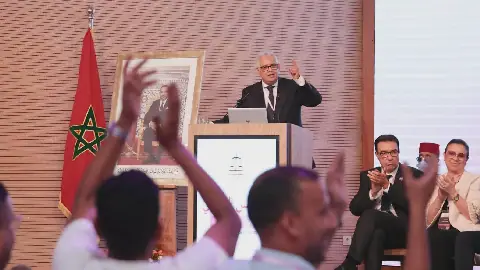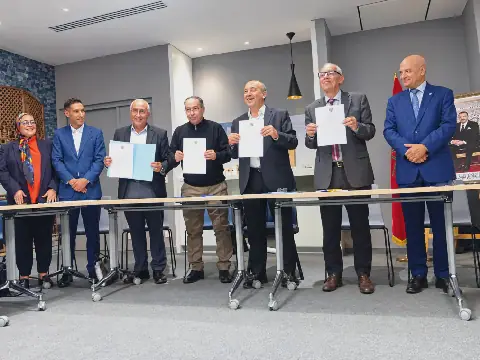
A recent gathering at the "House of Sudan" in Cairo, held on October 2, 2026, has sparked controversy among the Sudanese diaspora community. The event was called to endorse the results of a recent electoral process, with attendees being encouraged to show their support and loyalty to the outcome. However, critics argue that this process was undemocratic and failed to represent the true voices of the community.
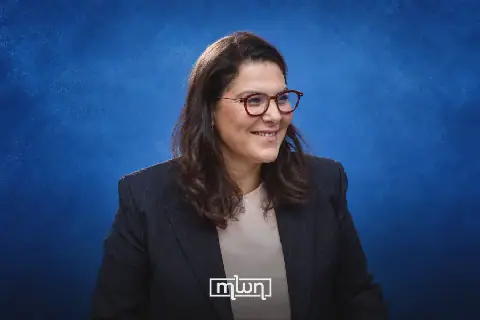
The author of a recent article, Heba Allah, has expressed concerns that the emphasis on electoral processes can be misguided, particularly in situations where the community is experiencing significant turmoil. In such cases, the focus on counting votes can overlook deeper social and cultural issues that underpin a truly democratic system. This perspective suggests that democracy is not simply a matter of mechanical processes, but rather a complex interplay of social and cultural factors.
The Sudanese diaspora community in Egypt has been affected by ongoing conflict and social upheaval, which has led to significant divisions and challenges. In this context, some argue that the recent electoral process was an attempt to impose a particular agenda or worldview on the community, rather than providing a genuine outlet for expression and representation.
Critics of the electoral process argue that it has been hijacked by a closed elite or particular alliances, which has resulted in the marginalization of certain groups. This has led to concerns that the process has been used to entrench existing power structures, rather than providing a genuinely democratic forum for discussion and decision-making.
The author suggests that the emphasis on electoral processes can be used as a way of legitimizing undemocratic systems and imposing a particular form of governance on the community. This can be seen as a form of "democratic washing," where the trappings of democracy are used to mask a more authoritarian reality.
In response to these criticisms, some have called for a more nuanced understanding of democracy that takes into account the specific social and cultural context of the Sudanese diaspora community. This might involve a greater emphasis on building a more cohesive and inclusive community, rather than simply relying on electoral processes as a way of resolving disputes and making decisions.
The controversy surrounding the electoral process has highlighted deeper divisions within the Sudanese diaspora community, which will need to be addressed if a more inclusive and democratic system is to be established. The community will need to engage in a more fundamental conversation about the nature of democracy and representation, and how these can be achieved in a way that is authentic and meaningful.
Key points
- The recent electoral process in Sudan's diaspora community has been criticized for being undemocratic and serving only to entrench existing power structures.