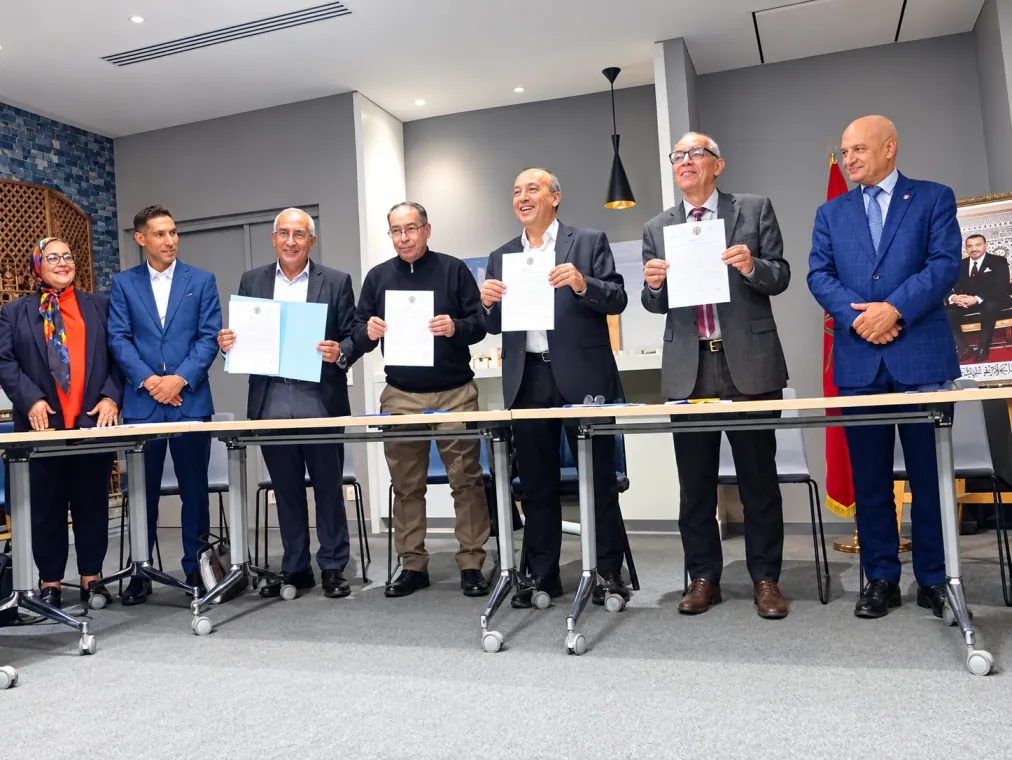
Four small parties in Morocco's House of Representatives have agreed to form a joint parliamentary group, pooling their six seats to increase their influence in the chamber. The parties are the Front of Democratic Forces (FFD), the Equity Party (PE, Al Insaf), the Party of the New Democrats (PND), and the Unity and Democracy Party (PUD). They won their seats in the September 23 legislative elections.
The joint group holds 1.5% of the chamber's 395 seats, placing them at the far edge of the house. The Authenticity and Modernity Party (PAM) leads with 97 seats, followed by the National Rally of Independents (RNI) with 66, the Istiqlal Party with 65, and the Justice and Development Party (PJD) with 54. The six seats are split unevenly among the parties, with the FFD and Al Insaf winning two each, and the PND and PUD taking one apiece.
Four of the six seats were won through regional lists reserved for women, and two through local districts. Abdelaziz Barik of the PUD won the Midelt constituency in the Drâa-Tafilalet region, while Larbi Chrii of Al Insaf took the Settat district in the Casablanca-Settat region. Nadia Nouam (FFD) and Amal Idouq (Al Insaf) won on the women's regional lists in Casablanca-Settat, Hanane Zmizem (PND) in Tangier-Tetouan-Al Hoceima, and Dounia Ezzahir (FFD) in Fez-Meknes.
According to a joint statement dated October 3, the parties held "deep and responsible" political consultations following the election results. They framed the group as an effort to "inject new blood into the arteries of national parliamentary practice" and move beyond "the logic of numbers." The parties laid out a legislative and oversight agenda, pledging to put forward significant proposals and defend "the pillars of the social state" and citizen dignity.
The joint group aims to use parliamentary mechanisms "with greater depth and firmness" to evaluate public policies and address pressing public concerns. They also pledged to strengthen their presence in parliamentary diplomacy in defense of the kingdom's constants. By forming a joint group, the parties can consolidate their weight inside the institution and increase their influence in legislative and oversight debates.
Under the House's Rules of Procedure, a parliamentary group requires at least four members, while a parliamentary team needs at least twenty. The group's president serves as its official spokesperson and sits on the Conference of Presidents, which helps set the chamber's agenda and schedule debates. The Rules also oblige the House Bureau to provide groups with premises, staff, funding, and logistical support.
The move reflects an attempt by parties with limited representation to increase their influence in the House of Representatives. A joint group gives them a wider margin to shape legislative and oversight debates than their individual numbers would allow. The group's formation was announced on October 3, and its members are expected to work together to achieve their legislative and oversight goals.
Key points
- The four parties have pooled their six seats to form a joint parliamentary group, increasing their influence in the House of Representatives.
- The joint group aims to defend "the pillars of the social state" and citizen dignity, and to evaluate public policies and address pressing public concerns.
- The group's formation reflects an attempt by parties with limited representation to consolidate their weight inside the institution and increase their influence in legislative and oversight debates.