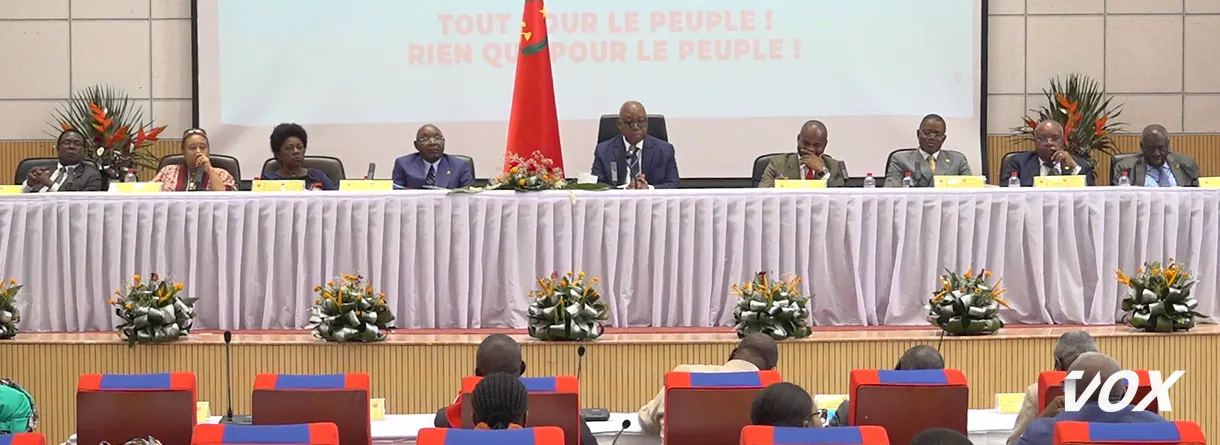
The secretary general of the Congolese Labour Party (PCT), Pierre Moussa, on October 4 in Brazzaville, encouraged the government to make concerted efforts to address the concerns of the population. This call was made during the closing of the PCT's bureau's third ordinary meeting. Moussa emphasized that the current socio-economic and security situation requires a collective response from the party and the government. He stressed the need for swift action from the party's permanent committees to support public action.
Moussa also urged members of the bureau to engage in prospective reflection to enable the party to develop an electoral strategy that guarantees a landslide victory. The party's efforts aim to provide support to the government's actions and address the population's concerns. The PCT's bureau meeting analyzed the country's current situation and reaffirmed its commitment to working with the government to find lasting solutions.
Prime Minister Anatole Collinet Makosso highlighted the PCT's contribution to the functioning of schools and healthcare facilities. He mentioned that the government is awaiting the promulgation of a bill on the organization of the education system, which was adopted by the Council of Ministers in January 2026 and is currently under examination in Parliament. The bill aims to modernize the education system by introducing significant reforms.
The proposed education bill includes several key reforms, such as making the third year of preschool compulsory, reducing the primary education cycle from six to five years, and introducing a unique preparatory course. Additionally, the bill proposes to institutionalize the primary education certificate as a diploma and replace the entrance exam to the sixth grade with continuous assessment. The bill also aims to extend the LMD system to all higher education institutions.
Prime Minister Makosso also addressed the issue of national debt, stating that the debt-to-GDP ratio stood at 90.8% at the end of 2025 and around 92.46% in the first quarter of 2026. He noted that the debt is primarily composed of domestic debt, estimated to be between 58% and 60%. Makosso emphasized that although the debt stock remains high, its trajectory is considered viable due to ongoing structural reforms.
The high level of domestic debt, however, affects the treasury of local creditors and national economic operators. In this context, the government's ability to honor its commitments is uncertain, which could lead to a succession of payment defaults and a decline in confidence among technical and financial partners. Makosso concluded by affirming that the government is working to address the concerns of the population despite multiple constraints.
The government's efforts to address the population's concerns and implement reforms will be crucial in the coming months. The PCT's support for the government's actions and the proposed reforms aim to improve the country's socio-economic situation and provide a positive outlook for the future. The party's electoral strategy will likely be shaped by its efforts to address the population's concerns and promote the government's achievements.
Key points
- Pierre Moussa urged the government to redouble efforts to address the population's legitimate expectations.
- The proposed education bill aims to modernize the education system through significant reforms.
- The country's debt-to-GDP ratio stood at 90.8% at the end of 2025 and around 92.46% in the first quarter of 2026.