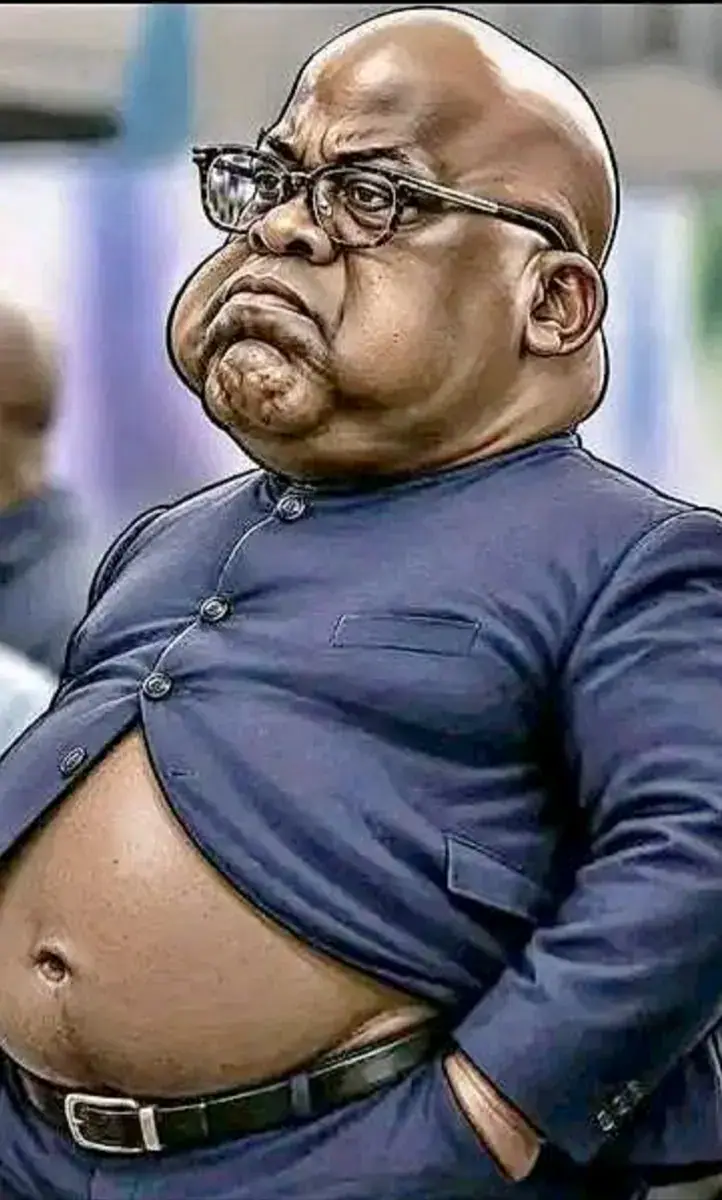
The President of the Democratic Republic of Congo, Felix Tshisekedi, has sparked controversy by stating that he does not like the country's constitution. This declaration has been met with criticism from various quarters, given that President Tshisekedi has sworn allegiance to the same constitution on two separate occasions, in 2018 and 2023. Critics argue that his stance undermines the very foundation of the country's governance.
The constitution in question was first sworn to by President Tshisekedi's father, Etienne Tshisekedi, in 2011. The elder Tshisekedi had previously rejected the constitution in 2006. The current president's comments have raised concerns about his commitment to upholding the country's laws and the potential consequences for the nation's stability. Furthermore, President Tshisekedi's actions have been described as those of a "profito-situationniste" and an adventurer, who prioritizes personal interests over the welfare of the country.
The issue has also taken an ethnic dimension, with some groups accusing President Tshisekedi of favoring individuals from the Kasai region over those from the Katanga region. The Katanga region is said to be rich in strategic minerals, and critics argue that President Tshisekedi's regime is exploiting these resources for personal gain. This has led to tensions between different ethnic groups, with some calling for the president to prioritize the interests of the Congolese people as a whole.
President Tshisekedi's relationship with the judiciary has also come under scrutiny. In Belgium, he was found to have presented a fake diploma from the ICC Brussels to the Independent National Electoral Commission. This has raised questions about his credibility and trustworthiness as a leader. Moreover, there are allegations that President Tshisekedi is involved in corrupt activities, including bribing Belgian authorities.
The controversy has sparked a national debate, with many calling for President Tshisekedi to be held accountable for his actions. Some have questioned why he has not taken action to address the concerns of the Congolese people, particularly those from the Katanga region. The situation remains tense, with many watching to see how the president will respond to the criticism.
The issue has also raised concerns about the role of the international community in addressing the situation in the DRC. Some have called for diplomatic pressure to be applied to President Tshisekedi to ensure that he upholds the country's constitution and respects the rights of all Congolese citizens. The situation remains complex, with many different factors at play.
As the situation continues to unfold, one thing is clear: President Tshisekedi's stance on the constitution has sparked a national crisis. It remains to be seen how he will respond to the criticism and whether he will take steps to address the concerns of the Congolese people. The international community will be watching closely, as the stability of the DRC has significant implications for the region as a whole.
Key points
- President Tshisekedi's comments have raised concerns about his commitment to upholding the country's laws.