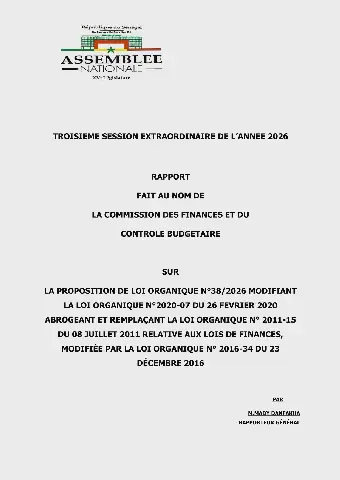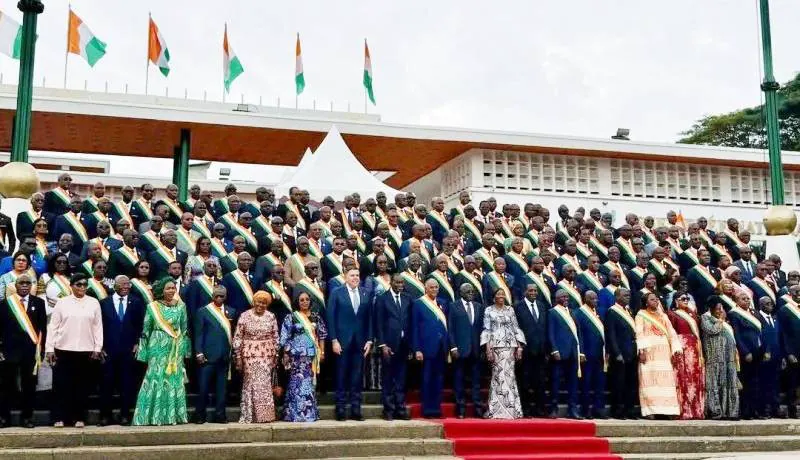
The National Assembly of Cote d'Ivoire convened on October 1, 2026, for the opening of its second ordinary session. The session is set to prioritize the examination of the 2027 national budget, various legislative projects, and the integration of artificial intelligence within the institution. According to the Assembly's president, the session aims to align with the country's development goals as outlined in the 2026-2030 National Development Plan (PND).
The president of the National Assembly highlighted the achievements of the first session of the third legislature, during which 27 bills were adopted, with 26 of them receiving unanimous approval. Notably, the PND 2026-2030 was among the adopted texts, outlining the country's economic and social priorities for the next five years. The plan involves approximately 115,000 billion CFA francs in investments, with over 70% expected to come from the private sector.
A key focus of the upcoming session will be the examination and approval of the 2027 national budget. The Assembly's president emphasized the need for the budget to reflect the ambitions of the PND 2026-2030. The Parliament will be tasked with monitoring the utilization of approved funds and evaluating the results achieved. To this end, parliamentary committees will collaborate with the government, administrative bodies, and structures responsible for implementing public policies.
In addition to budgetary matters, several bills are pending before the National Assembly, including those related to banking regulation, microfinance, and public financing instruments. The Assembly will also consider a bill amending the Penal Code, which was adopted by the Council of Ministers on September 23 and submitted to the Assembly on September 29. Other texts addressing institutional life, electoral matters, economic issues, and social concerns are also on the agenda.
The integration of artificial intelligence (AI) is another significant aspect of the session. The Assembly's president noted that AI is transforming research, learning, production, and decision-making processes. To enhance the understanding and utilization of AI among parliamentarians, a training cycle will be organized in collaboration with the Ministry of Digital Transition and Technological Innovation, starting on October 12.
The modernization of the National Assembly is also a priority for the session. As part of this effort, deputies will be provided with tablets starting from October 5, and a high-speed internet connection and enhanced Wi-Fi access will be implemented to facilitate parliamentary work. Furthermore, a new conference system is expected to be introduced by the end of the year, and the rehabilitation of the Assembly is slated to begin in January 2027.
The president of the National Assembly stressed the importance of maintaining a connection with the population and incorporating their concerns into parliamentary work. The experience gained from the "National Assembly outside the walls" initiative during the intersession will serve as a basis for this endeavor. Ultimately, the session aims to balance the examination of legislative texts, oversight of public action, engagement with citizens, and institutional modernization.
Key points
- The National Assembly will examine the 2027 budget and several legislative projects, including those related to banking regulation and artificial intelligence.
- The Assembly aims to enhance its modernization efforts, including the provision of tablets to deputies and improved internet connectivity.
- The session prioritizes the integration of artificial intelligence in parliamentary work, with a training cycle set to begin on October 12.