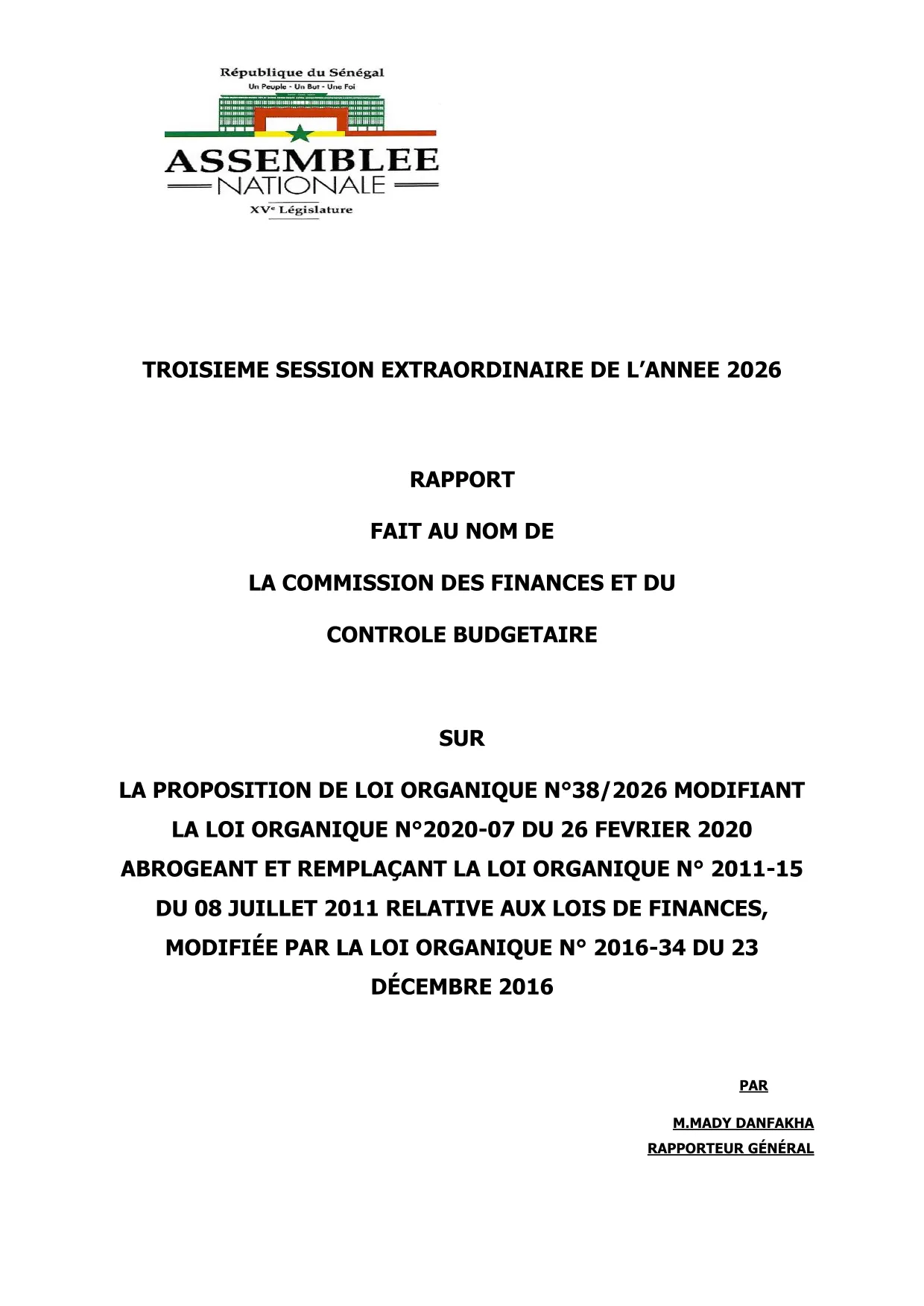
The Senegalese National Assembly's Commission on Finance and Budgetary Control examined a proposal for an organic law on September 25, 2026. The proposal, numbered 38/2026, aims to modify the organic law n°2020-07 related to finance laws. This modification seeks to regulate special credits, particularly those related to defense, security, and intelligence, by integrating them into allocations and subjecting them to specific oversight. The proposal was presented by several deputies.
The proposed law targets the integration of special credits into the budget by modifying article 14 of the organic law n°2020-07. This modification will explicitly include special credits or funds within the allocations. Furthermore, the proposal suggests strengthening parliamentary control through a restricted committee within the Finance Commission. This committee will be responsible for producing reports that will be submitted to the President of the National Assembly, the Court of Accounts, and the President of the Republic.
The Commission adopted the text despite reservations from the Government. The proposal is a follow-up to the Constitutional Council's decision n°7/C/2026 on August 25, 2026. This decision declared inadmissible a previous proposal concerning special credits. The Government has expressed its intention to propose amendments. These amendments aim to refocus constitutional references on article 67 and eliminate the referral to a dedicated law for control modalities.
Special credits primarily concern national defense, internal and external security, and intelligence activities. The proposed organic law seeks to enhance transparency and accountability in the management of these sensitive areas. By integrating special credits into the general budget and strengthening parliamentary oversight, the initiative aims to improve governance and control over these critical sectors.
The proposal for an organic law has been a subject of interest among various stakeholders. The National Assembly has been reviewing several proposals and documents related to financial and budgetary matters. These include proposals on health in prison settings, irregular sales of state-owned buildings, and management issues in land allocation and maritime public domain.
The examination of this proposal occurs within a broader context of efforts to enhance transparency and accountability in Senegal's public finance management. The National Assembly's Finance Commission plays a crucial role in this process. By scrutinizing and debating proposals such as the one on special credits, the Commission contributes to refining the legal framework governing public finances.
The adoption of this proposal could have significant implications for the management of special credits in Senegal. It reflects ongoing efforts to align national legislation with best practices in public finance management. The proposal's focus on enhancing parliamentary oversight and transparency is expected to contribute to more effective and accountable management of resources allocated to defense, security, and intelligence.
Key points
- The proposal aims to integrate special credits into allocations and strengthen parliamentary control.
- The initiative seeks to enhance transparency and accountability in the management of defense, security, and intelligence activities.
- The Government has proposed amendments to refocus constitutional references and eliminate the referral to a dedicated law for control modalities.