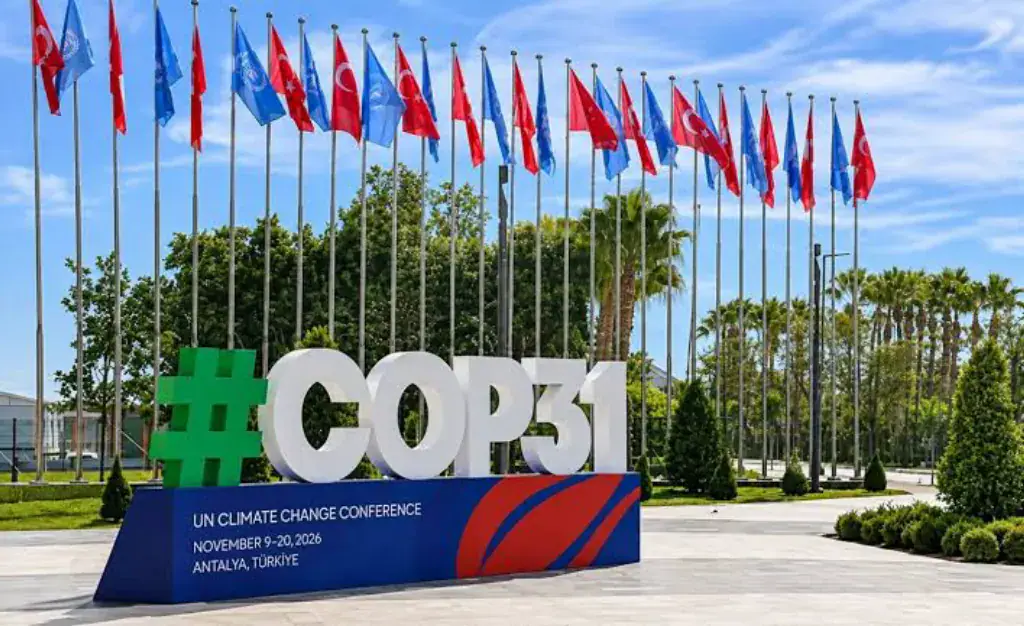
A recent report presented at the 31st Conference of the Parties (COP31) in Antalya, Turkey, has revealed that global climate action has stalled over the past five years. Despite efforts to reduce greenhouse gas emissions, the world has failed to make significant progress in slowing down global warming. The report, compiled by the Climate Action Tracker, an independent organization, notes that initiatives to mitigate climate change have been offset by negative developments.
According to the report, the world had made progress in reducing projected warming by 1°C in the five years following the 2015 Paris Agreement. However, since then, no further progress has been made. The report's authors warn that if current trends continue, the world will irreversibly exceed the 1.5°C limit set by the Paris Agreement. This limit is critical, as exceeding it could have catastrophic consequences for the planet.
The report's findings are based on an analysis of national climate plans, known as Nationally Determined Contributions (NDCs). While countries have made promises to reduce emissions, these promises have not been sufficient to meet the goals of the Paris Agreement. Even if countries fulfill their current commitments, the report projects that the planet will warm by 2.6°C above pre-industrial levels by the end of the century.
The report's authors emphasize that countries need to strengthen their climate commitments to avoid the worst impacts of climate change. Sarah Heck, lead author of the report, notes that current efforts are "not enough" and that countries must do more to reduce emissions. This message was echoed by leaders from island nations, who are already experiencing the devastating impacts of climate change.
Island nations, such as the Marshall Islands, Tuvalu, and Antigua and Barbuda, are among the most vulnerable to climate change. Rising sea levels and increased frequency of natural disasters threaten the very existence of these countries. Their leaders are calling for urgent action to reduce emissions and provide financial support to help them adapt to a warmer world.
The first minister of Barbados, Mia Mottley, emphasized that rich countries must not only make more ambitious climate commitments but also provide financial support to poor countries. She noted that current climate finance pledges are 70% below previous levels and that "promises are not payments." Mottley urged leaders to take concrete action to support vulnerable countries.
The COP31 report highlights the urgent need for countries to strengthen their climate commitments and take concrete action to reduce emissions. With the planet on track to warm by 2.6°C above pre-industrial levels, the stakes are high. The report's findings serve as a wake-up call for leaders to take bold action to address the climate crisis.
Key points
- Global climate efforts have stalled, with temperatures projected to rise 2.6°C above pre-industrial levels by the end of the century.
Reporting sources
- COP31: Relatório aponta poucos resultados na ação climática global · Expresso das Ilhas