The 31st Conference of the Parties (COP31) to the United Nations Framework Convention on Climate Change (UNFCCC) kicked off on Monday with a strong call to action from UN Secretary-General Antonio Guterres. He urged countries to show leadership in reducing greenhouse gas emissions, transitioning away from fossil fuels, and providing financial support to vulnerable nations. Guterres warned that the world has entered a new era of extreme climate events, emphasizing the need for immediate and collective action.
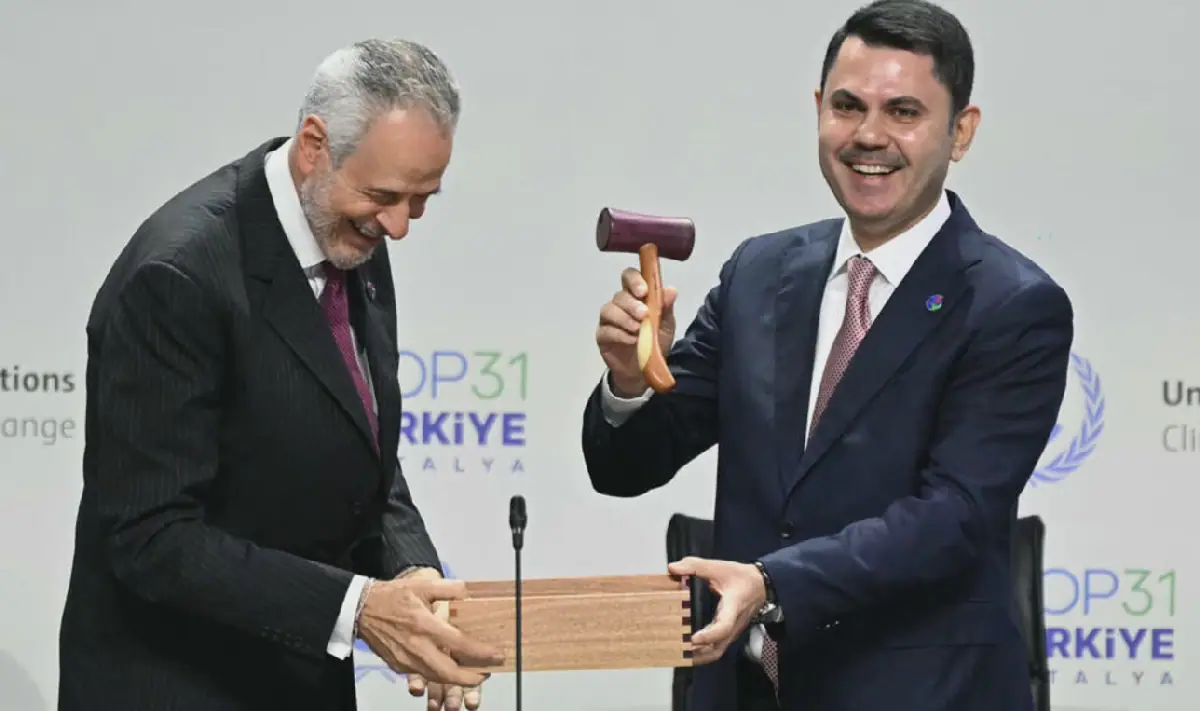
The opening ceremony was delayed by over an hour, with Brazilian Andre Correa do Lago, president of the previous COP, passing the baton to Turkish Minister of Environment Murat Kurum. Correa do Lago emphasized the importance of maintaining moral compass in the face of climate change, stating that the world looks to the COP for solutions and justice. The handover marked the beginning of a critical two-week negotiation period.
However, the conference got off to a rocky start, with disagreements over the agenda, particularly regarding financial commitments from developed countries to support climate action in developing nations. Greenpeace's Jasper Inventor described the start as "difficult," citing European resistance to discussing financing. Despite this, a mechanism to address financing will be included in the agenda, according to sources close to the negotiations.
One of the key points of contention is the tripling of adaptation finance, a demand from African countries. While this specific request will not be officially on the agenda, it can be addressed under other topics. The conference aims to translate previous commitments into concrete actions, with many emphasizing the need for realism in the face of climate disasters and economic challenges.
The scientific consensus continues to sound alarm bells, with the UN warning in September that the world is on a trajectory incompatible with the 2015 Paris Agreement's 1.5°C target. The Turkish presidency, supported by Australia, will focus on electrification, aiming for 35% of global energy consumption to come from electricity by 2035. However, this goal may face resistance from countries reliant on fossil fuels.
The COP31 presidency has emphasized the importance of teamwork, with Turkish Minister Kurum and Australian Minister Chris Bowen working together to drive negotiations. However, the absence of the US administration, a significant player in global greenhouse gas emissions, casts a shadow over the conference. The effectiveness of the Turkish-Australian partnership in facilitating compromise remains to be seen.
As the conference progresses, countries will need to navigate complex issues, including financing, adaptation, and mitigation. The outcome of COP31 will depend on the willingness of nations to show leadership and make concrete commitments to address the climate crisis. With the world watching, the stakes are high, and the need for collective action has never been more pressing.
Key points
- The COP31 conference aims to translate previous climate commitments into concrete actions.
- The conference faces challenges, including disagreements over financing and the absence of the US administration.
- The Turkish presidency will focus on electrification, aiming for 35% of global energy consumption to come from electricity by 2035.