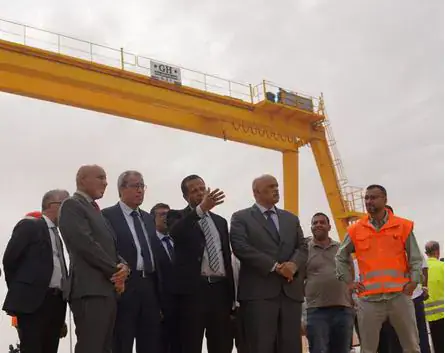
The construction of Morocco's Dahla desalination plant has reached 97% completion, with the associated irrigation network at 99% completion. The plant, a strategic project aimed at enhancing food and water security, is expected to produce 37 million cubic meters of water per year. Of this, 30 million cubic meters will be allocated for irrigation and 7 million cubic meters for drinking water.
The project, described as a royal initiative, aims to bolster local development, particularly in Morocco's southern regions. According to Khalid Hateimi, Minister of Agriculture, Fisheries, and Food Sovereignty, the plant will enable investments of approximately 4 billion dirhams in the agricultural sector. This, in turn, is expected to generate annual revenues exceeding 1 billion dirhams and create around 20,000 jobs per year.
The Dahla desalination plant is part of Morocco's efforts to enhance its water security and promote sustainable agricultural practices. The project is also expected to stimulate investment in the agricultural sector and support the country's food sovereignty goals. By providing a reliable source of water, the plant will help to drive economic growth and development in the region.
The plant's construction is a significant step towards achieving Morocco's water management objectives. With its completion, the plant will help to address the country's water scarcity challenges, particularly in the southern regions. The project is also expected to have a positive impact on the environment by promoting the use of desalinated water for irrigation and drinking purposes.
Morocco's investment in the Dahla desalination plant reflects the country's commitment to developing its water infrastructure. The project is part of a broader strategy to enhance the country's water security and promote sustainable development. By leveraging innovative technologies and strategic partnerships, Morocco aims to address its water challenges and drive economic growth.
The successful completion of the Dahla desalination plant will serve as a model for future water infrastructure projects in Morocco. The project's impact will be closely monitored, and its outcomes will inform the development of future water management initiatives. With its focus on sustainability and innovation, the Dahla desalination plant is poised to play a critical role in Morocco's water management landscape.
The Dahla desalination plant is a key component of Morocco's efforts to promote sustainable water management practices. The project's completion will mark a significant milestone in the country's quest to address its water challenges and promote economic development. As the project nears completion, stakeholders are optimistic about its potential to drive positive change in the region.
Key points
- The Dahla desalination plant is expected to produce 37 million cubic meters of water per year, with 30 million cubic meters allocated for irrigation and 7 million cubic meters for drinking water.