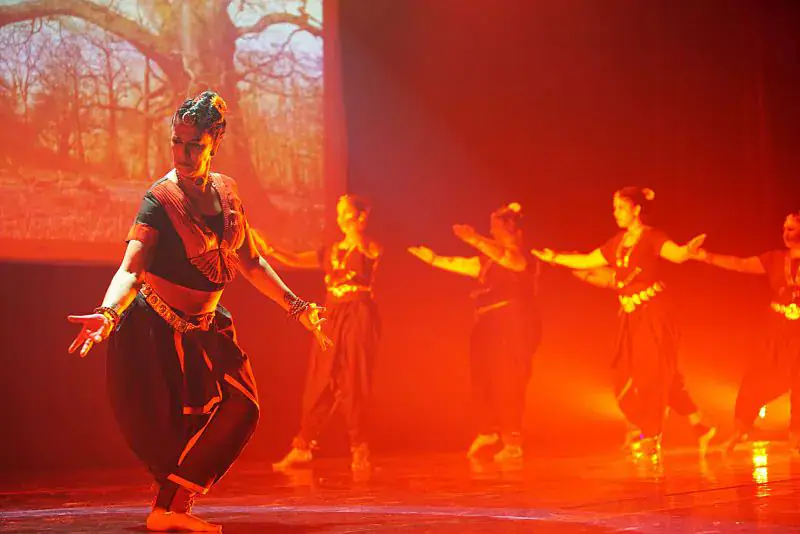
The dance production Bhūmi, which means Earth in Sanskrit, is set to premiere at the Joburg Theatre on November 13 and 14. The show's creator, Kavisha Pillay, believes that connection is an act of resistance in a world where technology has enabled instant communication but also increased feelings of loneliness. Pillay, who is also the founder of the Campaign on Digital Ethics, has spent years investigating the impact of technology on society. Her work with Bhūmi has led her to explore the role of art in fostering connection and community.
Pillay's background in Bharatanatyam, an ancient Indian classical art form, has influenced her approach to Bhūmi. She began learning the dance style at the age of four from her mother, who is also her guru. For Pillay, dance is not just a form of artistic expression but also a way to connect with her heritage and community. The process of learning Bharatanatyam involves transmission from generation to generation, with a focus on attention, patience, and care. This approach is in stark contrast to the fast-paced and often superficial nature of modern technology.
The idea for Bhūmi was born out of questions about our relationship with the Earth and the impact of technology on our lives. As Pillay grappled with these questions, she realized that dance offered a unique space to explore and express emotions such as grief, rage, and love. Through Bhūmi, Pillay aims to create a shared experience that brings people together and fosters a sense of connection. The production is part of a larger conversation about the role of art in rebuilding social cohesion in South Africa.
The Indlulamithi 2035 scenarios, developed by the Mapungubwe Institute for Strategic Reflection, offer a vision of a possible future for South Africa. In one of these scenarios, investment in arts and culture becomes a key part of rebuilding social cohesion. People return to theatres and shared cultural spaces, even in a society saturated by AI and online technology. Art becomes a place where people encounter difficult ideas, experience something collectively, and begin rebuilding relationships with one another.
Pillay believes that the arts offer something that our increasingly individualized and technologically mediated lives desperately need: shared experience. For too long, we have underestimated the sociopolitical importance and value of the arts. While the crises we face are structural and require structural responses, investing in and creating spaces for connection and meaning is crucial. The future will require us to protect the spaces in which we remember how to be human together.
The production of Bhūmi has also made Pillay think more seriously about the role that art might play in the years ahead. As we navigate the challenges of the 21st century, Pillay argues that we need to invest in and create spaces for connection and meaning. This can involve supporting arts and culture initiatives, as well as creating public spaces that foster community and connection.
Ultimately, Pillay sees Bhūmi as a hopeful vision of connection and community in a world dominated by technology and isolation. Through dance and art, we can create spaces for shared experience and meaning, and begin to rebuild relationships with one another and with the Earth. As Pillay notes, the future will require us to protect these spaces and prioritize connection and community in a world that often seems to value efficiency and profit above all else.
Key points
- Investing in arts and culture can help rebuild social cohesion in South Africa.
Reporting sources
- REFLECTION: Connection is an act of resistance · Daily Maverick