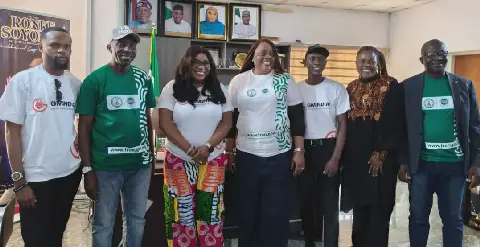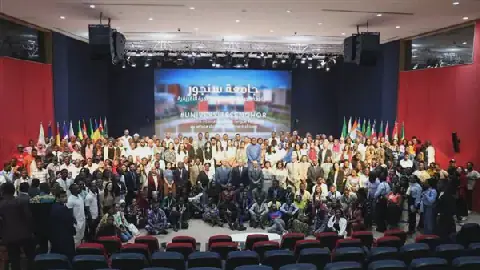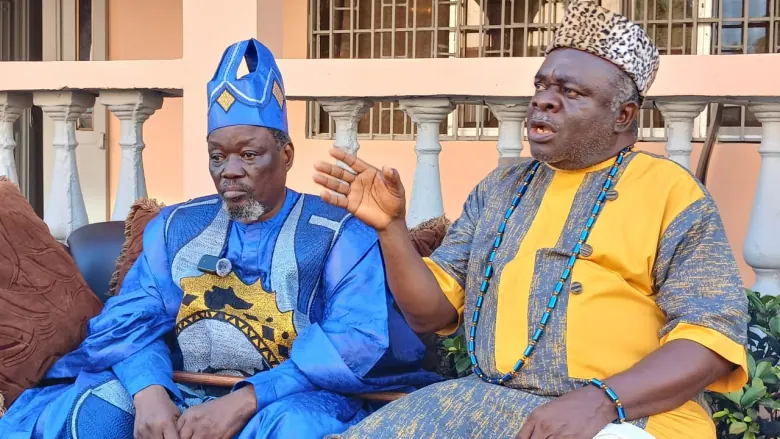
Congolese traditional spiritual leader Mfumu Nkusu Kiambu Nzalampanda Nangola is leading a 13-member delegation from the Democratic Republic of Congo on a two-week outreach mission in Liberia. The visit, invited by the Liberia Independent Elders Council for Peace and Reconciliation, aims to engage government institutions, youth organizations, academics, women's groups, and community stakeholders on issues affecting Africa's development. Nangola serves as the Spiritual Chief of the traditional African religious movement known as Vuvamu.
The Vuvamu movement, which translates to "returning to the roots" or "the original path," aims to preserve traditional African customs, ancestral worship, and indigenous knowledge. The movement is rooted in the spiritual legacy of Simon Kimbangu, who is revered by its followers as the ultimate prophet and spiritual savior of Africa. Kimbangu was arrested by Belgian colonial authorities in 1921 and later died in prison in 1951. Leadership of the core Kimbanguist movement passed directly to his immediate family before Nangola.
Speaking through his interpreter, Liongo Sanza, Nangola said the primary purpose of the visit is to rebuild the connection between Africans and their traditional heritage. The mission seeks to encourage Africans, particularly young people, to take responsibility for their future and rediscover their identity and purpose. Nangola emphasized that Africans must gain a deeper understanding of their history, culture, and place in the world to become active participants in Africa's transformation.
The Congolese leader's message centers on self-determination, self-sufficiency, and independence in key sectors needed for Africa's advancement. He urged young Africans to position themselves as leaders capable of managing the continent's future. Nangola said Africa stands at a critical moment in its history due to the continent's natural wealth and strategic importance. He warned that if young Africans do not take leadership roles, they risk being enslaved again.
Nangola also spoke about African identity, arguing that colonial-era boundaries should not prevent Africans from recognizing their common heritage and shared destiny. He noted that the Berlin Conference created artificial country boundaries, which should not define African identity. While promoting traditional African beliefs, Nangola said his message is not intended to exclude people based on religion and that the delegation is open to engagement with people of different faiths.
The delegation's visit received the backing of the Liberia Independent Elders Council for Peace and Reconciliation, which said it reviewed the group's objectives before extending an invitation to Liberia. Chairman Elder Samuel O. Philips said the council found that the delegation's message focuses on African unity, peace, and cooperation. Philips stressed that Africa's abundant natural resources make unity among Africans increasingly important.
The delegation will spend about two weeks meeting students, educators, women's groups, youth organizations, traditional leaders, and other stakeholders across Liberia as part of efforts to promote discussions on African culture, identity, education, and development. The visit aims to foster dialogue and peaceful coexistence, with Nangola's message resonating with the council's goals. The outreach mission is expected to conclude with a deeper understanding of African unity and cultural awareness.
Key points
- Mfumu Nkusu Nangola's visit to Liberia promotes African unity, cultural awareness, and self-reliance.
- The Vuvamu movement seeks to preserve traditional African customs, ancestral worship, and indigenous knowledge.
- Nangola's message emphasizes self-determination, self-sufficiency, and independence in key sectors for Africa's advancement.