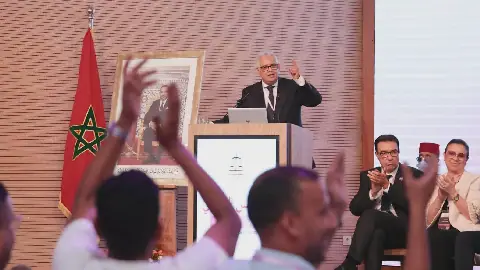
The Democratic Republic of Congo's Minister of Foreign Trade, Julien Paluku, has highlighted the significant benefits of the Pan-African Payment and Settlement System (PAPSS). In a statement, Paluku said that the PAPSS saves Africa around $5 billion in transaction fees every year. This is achieved by eliminating Western correspondent banks and multiple currency conversion fees. The PAPSS, developed by Afreximbank, the African Union (AU), and the Secretariat of the African Continental Free Trade Area (AfCFTA), has revolutionized trade in Africa.
The PAPSS enables cross-border transactions to be settled directly in local currencies, reducing transaction times and costs. Previously, intra-African trade was hindered by traditional circuits that involved converting national currencies into US dollars or euros. The funds would then be transferred through correspondent banks in the US or Europe, resulting in high exchange fees and delays of three to five days. The PAPSS has streamlined this process, reducing transaction times to less than 120 seconds.
The Democratic Republic of Congo officially joined the PAPSS on September 18, 2026, in Kenya. Paluku emphasized that the PAPSS has eliminated intermediaries, reducing settlement times and preserving foreign exchange resources for central banks. The system allows for instant and secure payments in local currencies across Africa. This has significant benefits for countries and their central banks, as they no longer need to exhaust their dollar or euro reserves to finance intra-African trade.
The PAPSS is a continental financial infrastructure designed to facilitate cross-border payments in local currencies. Developed by Afreximbank, the AU, and the AfCFTA Secretariat, the system aims to promote economic integration and reduce transaction costs. Paluku's statement highlights the positive impact of the PAPSS on Africa's economies, particularly in terms of cost savings and efficiency gains.
The traditional circuit for intra-African trade involved significant costs and delays. The use of correspondent banks in the US or Europe resulted in high exchange fees and dependence on foreign currency availability. The PAPSS has addressed these challenges, providing a more efficient and cost-effective solution for cross-border transactions. This has significant implications for Africa's economic development and integration.
The African Continental Free Trade Area (AfCFTA) has been instrumental in promoting economic integration and cooperation among African countries. The PAPSS is a key component of this initiative, enabling countries to trade more easily with each other. The Democratic Republic of Congo's membership in the PAPSS is a significant step towards deeper economic integration and cooperation with other African countries.
The implementation of the PAPSS is expected to have a positive impact on Africa's economic development. By reducing transaction costs and increasing efficiency, the PAPSS can promote economic growth and integration. The system has the potential to increase trade volumes and improve economic cooperation among African countries, ultimately contributing to the continent's economic development.
Key points
- The Pan-African Payment and Settlement System (PAPSS) saves Africa around $5 billion in transaction fees annually.
- The PAPSS enables cross-border transactions to be settled directly in local currencies, reducing transaction times and costs.
- The Democratic Republic of Congo officially joined the PAPSS on September 18, 2026, in Kenya.