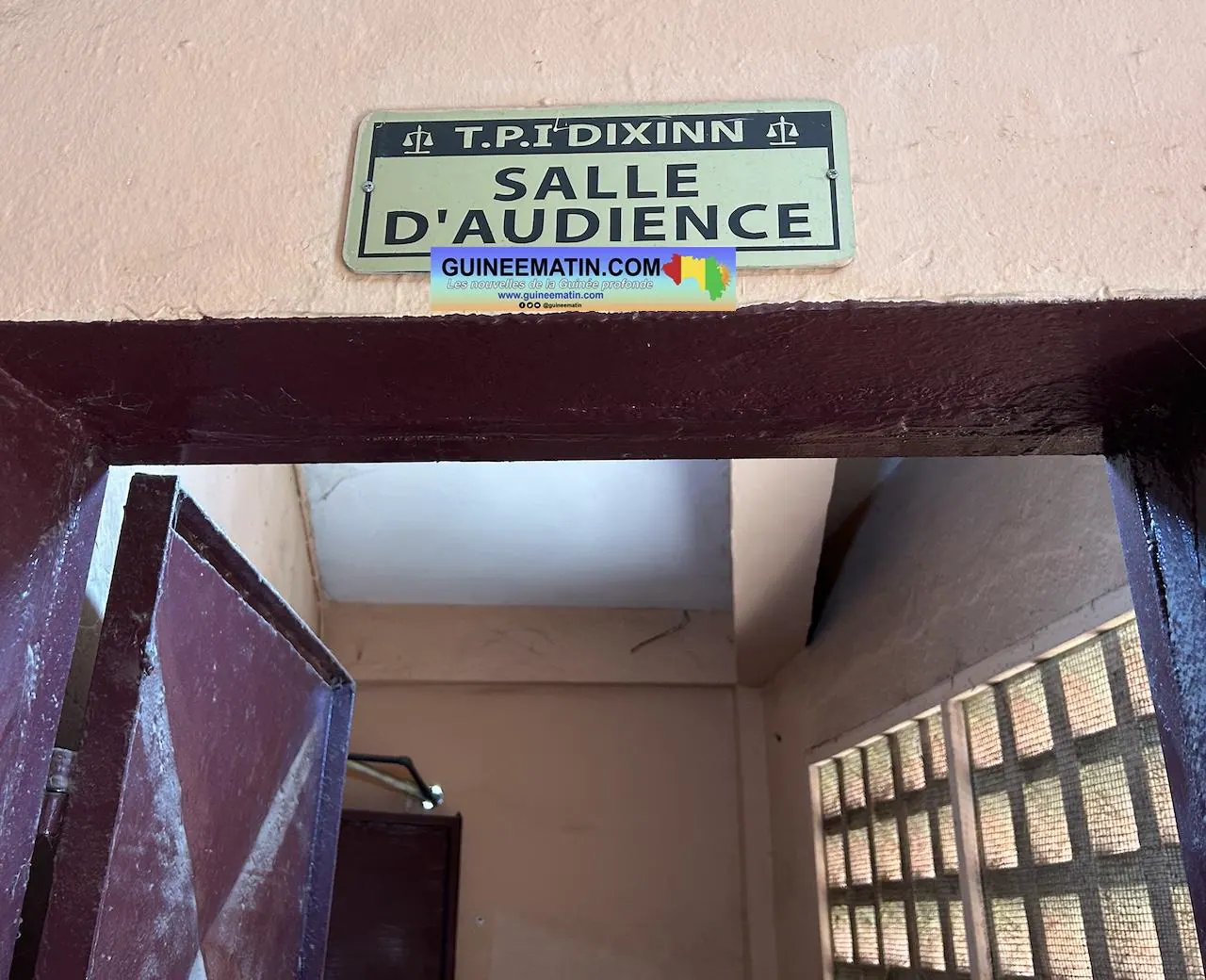
In a recent court ruling, Moussa Camara, a service provider in Conakry, Guinea, was found guilty of falsifying a diploma and sentenced to six months in prison, suspended. The case was brought to trial at the Tribunal de Première Instance de Dixinn on September 22, 2026, after Camara was accused of creating a fake diploma for Karamo Cissé. Cissé had initially traveled abroad for studies, only to discover errors in his diploma that needed correction.
According to court proceedings, Cissé tasked his younger brother with rectifying the issues with his diploma while he was still abroad. The brother then contacted Camara, who operated a service center in Conakry, to correct the document. Camara agreed to provide the service for a fee and subsequently altered the diploma before passing it back to Cissé's brother. However, the falsified document failed to pass verification by relevant institutions.
Upon discovering the diploma was fake, Cissé faced judicial complications and was suspended from his studies. Following his release, he decided to return to Guinea and file a complaint against those he holds responsible for the forgery. The complaint led to Camara's prosecution for forgery and use of a forged document. The case was closely followed, given the implications of such actions on individuals and institutions.
During the trial, the prosecution emphasized the gravity of the offense, requesting a sentence of two years in prison and a fine of 2 million Guinean francs against Camara. Conversely, the defendant pleaded for leniency from the court. Despite his appeal, the judge found him guilty of the charges and handed down a sentence of six months in prison, suspended.
The case highlights the risks associated with using forged documents and the legal consequences for those involved in such activities. It also underscores the vigilance of educational and judicial institutions in verifying the authenticity of documents presented to them. For Cissé, the ordeal has been a challenging experience, affecting his academic pursuits.
The verdict serves as a warning to others who might consider engaging in similar illicit activities. The court's decision aims to deter future instances of document forgery and reinforce the importance of authenticity in official documents. As for Camara, his suspended sentence offers him a chance to reflect on his actions without serving time in prison.
This incident demonstrates the collaborative efforts between complainants, law enforcement, and the judiciary in addressing and resolving cases of document forgery. It also highlights the critical role of vigilance and due diligence in preventing such fraudulent activities from causing harm to individuals and society at large.
Key points
- The court sentenced Moussa Camara to six months in prison, suspended, for falsifying a diploma.
- The case was prompted by a complaint from Karamo Cissé, whose diploma was falsified by Camara.
- The prosecution had requested a two-year prison sentence and a 2 million Guinean franc fine against Camara.