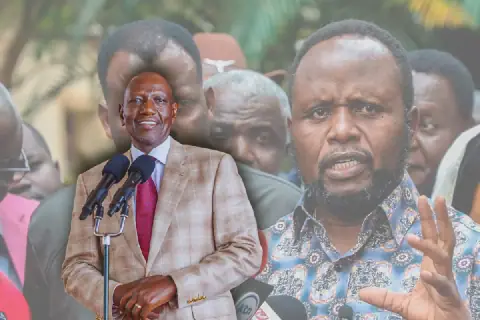
The Comorian delegation, led by Minister of Finance, Budget, and Banking Sector Moussa Abderemane, participated in the African Group I caucus of the International Monetary Fund (IMF) on October 13. The meeting, held on the sidelines of the IMF and World Bank annual meetings in Bangkok, Thailand, focused on the weight of public debt and ways to strengthen economic resilience in Africa. Public debt is a major concern for many African countries, limiting their budgetary maneuverability.
The caucus, co-chaired by Gambian Finance Minister Seedy Keita and IMF Managing Director Kristalina Georgieva, highlighted the pressures exerted by debt servicing on public finances. The meeting noted that several African economies face high debt levels, but Comoros' situation appears relatively less constrained. According to the Debt Directorate's annual report, Comoros' public debt stood at 27.6% of GDP at the end of 2025, significantly lower than the 70% threshold mentioned in the report.
In comparison, Egypt and Côte d'Ivoire's debt-to-GDP ratios are 79.7% and 56%, respectively. These disparities illustrate the diversity of budgetary situations on the continent and the need for tailored economic policies. The African governors and IMF emphasized the resilience of African economies in recent years, despite the impact of the Middle East conflict. African growth is expected to reach 4.5% in 2026, while inflation is forecast to decline to 9.3%.
However, the outlook remains exposed to several risks, including rising energy prices, high financing costs, and debt servicing burdens. The decline in external aid further reduces resources available for development spending. Participants warned against a potential tightening of international financial conditions and the consequences of an intense El Niño episode, which could exacerbate economic and climate vulnerabilities.
To address these challenges, African governors and the IMF stressed the importance of macroeconomic stability, fiscal sustainability, and good governance. They emphasized the need for African countries to mobilize domestic resources more effectively, through modern, efficient, and equitable tax systems. This would enable the broadening of the tax base, improvement of tax compliance, and better mobilization of public revenue.
A more rigorous management of expenditures is also necessary to protect vulnerable populations, meet social needs, and finance climate change adaptation investments. African officials highlighted the importance of maintaining international support, including accessible financing and technical assistance tailored to countries' needs. The structural transformation of African economies is another key priority, involving improving the business climate, developing financial markets, and accelerating job creation.
The full implementation of the African Continental Free Trade Area (AfCFTA) is seen as essential for expanding markets, consolidating regional value chains, and improving the continent's competitiveness. The Comorian delegation's participation in the IMF and World Bank meetings demonstrates the country's commitment to addressing economic challenges and promoting sustainable growth. The annual meetings provided a platform for African governors to engage with the IMF and discuss pressing economic issues.
Key points
- Comoros' public debt stands at 27.6% of GDP, relatively lower than other African countries.
- African growth is expected to reach 4.5% in 2026, despite risks.
- The implementation of the African Continental Free Trade Area (AfCFTA) is crucial for promoting economic growth and competitiveness.