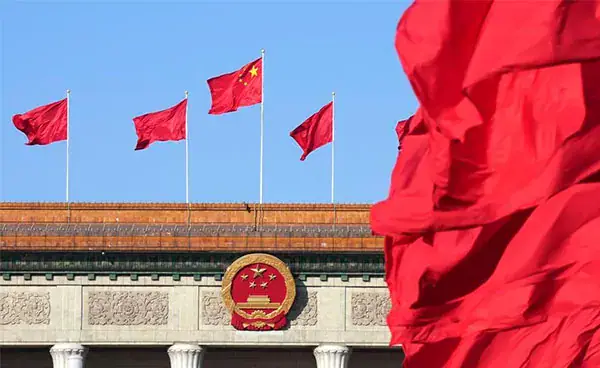
The Communist Party of China (CPC) is set to convene the fifth plenary session of its 20th Central Committee in Beijing, focusing on advancing full and rigorous Party self-governance. With over 100 million members, the CPC faces the task of identifying and addressing issues within its own ranks. Chinese President Xi Jinping has highlighted the importance of self-reform, stating that it is a great practice in the Party's self-reform in the new era.
The CPC's pursuit of self-reform is not new, with Xi Jinping emphasizing the Party's focus on self-strengthening and maintaining vigor and vitality. Since the reform and opening-up in 1978, China has undergone profound transformations, and the CPC views full and rigorous governance of the Party as an essential guarantee. The Party has made persistent efforts to improve conduct, build a clean government, and fight corruption.
Experts from various countries have shared their insights on the CPC's approach to self-reform. Haris Bilal Malik, a research fellow at the Institute of Strategic Studies Islamabad, noted that the CPC's approach treats self-reform as a continuing responsibility of the governing organization. Helga Zepp-LaRouche, founder and president of the Schiller Institute, linked the CPC's concept of self-reform to the Confucian tradition of lifelong learning and self-improvement.
The CPC has implemented various measures to ensure accountability and discipline within its ranks. The central Party leadership's eight-point decision on improving work conduct, adopted in December 2012, has targeted problems ranging from the misuse of public funds to misconduct outside working hours. Anti-corruption efforts have also continued, with China's top anti-graft authorities filing cases against 181 officials in 2025.
The CPC has institutionalized regular inspections to assess whether Party organizations are implementing central decisions and exercising power properly. Inspection teams identify problems and provide feedback, while the organizations concerned must take corrective action under follow-up supervision. In 2025, the fifth and sixth rounds of inspections under the 20th CPC Central Committee were carried out, completing full coverage of all provincial-level regions.
The emphasis on corrective action can also be seen in China's environmental governance. Central environmental inspections examine whether local Party committees and governments are fulfilling their environmental protection responsibilities. Following inspections, local authorities have taken corrective action, such as accelerating wastewater treatment projects and tightening controls on industrial discharges.
The effects of discipline and oversight extend beyond official conduct to the management of public resources and development policies. Efforts to tackle corruption and misconduct in school meal programs have resulted in 61,000 cases being handled in 2025, with 35,000 people receiving Party disciplinary or administrative sanctions. Experts believe that full and rigorous Party self-governance can strengthen fiscal discipline and improve the implementation of development projects.
Key points
- The Communist Party of China is prioritizing self-governance and discipline within its ranks to ensure effective governance and development.
- The Party's self-reform efforts are aimed at addressing issues within its own ranks and improving its governing capacity.
- Experts view the CPC's approach to self-reform as a unique and effective way to maintain the Party's vigor and vitality.