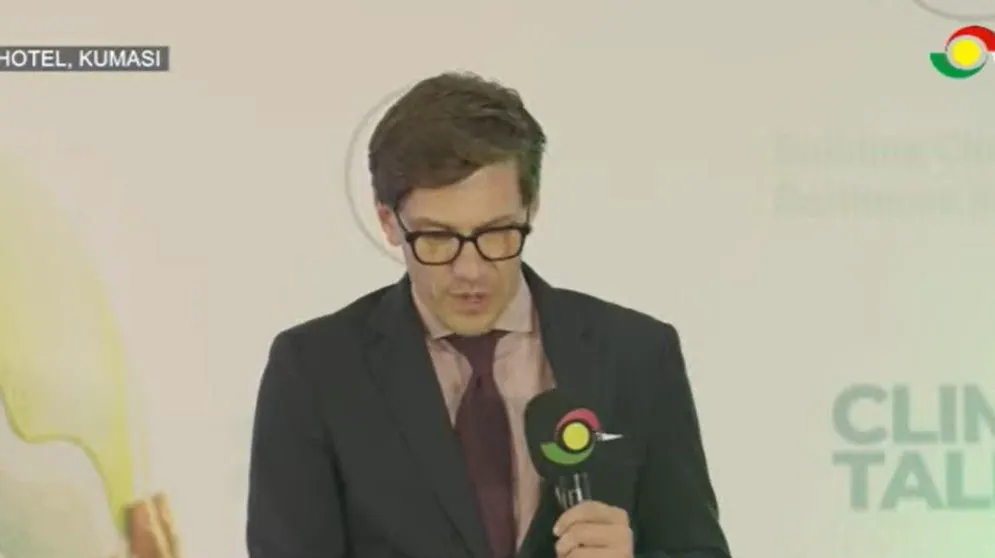
German Ambassador to Ghana, Frederik Landshöft, has called for a thoughtful approach to addressing illegal mining in Ghana, emphasizing the need to consider the livelihoods of people engaged in artisanal and small-scale mining. He made this statement at the Kumasi Edition of Climate Talks 2026, held on September 23, 2026. Landshöft noted that an estimated one million people are engaged in artisanal and small-scale mining, a figure that should prompt careful consideration of the social and economic realities behind the illegal mining debate.
Landshöft stressed that the discussion on galamsey should go beyond the excavators, polluted rivers, and degraded lands associated with illegal mining. He highlighted that behind the debate about illegal mining are people, young people looking for a job, families looking for income, communities looking for opportunities, and a better future. The Ambassador emphasized that limited economic opportunities can make illegal mining more attractive to people seeking alternative sources of livelihood.
The German Ambassador noted that it is essential to consider the livelihoods of people involved in artisanal mining while developing responses to the environmental damage caused by the practice. However, he also emphasized that this should not take away from the consequences of illegal mining, particularly the destruction of farmlands, forests, and water bodies. Landshöft stated that when mining destroys these natural resources, it damages precisely the resources on which communities depend.
Landshöft explained that the connection between illegal mining and climate resilience becomes particularly important in this context, as climate change is already putting pressure on livelihoods through unpredictable rainfall, floods, droughts, and declining agricultural productivity. He noted that the German Embassy’s role in fighting illegal mining is to provide a platform for stakeholders to exchange experiences and explore solutions.
The German Ambassador commended the government for taking important steps so far to address the challenges associated with illegal mining. He expressed hope that such engagement could help stakeholders identify ways of breaking the cycle in which limited economic opportunities influence people towards engaging in galamsey activities.
Landshöft's comments come as part of the Climate Talks 2026 initiative, which aims to bring together stakeholders to discuss pressing environmental issues in Ghana. The Kumasi Edition of the talks provided a platform for the Ambassador to share his perspectives on the complex issues surrounding illegal mining.
The issue of illegal mining remains a significant challenge in Ghana, with far-reaching environmental and social implications. As stakeholders continue to grapple with finding effective solutions, Landshöft's call for a nuanced approach that considers the livelihoods of those involved in artisanal mining is likely to remain a crucial aspect of the conversation.
Key points
- The German Ambassador to Ghana, Frederik Landshöft, has urged stakeholders to consider the livelihoods of people engaged in artisanal and small-scale mining when addressing illegal mining in Ghana.
- An estimated one million people are engaged in artisanal and small-scale mining in Ghana, a figure that should prompt careful consideration of the social and economic realities behind the illegal mining debate.
- The connection between illegal mining and climate resilience is particularly important, as climate change is already putting pressure on livelihoods through unpredictable rainfall, floods, droughts, and declining agricultural productivity.