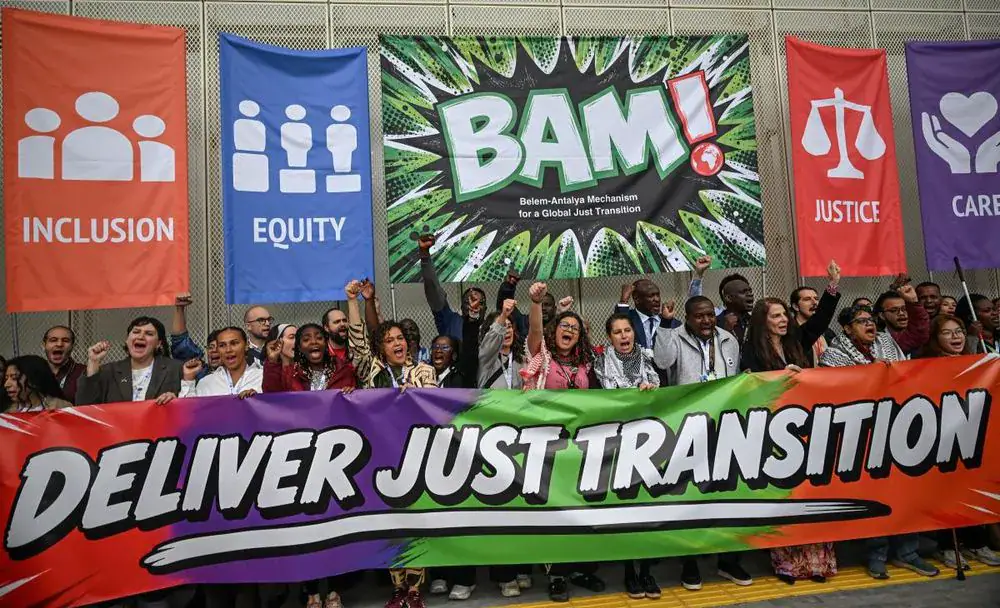
The COP31 summit, which opened in Antalya, Türkiye, on November 9, 2026, has been marred by controversy after Africa's core demand for a dedicated discussion on tripling adaptation finance was not included on the agenda. President Murat Kurum stated that the issue could still be raised under other agenda items, but this decision has been met with alarm from climate activists and African representatives. The summit's theme, "From dialogue to consensus, from consensus to action," seems to be at odds with the exclusion of this critical issue.
The United Nations Climate Change Executive Secretary, Simon Stiell, urged delegates to move beyond setting targets and "supercharge solutions" that make a meaningful difference on the ground. However, for Africa, which bears a disproportionate share of the damage caused by global warming while contributing less than 4% of global greenhouse gas emissions, this is more than a procedural tussle. It is a sign of disrespect and disregard for Africa's legitimate call for climate justice. The financing gap for adaptation is massive, with the United Nations Environment Programme estimating that developing countries will need close to $305 billion a year by 2035.
The problem lies not in the absence of commitments but in implementation. Global promises of climate solidarity are meaningless without solid, sustainable financial commitments. Article 9.1 of the Paris Agreement obliges developed countries to provide financial resources to help developing countries. However, climate funding is often problematic, with Greenpeace Africa estimating that almost 70% of climate finance to Africa is debt-financed. This has significant implications for African economies and communities, which are already struggling with the impacts of climate change.
The World Meteorological Organisation's latest State of the Climate Update highlights the urgency of adequate climate finance for Africa, warning of continuing extreme temperatures and increasingly disruptive weather into 2027. Heatwaves, droughts, floods, and food insecurity are already placing enormous strain on African economies and communities, destroying livelihoods and food production, and driving waves of internal displacement. Loss and damage finance is in short supply, with developing countries asking for $2.8 billion but receiving only $342 million in the first funding round.
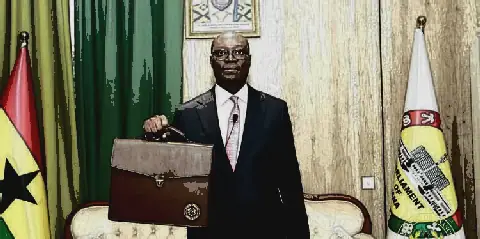
Forestry, Fisheries and the Environment Minister David Maynier has called for a benchmark and monitoring process to triple adaptation finance, replenish the Green Climate Fund, and close gaps in loss-and-damage finance. The Fund, whose funding needs the COP has not assessed since 2013, needs urgent replenishment. Although the issue of tripling adaptation finance is not being formally tabled at COP31, the African Group must ensure it emerges as a critical talking point. The group must demand that the climate-finance work programme explicitly sets out how the pledged $300 billion will be achieved and implemented.
The debate must extend beyond how much money Africa receives. It must address who benefits economically from the global transition. Africa must move beyond being a mere supplier of the minerals and raw materials required for renewable energy and green technologies. This arrangement reproduces the patterns of extraction, dependency, and unequal trade that occurred under colonialism. African Group of Negotiators chair Dr. Antwi-Boasiako Amoah has articulated this challenge clearly: "The transition must create value in Africa, build industries in Africa, strengthen skills in Africa, and create jobs for Africans."
African countries must approach the negotiations with collective resolve. While economies, energy systems, and development priorities are not uniform, they share a common interest in challenging an international system that continues to distribute the costs and benefits of climate change unequally. Fair and sustainable climate finance, compensation for loss and damage, and technology transfer are the bare minimum that Africa must insist on. It is untenable for the continent to carry the financial burden of a crisis which is largely fueled by other nations' industrialization. The road from Antalya to Addis Ababa needs more than declarations of solidarity; it needs tangible milestones.
Key points
- Africa needs $305 billion a year by 2035 to meet its adaptation needs.
- Almost 70% of climate finance to Africa is debt-financed.
- The African Group must demand that the climate-finance work programme explicitly sets out how the pledged $300 billion will be achieved and implemented.
Reporting sources
- Climate justice remains a distant promise for Africa · Pretoria News