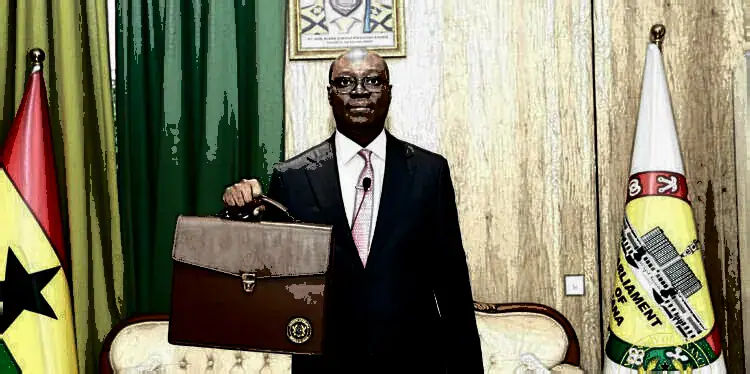
The Minister of Finance, Cassiel Ato Forson, presented the 2027 Budget Statement and Economic Policy of the John Dramani Mahama-led administration to Parliament on November 12, 2026. This presentation outlines the administration's plans for public spending in 2027 and details the New Economy programme. The New Economy is the Government of Ghana's four-year programme aimed at transforming the structure of the Ghanaian economy.
Earlier in July 2026, Ato Forson presented the mid-year budget review, which highlighted key economic indicators such as inflation, gross international reserves, and exchange rate performance for the first half of the 2026 fiscal year. The review provided an update on the country's economic performance and set the stage for the 2027 budget presentation. FactSpace West Africa conducted a live fact-check of the mid-year budget review, verifying claims made by the minister.
One of the claims made by the minister was that by the end of 2022, inflation rose to 54.1%, while the primary balance stood at a deficit of 4.3% of GDP, and the Gross International Reserves had fallen to less than 3 weeks of import cover. According to data from the Ghana Statistical Service (GSS), the year-on-year inflation rate for December 2022 was indeed 54.1%. However, the Bank of Ghana's Monetary Policy Committee report released in January 2023 stated that the stock of Gross International Reserves stood at US$6.2 billion, equivalent to 2.7 months of import cover, not less than 3 weeks.
The minister also claimed that by the end of 2025, inflation had fallen from 23.8% to 5.4%. According to data from the GSS, the inflation rate at the end of December 2025 was indeed 5.4%, falling from 23.8% by the end of December 2024. This claim was verified as true. Additionally, the minister claimed that by the end of 2025, public debt had fallen to 44.7% of GDP, and gross international reserves had risen to 5.7 months of import cover, which was also verified as true.
The minister highlighted the importance of the agriculture sector, stating that it accounts for about 20% of Ghana's economy, almost 40% of employment, and nearly 25% of export earnings. According to the GSS Statistical Newsletter for the second quarter of 2026, agriculture accounted for 21% of Real GDP. The Services sector was the largest sector of the Ghanaian economy in Q2 2026, with a share of 45.9 percent of GDP at basic prices.
The New Economy programme is a key component of the government's economic policy, aiming to transform the structure of the Ghanaian economy over four years. The programme's details were not fully disclosed in the budget presentation, but it is expected to have a significant impact on the country's economic development. The government has been working to improve economic indicators, including inflation and public debt.
The 2027 budget presentation is a critical step in the government's efforts to manage the economy and improve the living standards of Ghanaians. The presentation outlines the administration's plans for public spending and economic development, and it will be closely monitored by stakeholders, including parliamentarians, economists, and citizens. The government's ability to implement its economic policies will be crucial in achieving its goals.
Key points
- The minister's claims about inflation, public debt, and gross international reserves were verified using data from the Ghana Statistical Service and the Bank of Ghana.
Reporting sources
- Live fact-checking of the 2027 budget presentation by the Minister of Finance · FactSpace West Africa