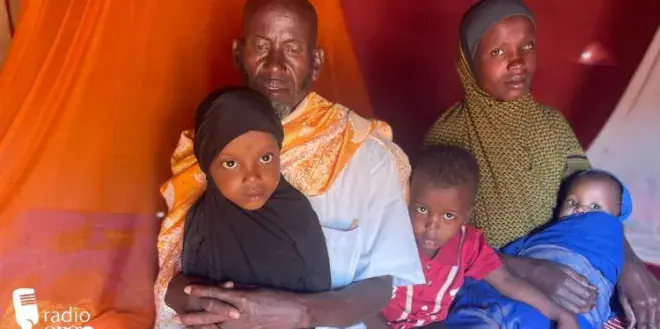
Families displaced by fighting in Hiran region are facing severe humanitarian challenges, including food shortages, homelessness, and constant uncertainty. Many have fled to Coomaad, near Mataban, with few belongings and limited means of supporting themselves. The displaced individuals, including women and children, have been forced to move multiple times in search of safety, leaving behind their livelihoods and possessions.
Nuriya Mohamed Bare, a 51-year-old mother of eight, is one of the displaced individuals who reached Coomaad on October 10. She had been repeatedly displaced by conflict over the past year and two months, losing almost everything. Her family had to flee several locations, including Moqokori, Bulo Burde, Beledweyne, Teedaan, and Hees, due to Al-Shabaab's presence. Nuriya's situation is dire, with no stable income, and her children's education has been interrupted.
The displaced families in Coomaad face significant challenges, including inadequate shelter, limited access to food and clean water, and exposure to harsh weather conditions. They receive some assistance from local volunteers, but the supplies are irregular and insufficient. Nuriya and her family share a few donated mats with other displaced families and sleep under acacia trees, exposed to rain and cold weather.
Another displaced mother, Hodan Mohamud Ahmed, arrived in Coomaad with her three children on October 15. She has no relatives in the area to support them and relies on occasional food assistance from soldiers and local residents. Hodan's family had to abandon their 26 goats, which were their primary source of livelihood. She expressed concerns about the lack of access to basic services, including education and healthcare, in Coomaad.
The Coomaad administration is struggling to provide assistance to the large numbers of displaced people arriving in the area. Deputy chairman Abdi Abdullahi Mohamud stated that local authorities and residents are providing limited food and water, but they lack the resources to meet the growing needs. The area has not received assistance from government agencies or humanitarian organizations.
The security situation in Hiran remains volatile, with Al-Shabaab making territorial gains and government forces continuing their operations against the group. The conflict has disrupted phone services, damaged telecommunications infrastructure, and reduced movement and trade in the area. Local businesses have suffered, and many livestock keepers have moved elsewhere to protect their animals from looting.
The humanitarian crisis in Hiran region highlights the urgent need for assistance to displaced families. The local administration and residents are calling for humanitarian aid to address the growing needs of the displaced population. Key challenges include providing adequate shelter, food, and clean water, as well as restoring access to basic services such as education and healthcare.
Key points
- Displaced families in Hiran region face severe humanitarian challenges, including food shortages, homelessness, and uncertainty.
- Local administration and residents are providing limited assistance, but more support is needed to address the growing needs of the displaced population.
- The security situation in Hiran remains volatile, with Al-Shabaab making territorial gains and government forces continuing their operations against the group.