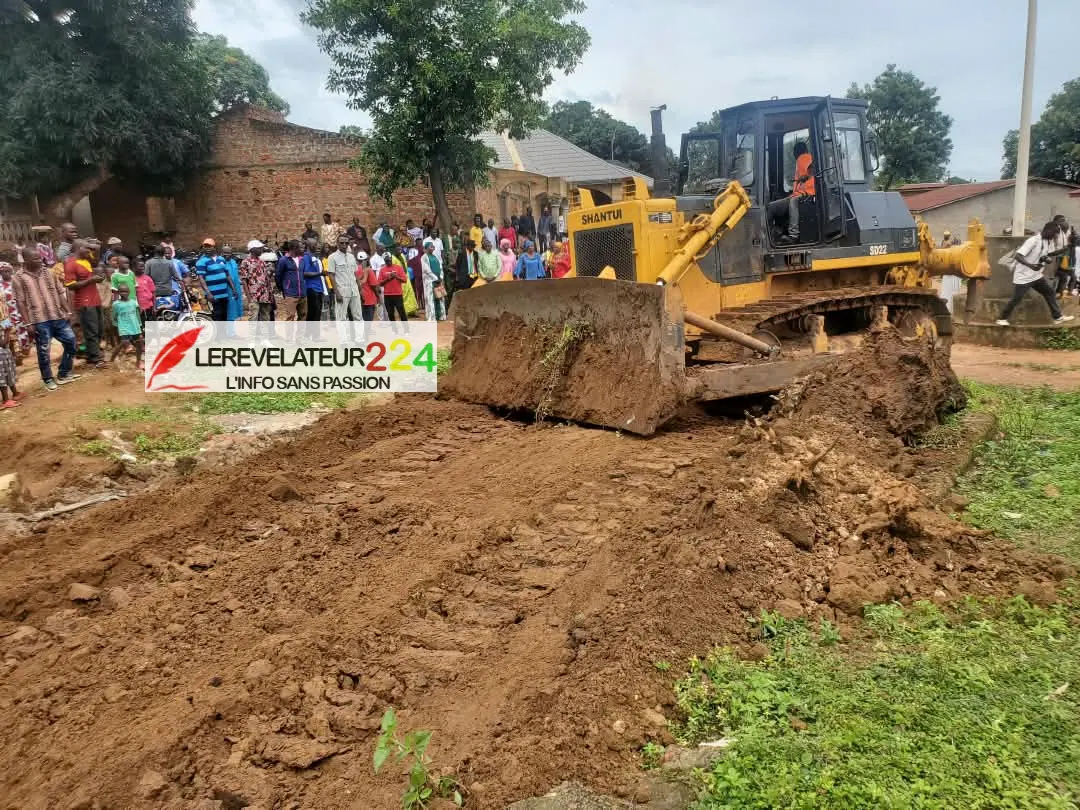
The Kénendé quarter in Kindia, Guinea, has become a model for participatory development, with citizens and local authorities collaborating to address infrastructure challenges. The quarter's residents, led by their neighborhood council, have taken the initiative to rehabilitate nearly two kilometers of roads, improving access to various sectors of the quarter. This effort aims to alleviate the difficulties faced by inhabitants, particularly with regards to mobility, which has been exacerbated by the quarter's distance from the city center.
The neighborhood council president stated that the road rehabilitation project is part of a broader plan to address the quarter's infrastructure needs. The quarter's distance from the main market in Kindia and the difficulties faced by taxi-moto drivers have significantly impacted the daily lives of residents. The council has identified approximately 2 kilometers of roads for rehabilitation, with the possibility of extending the project to other sectors of the quarter.
During a visit by local authorities to the road construction sites, the residents of Kénendé took the opportunity to raise another long-standing concern: the revival of their old market. The market, which has been neglected, has significant economic potential and could benefit the local population. The quarter's leader urged the authorities to support the rehabilitation and valorization of the old market.
The local authorities have expressed their willingness to support the project, which aligns with their vision of decentralizing development and reducing congestion in the city center. Elhadj Aboubacar Molota Camara, representing the Kindia commune authorities, praised the dynamism of Kénendé and encouraged the structuring of the project. He emphasized that the development of secondary markets would help reduce pressure on the main market, improve sanitation, and better regulate commercial activities.
The commune authorities have invited the neighborhood council to integrate the old market project into the local development plan and provide technical elements to secure potential partner support. This synergy between citizen-led initiatives and institutional support could lead to lasting transformations in the Kénendé quarter. The development of the quarter's agricultural potential, particularly its market gardening production, is also being encouraged.
The collaborative approach between citizens and authorities in Kénendé has been welcomed by both parties, who recognize the importance of working together to address local challenges. The quarter's residents have demonstrated their commitment to improving their living conditions, and the authorities have pledged to support their efforts. This partnership could serve as a model for other communities in Guinea.
The development projects in Kénendé are expected to have a positive impact on the daily lives of residents, improving access to basic services and enhancing the quarter's economic potential. The revival of the old market and the rehabilitation of roads are seen as key steps towards achieving these goals. With continued collaboration and support, the Kénendé quarter is poised to become a thriving example of participatory development in Guinea.
Key points
- The Kénendé quarter in Kindia, Guinea, is a model for participatory development, with citizens and authorities working together to improve infrastructure and address local challenges.