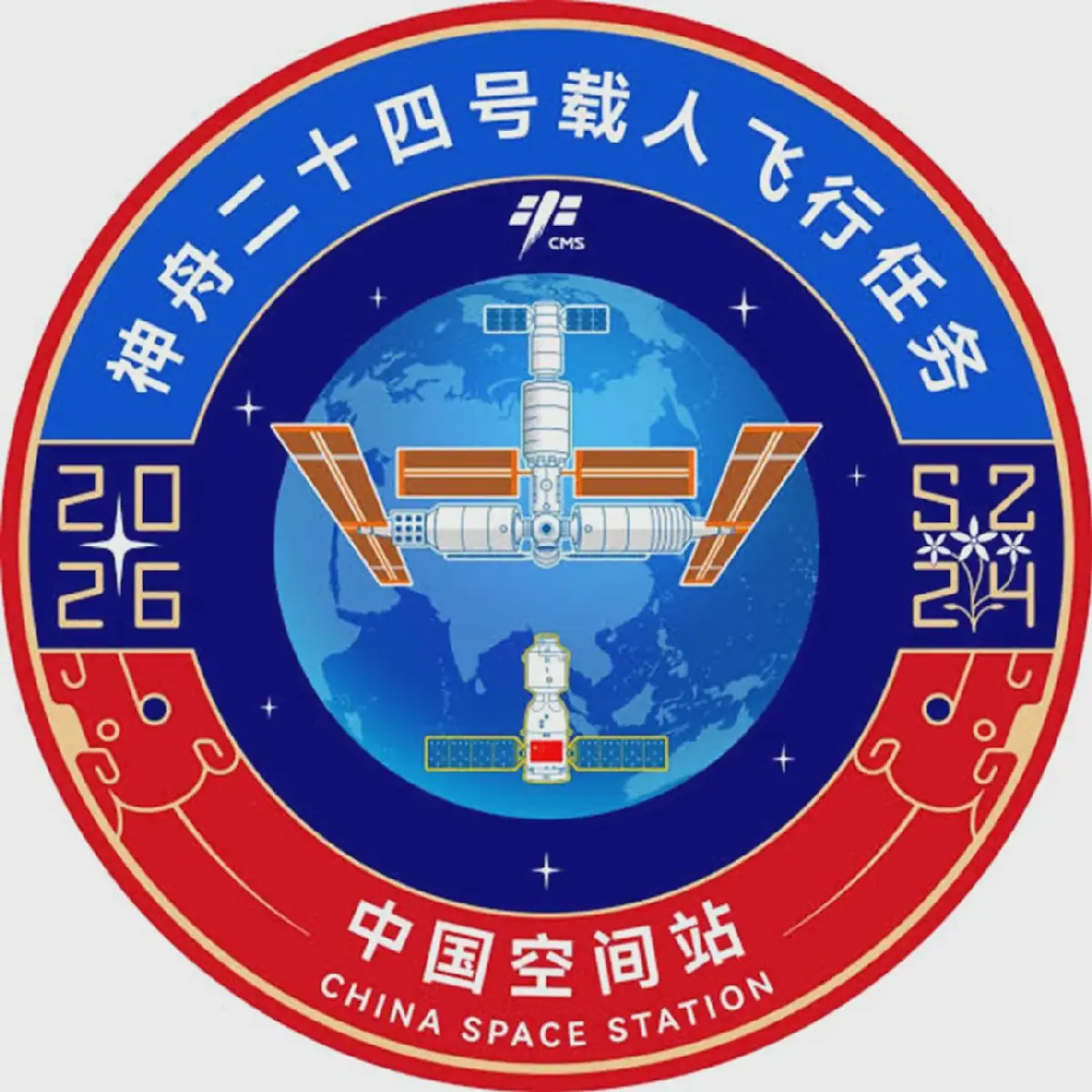
The China space station is set to take a significant step in international cooperation by hosting its first foreign astronaut, a Pakistani, as part of the Shenzhou 24 mission. This development marks a new era in China's space exploration program, which is becoming increasingly collaborative. The Pakistani astronaut, designated as a payload specialist, will conduct a scientific research program onboard the space station for about a week.
The inclusion of the Pakistani astronaut is a result of an agreement signed between China and Pakistan in February 2025, which involves the selection, training, and participation of Pakistani astronauts in China's manned spaceflight missions. This cooperation extends beyond just personnel exchange, as China and Pakistan have been collaborating in space exploration and satellite engineering. The Shenzhou 24 mission will also feature an official insignia with a jasmine flower motif, symbolizing the national flower of Pakistan.
In addition to the international cooperation, China is also pushing the boundaries of human endurance in space with its next mission. A Chinese astronaut from the Shenzhou 23 crew is expected to extend their orbital stay to one year, providing valuable insights into the effects of long-term space exposure on the human body. This mission will help scientists understand the physiological changes that occur in space and improve medical support for future astronauts.
The one-year orbital mission is crucial for preparing future human spaceflight missions to the Moon, Mars, and other distant destinations. According to Pang Zhihao, a leading expert in space exploration, a prolonged stay in space will allow researchers to study the human body's adaptation to microgravity and its effects on physical health. The findings from this mission will contribute to the development of more effective medical care and technologies for astronauts.
The China space station's increasing international involvement is evident in its expanding partnerships. The station is expected to host a systematic research program focused on studying the human body in space, marking a significant step in China's space research capabilities. This program will likely involve collaboration with international researchers and organizations, further solidifying China's position as a major player in space exploration.
The upcoming missions demonstrate China's growing ambitions in space exploration and its commitment to international cooperation. The Shenzhou 24 mission, featuring the first foreign astronaut, and the extended orbital stay of the Shenzhou 23 crew, showcase China's progress in developing its space program. These advancements have significant implications for the future of human spaceflight and space research.
As China continues to push the boundaries of space exploration, it is also emphasizing the importance of international cooperation. The country's space program is becoming increasingly collaborative, with partnerships extending beyond just bilateral agreements to include multilateral research initiatives. This shift towards cooperation is expected to drive innovation and advancement in space research, ultimately benefiting the global scientific community.
Key points
- China space station to host first foreign astronaut from Pakistan as part of Shenzhou 24 mission
- Chinese astronaut to extend orbital stay to one year, providing insights into long-term space exposure
- Missions demonstrate China's growing ambitions in space exploration and commitment to international cooperation