Alumni associations across Nigeria are taking steps to address the chronic funding gaps and restore the quality of secondary education in the country. Years of neglect and ageing infrastructure have taken a toll on the nation's secondary schools. In response, former students are playing a central role in rebuilding the institutions that shaped them. This movement is being led by various alumni associations, which are investing in their alma maters to improve learning outcomes and infrastructure.
The Old Boys Association of Igbobi College, Lagos, has unveiled a N10bn endowment fund to support the school's long-term growth. The association's first vice-president, Femi Soremekun, stated that rescuing Nigeria's struggling secondary schools requires more than government action. The focus is on continuously improving standards, which involves investing in equipping the school properly. This effort has yielded results, with students achieving top scores in their WAEC exams.
The Igbobi College Old Boys Association has built an information and communications technology centre with modern research equipment to improve learning outcomes. The association also offers scholarships to indigent pupils and rewards academic excellence. Similarly, St Gregory's College alumni have launched an endowment and perpetual fund to modernise their school for coming generations. The capital will be used to upgrade existing infrastructure, revive sports facilities, and introduce laboratories for artificial intelligence, coding, and robotics.
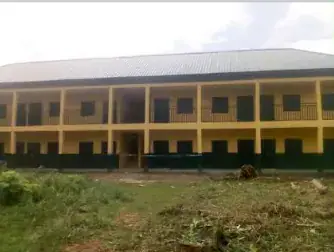
In Edo State, former pupils of Igbanke Grammar School in Orhionmwon Local Government Area committed about N25m to renovate dilapidated buildings. The association president, Jacob Erhabor, said they spent N15m to rehabilitate the administrative block and N9.9m to renovate classrooms and the chemistry laboratory. The drive to give back to the school that shaped their careers inspired these projects. This effort is an example of the grassroots interventions happening across regions to address the systemic decay in Nigerian secondary schools.
In the southeast, Government College, Umuahia, founded in 1929, faced severe infrastructural decay and falling enrolment. However, the school's alumni established the Fisher Educational Development Trust to manage the school's revival. Following their intervention, the Abia State institution now ranks among the best-equipped schools in the region. At Ekiti Parapo College, the 1985 alumni set returned with tangible upgrades to improve learning conditions, including a large generator to power the school borehole and office tables and an executive chair for the principal.
Despite these efforts, infrastructural decay in Nigerian secondary schools remains a systemic problem that undermines safety and learning quality. According to a 2024 UNICEF report, at least 10.2 million primary-school-age children and 8.1 million junior-secondary-school-age children in Nigeria were out of school. The agency also reported that 74% of children aged seven to 14 lacked basic reading and mathematics skills. Addressing these challenges requires sustained efforts to improve infrastructure, train teachers, and provide learning resources.
Poor public funding sits at the root of the crisis, prompting former students to step in with private capital. Despite UNESCO's recommendation that developing nations allocate 10% to 15% of their budgets to education, Nigeria's spending has lagged. Allocations stood at 5.3% in 2023, 7.9% in 2024, and 7.3% in 2025. In 2026, the federal government budgeted N3.52 trillion for education, representing just 6.1% of total expenditure. Experts have welcomed the alumni interventions as a positive sign, but emphasised that more needs to be done to address the systemic challenges facing Nigeria's education sector.
Key points
- Chronic budget shortfalls have led to a significant decline in the quality of education in Nigerian secondary schools.
- Alumni associations are stepping forward to bridge the funding gap and restore the quality of secondary education.
- Systemic decay and learning deficits in Nigerian secondary schools remain a major challenge, with many schools lacking basic infrastructure and resources.