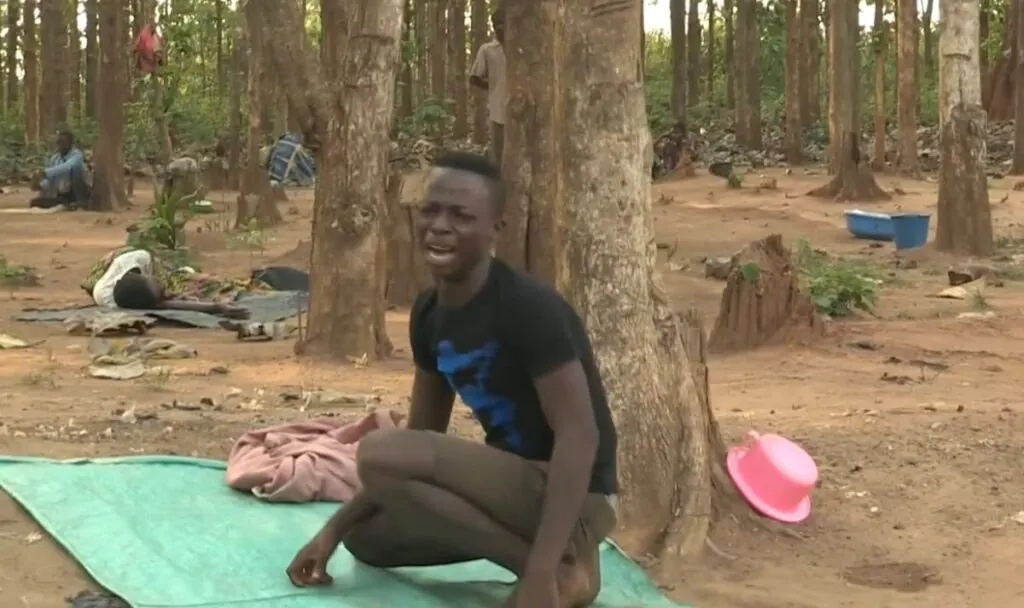
Hafiz Abdallah, a 16-year-old from Paga, a border town in the Upper East Region of Ghana, has spent half his life inside a prayer camp called Nyinbonya. He arrived at age eight, and despite his mother's efforts to seek help, he has never received a clinical diagnosis for his condition. According to his mother, Hafiz became difficult to manage after his twin brother died, exhibiting erratic behavior such as destroying property and attacking her.
Hafiz's case is not an isolated incident. Many Ghanaian families face similar challenges in accessing affordable and accessible psychiatric care. The country's mental health law, passed in 2012, establishes the Mental Health Authority and sets out legal protections for people with mental health conditions, including children. However, the law's implementation is hindered by a shortage of psychiatrists, with most of the 80 psychiatrists in Ghana based in Accra.
The shortage of psychiatric care leads many families to seek help from prayer camps and traditional healers. Nyinbonya, the prayer camp where Hafiz is being held, has a caregiver who claims that the facility can accommodate close to 200 patients. However, reporters who visited the camp described a lack of proper care and conditions, with patients appearing malnourished and staff using physical punishment to quieten them.
Dr. Josephine Stiles Darko, deputy head of communications at Ghana's Mental Health Authority, acknowledged that the country's mental health system is not functioning as intended. She noted that the Authority is working to train district-level health personnel to identify and treat some mental health conditions at the primary care level. However, it remains unclear whether Paga or the Upper East Region is among the areas targeted for this initiative.
Clinical psychologist Emmanuel Asampong suggests that Ghana's cultural understanding of illness, which often attributes unexplained behavior to spiritual causes, contributes to the reliance on prayer camps. He proposes a longer-term approach that integrates traditional birth attendants into the formal health system, training them to recognize danger signs and refer patients rather than trying to remove them from the health landscape altogether.
Dr. Abigail Harding, a psychiatrist at Korle Bu Teaching Hospital, stresses that the solution is not to dismiss faith itself but to ensure that recovery does not come at the cost of an individual's human rights or dignity. She notes that practices such as chaining, forced fasting, and isolation risk retraumatizing patients and delaying effective treatment. Harding emphasizes that mental illness is a medical condition that requires humane and evidence-based treatment.
The Mental Health Authority, working with the Ghana Health Service and the World Health Organisation, is taking steps to address the mental health gap in Ghana. The Authority will soon run specialist outreach clinics that bring psychiatric professionals into selected districts and hand patients over to local health workers for continued follow-up.
Key points
- Ghana's mental health law, passed in 2012, establishes the Mental Health Authority and sets out legal protections for people with mental health conditions, including children.