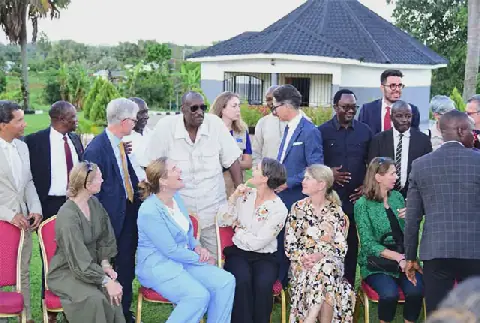
The Centre for Social Mobilisation and Sustainable Development (CENSODEV) has launched the Northern Ghana Women Anti-Corruption and Leadership Initiative (NG-WALI) to equip women with knowledge, skills and confidence to identify, resist and report corrupt practices. The initiative was launched at Paga in the Kassena Nankana West District. NG-WALI aims to position women as leaders and agents of change in promoting accountability and integrity in their communities.
The project will build a network of women to champion accountability within their communities, local government structures, and other spheres of influence. This will be achieved by drawing on existing Social Audit Committees established by CENSODEV in the Kassena Nankana Municipality and Kassena-Nankana West District. The initiative is a matching-fund project, with support from WACSI and WILDE-GANZEN.
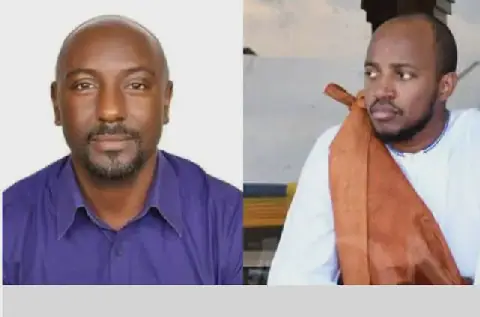
Speaking at the launch, Mr Braimah Sanjage, the Executive Director of CENSODEV, said corruption involved more than just the misappropriation of money. He stated that it also involved stolen opportunities, denied services and the betrayal of public trust. Women, who often manage households and small businesses, bear significant consequences of corruption, making their empowerment critical to efforts to promote accountability.
Mr Sanjage said the NG-WALI project represented the next step in CENSODEV’s efforts to empower women and girls. This includes promoting their participation in local governance, supporting women entrepreneurs and mobilising women to participate in electoral processes in five regions. CENSODEV’s broader work focuses on participatory local governance and social accountability, health, water, sanitation and hygiene, quality education, and livelihood empowerment.
Mr Stephen Aeke Akurugo, Kassena-Nankana West District Chief Executive (DCE), described corruption as a challenge that affects everyday life. He cited examples such as illegal levies imposed on traders, demands for bribes in accessing healthcare and sexual exploitation linked to access to services. The DCE said women were disproportionately affected because they often manage households, care for families and run small-scale enterprises.
The DCE pledged the Assembly’s support for the initiative, saying good governance was a shared responsibility between the state and citizens. He reiterated the Assembly’s commitment to transparency in its operations. Mr Akurugo urged women participating in the initiative to be vigilant and report corrupt practices through available legal and institutional channels.
The initiative aims to empower women to understand their rights and speak out against corruption, which could have wider benefits for their households and communities. Mr Sanjage urged women participating in the initiative to learn, speak up, and take leadership roles in demanding accountability. He also called on traditional authorities, the District Assembly, civil society organisations, and the media to collaborate with CENSODEV to protect and amplify women’s voices in the fight against corruption.
Key points
- CENSODEV launches NG-WALI to empower women against corruption in Northern Ghana
- Initiative aims to equip women with knowledge and skills to identify and report corrupt practices
- Project supported by WACSI and WILDE-GANZEN as a matching-fund initiative