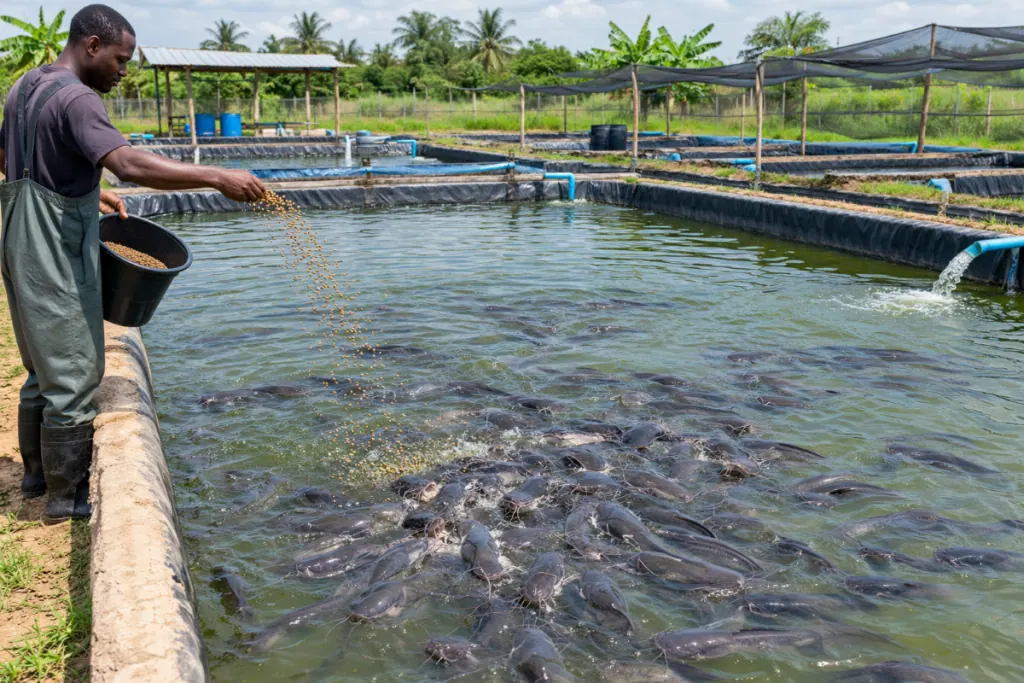
Catfish farming is a lucrative agribusiness venture in Nigeria, with fresh and smoked catfish in high demand across commercial markets. However, many beginners record massive losses within their first eight weeks of operation due to poor water chemistry and uncontrolled infectious disease. According to the Nigerian Tribune, catfish spend their entire life cycle feeding, breathing, and excreting in the same water volume, making water quality crucial to their survival. To build a successful enterprise, understanding pond hygiene is essential.
The foundation of a profitable fish enterprise is access to an abundant, clean water supply. Deep boreholes and clean mountain springs are ideal for aquaculture as they are isolated from industrial runoff, agricultural pesticides, and external parasites. Using untreated surface water can introduce pathogenic strains of Aeromonas and Pseudomonas into closed ponds, drastically lowering fingerling survival rates. Esther Amao, in her article published in the Nigerian Tribune, advises against pumping fresh municipal tap water directly into catfish ponds without treatment, as it contains concentrated chlorine and chloramines that can severely burn the sensitive gill tissues of catfish.
Regulating pond acidity and alkalinity levels is crucial for the biological comfort and biochemical survival of catfish stock. The optimal pH range for commercial African catfish and channel catfish is between 6.5 and 8.5. When pond water turns highly acidic or alkaline, the fish suffer chronic chemical irritation, stop eating feeds, and their normal metabolic growth grinds to a halt. Testing pond pH every three to four days using a reliable digital handheld pH pen or liquid test reagents is essential. Applying measured agricultural limestone can help regulate pH levels.
Monitoring dissolved oxygen and water temperatures is vital for catfish survival. Catfish require adequate dissolved oxygen in the water to convert consumed feeds into muscular body weight. Maintaining dissolved oxygen levels above 4.0 milligrams per litre fosters active feeding and rapid digestion. Installing mechanical paddlewheel aerators or ensuring the inflow pipe splashes vigorously into the pond can help mix atmospheric air into the water. Water temperature directly governs catfish digestion rates and immune functions, with optimal temperatures between 26°C and 30°C.
Neutralising toxic ammonia and managing feed waste is critical in closed aquaculture systems. Fish excrete toxic metabolic ammonia directly through their gills, and additional ammonia leaches from uneaten feed pellets decaying at the bottom of the pond. Overfeeding can lead to excess ammonia, which destroys gill lamellae, suppresses immune defenses, and suffocates the stock. Adopting a disciplined water-exchange routine can help physically remove accumulating waste metabolites.
Implementing strict biosecurity and routine sorting can help stop disease outbreaks. Fish diseases do not emerge out of thin air; they are often a result of poor water quality and contaminated feed. Routine sorting helps identify and isolate diseased fish, preventing the spread of disease throughout the stock. By following these essential guidelines, catfish farmers can protect their investment and build a successful enterprise.
By understanding and implementing these guidelines, catfish farmers can reduce the risk of disease and protect their investment. The five essential steps to prevent disease and protect investment are: securing an uncontaminated and reliable water source, regulating pond acidity and alkalinity levels, monitoring dissolved oxygen and water temperatures, neutralising toxic ammonia and managing feed waste, and implementing strict biosecurity and routine sorting.
Key points
- Poor water chemistry and uncontrolled infectious disease are major causes of losses in catfish farming.
- Maintaining optimal water quality and implementing strict biosecurity measures can help prevent disease outbreaks.
- Regular monitoring of pond water parameters, such as pH, dissolved oxygen, and water temperature, is crucial for catfish survival.