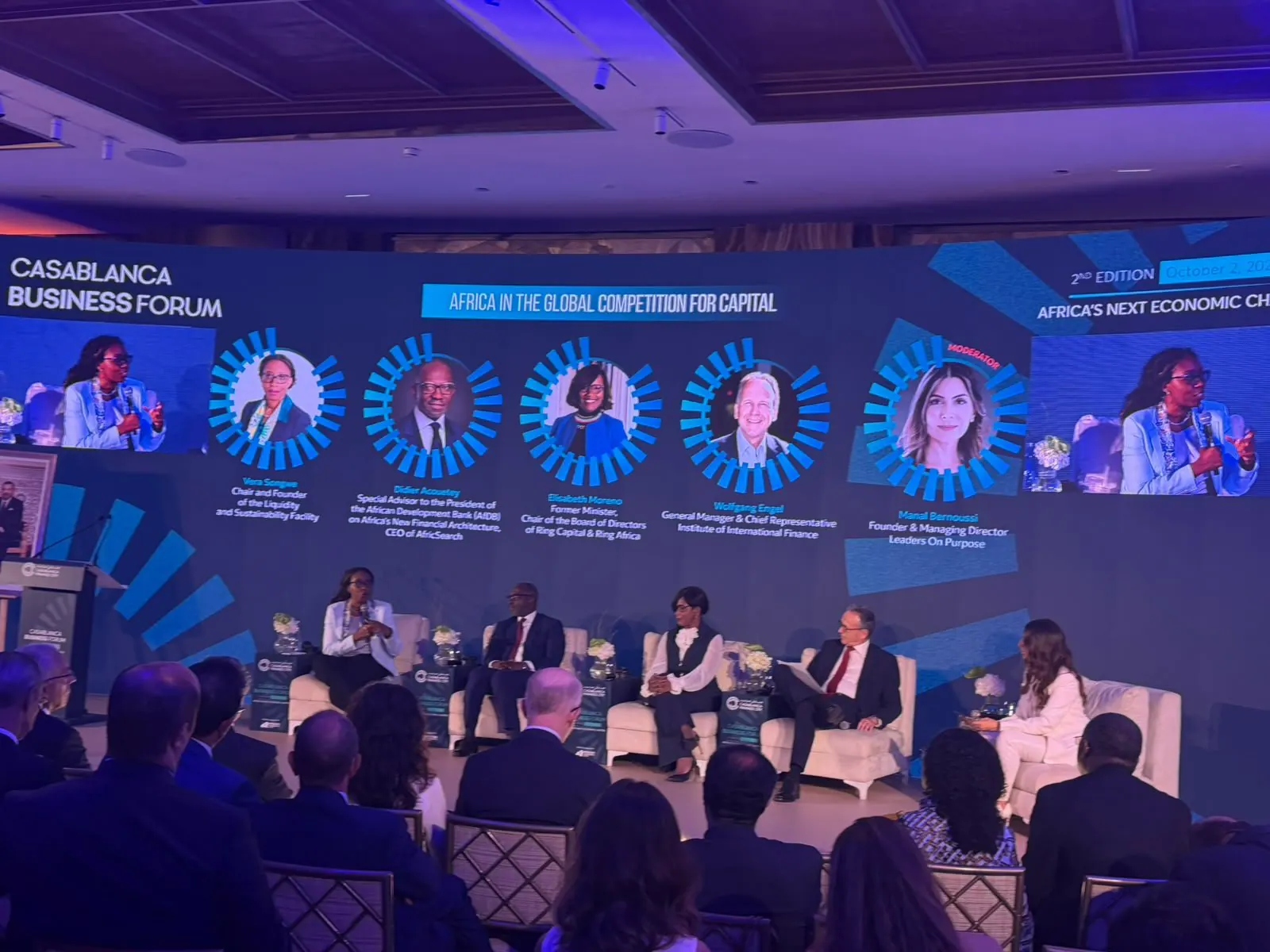
The recent Casablanca Business Forum posed a crucial question for Africa's financial landscape: how to build institutions, markets, and instruments capable of mobilizing existing savings in Africa. For years, the debate focused on attracting foreign investment, but the forum shifted the focus to creating a circuit of intermediation, transformation, and allocation. This change modifies the competition between major financial centers like Casablanca, Johannesburg, Maurice, and Kigali.
These cities now compete on their ability to circulate capital, finance the real economy, and create market depth. The goal is no longer to attract foreign capital but to channel African savings into African markets. Casablanca Finance City (CFC) claims over 300 member companies and 9,400 employees, with operations in 53 African countries. CFC's success is evident, but it must now demonstrate its capacity for structuring, intermediation, and reallocation.
According to Lamia Merzouki, CFC's deputy general manager, nearly $20 billion in African projects are managed by teams based in Casablanca. However, managing a project from Casablanca does not necessarily mean capital was raised locally or the fund is domiciled there. The difference between a business hub and a true financial center lies in its structuring, intermediation, and reallocation capacity.
The Global Financial Centres Index 40, published on September 16, 2026, confirmed Morocco's progress, with Casablanca ranking 38th globally and becoming the first African financial center, ahead of Johannesburg. This achievement recognizes a patiently built strategy led by CFC and increasing visibility on the continental financial map.
Despite this success, challenges persist. In 2025, the capitalization of listed companies represented around 327% of South Africa's GDP, compared to 62.5% in Morocco. In the UEMOA, the total capitalization of the BRVM, including stocks and bonds, was approximately 18% of regional GDP. These disparities also appear in banking financing, with private sector credit equivalent to nearly 78% of Morocco's GDP and around 89% of South Africa's GDP.
Lionel Zinsou, former Beninese Prime Minister and co-founder of SouthBridge, emphasizes the need to treat finance as an industry. CFC has adopted a hybrid model, welcoming financial firms, multinationals, and international consulting firms. The center prioritizes teams overseeing African operations of international groups, focusing on talent mobility and exchange rate flexibility.
The African continent has over $2,100 billion in institutional assets managed by pension funds, insurers, and sovereign wealth funds, according to the African Development Bank. Didier Acouetey, special advisor to the BAD president on the new African financial architecture, believes the challenge lies in making existing capital work more efficiently, rather than finding new capital.
Key points
- Casablanca Finance City must transform its attractivity into depth of market and real capital circulation capacity.
- African financial centers compete on their ability to circulate capital, finance the real economy, and create market depth.
- The continent's financial landscape requires a new approach, focusing on mobilizing existing savings and creating a circuit of intermediation, transformation, and allocation.