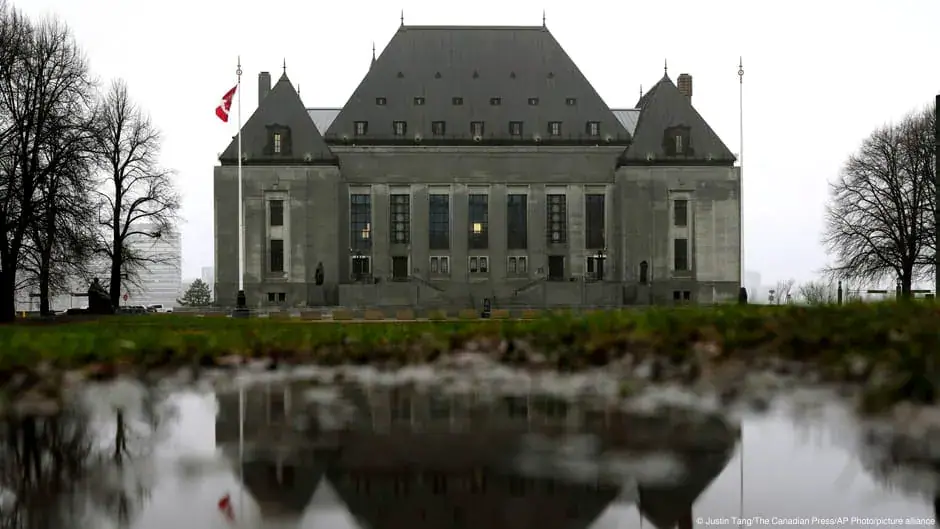
Canada's Supreme Court has upheld Quebec's ban on public servants wearing religious symbols, a law that was passed in 2019 as Bill 21. The law prohibits public service workers, including teachers and police officers, from wearing overt religious symbols like hijabs, turbans, and yarmulkes. The court's decision allows provincial lawmakers to wear such symbols in the National Assembly. Chief Justice Richard Wagner stated that the law reflects Quebec's commitment to state secularism within a democratic framework.
The law was justified by Quebec's government as essential for maintaining a secular society. Mathieu Levesque, interim leader of the right-wing Quebecois nationalist Coalition Avenir Québec (CAQ), called the ruling a "victory" for the province. He declared that the actions of the CAQ have been fully validated. The CAQ ruled from 2018 until 2026, after which the pro-independence Parti Québécois, which also backed Bill 21, took power.
The case tested the extent to which provinces can invoke the "notwithstanding clause," allowing them to pass laws that might contradict the federal constitution. Quebec invoked this clause while passing Bill 21, anticipating challenges based on freedom of religion guarantees. The notwithstanding clause is a contentious issue, as it allows provinces to override certain sections of the Canadian Charter of Rights and Freedoms.
Critics argue that the law disproportionately affects Muslim women and undermines rights protections. Stephen Brown, CEO of the National Council of Canadian Muslims, warned that the ruling empowers governments to strip away fundamental freedoms and legal rights. He noted that many Muslim women have felt compelled to leave teaching roles or refrain from volunteering in schools due to the law.
Emmett Macfarlane, a political science expert at the University of Waterloo, described the legislation as "Islamophobia as a state policy." Macfarlane's comments highlight the concerns of many who argue that the law is discriminatory and targets specific religious groups. The law has sparked intense debate and discussion across Canada.
The Supreme Court's decision has significant implications for the future of secularism in Quebec and Canada. The court's ruling sets a precedent for other provinces to invoke the notwithstanding clause and pass similar laws. The decision will likely be closely watched by provinces and territories across Canada.
The ruling has sparked mixed reactions, with some hailing it as a victory for Quebec's secularism and others criticizing it as a blow to religious freedom. As the country continues to grapple with issues of diversity, inclusion, and secularism, the Supreme Court's decision will likely remain a contentious issue for years to come.
Key points
- The law prohibits public service workers from wearing overt religious symbols like hijabs, turbans, and yarmulkes.
- Critics argue that the law disproportionately affects Muslim women and undermines rights protections.
- The decision sets a precedent for other provinces to invoke the notwithstanding clause and pass similar laws.
Reporting sources
- Canada: Supreme Court Mostly Affirms Quebec’s Secularism Legislation · sierraleonetoday.co.com