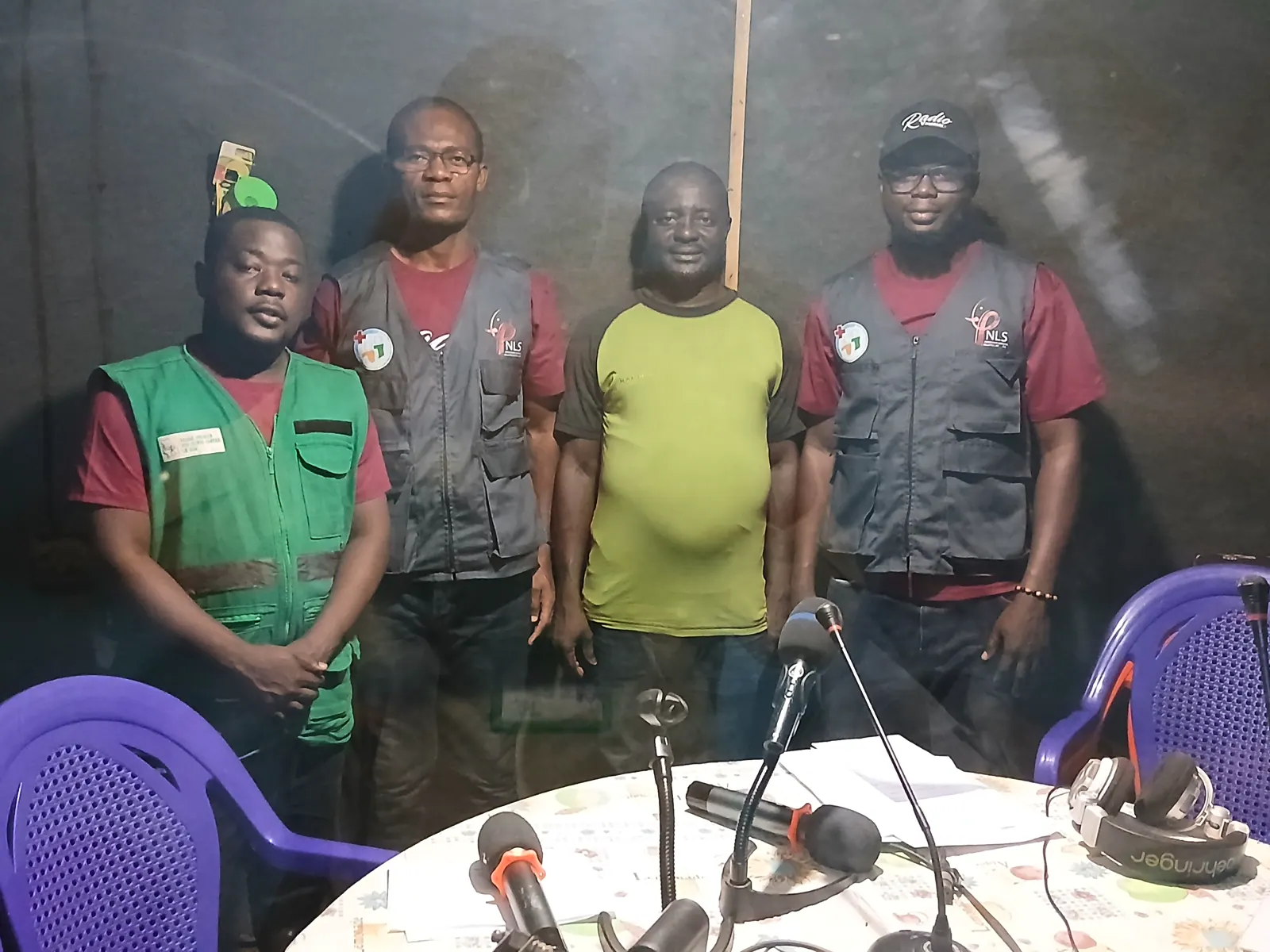
The PNLS has taken a proactive approach to educate adolescents and young people in Kouto about STIs and HIV/AIDS through a radio campaign. On September 24 and 25, 2026, two radio programs were broadcast on the local radio station, focusing on STIs and HIV/AIDS. The PNLS team, led by Essey Gabin, assistant to the communication service, Dr. Ouattara Mohamed, assistant to the STI service, and Atsé Franck, assistant to the social mobilization at the Ivoirian Youth Network Against AIDS (RIJES), provided valuable insights and information to the young audience.
The first radio program focused on STIs, highlighting the main infections, their modes of transmission, symptoms, and prevention methods. The team emphasized lesser-known infections, such as viral hepatitis. Dr. Ouattara Mohamed encouraged young people to adopt preventive behaviors and seek medical attention immediately if they suspect they have an infection. This initiative aims to equip young people with the knowledge and skills to protect themselves from STIs.
The second radio program, recorded for future broadcast, concentrated on HIV/AIDS, discussing transmission modes, prevention methods, and the importance of testing and care for people living with HIV. Essey Gabin explained that the goal of this campaign is to strengthen young people's knowledge and contribute to reducing new infections among this population. By using radio as a medium, the PNLS can reach a wider audience and have a greater impact on the community.
The radio programs will be rebroadcast for two weeks on the Kouto radio station to maximize their reach. This campaign is part of a larger effort by the PNLS, which began on September 7 and will continue until September 19, targeting several regions, including Marahoué, Gbêkê, Sud-Comoé, Bafing, and Poro. By engaging with young people in these regions, the PNLS hopes to reduce the spread of STIs and HIV/AIDS.
The PNLS team took a comprehensive approach to educating young people about STIs and HIV/AIDS. By covering topics such as transmission modes, symptoms, and prevention methods, the team provided a thorough understanding of these critical health issues. The campaign also encouraged young people to take responsibility for their health and seek medical attention when needed.
The use of radio as a medium for education and awareness is an effective strategy, particularly in rural areas where access to healthcare services and information may be limited. By leveraging radio, the PNLS can reach a large audience and promote a culture of prevention and care. The campaign's impact will be closely monitored, and its success will be evaluated based on the level of engagement and behavioral change among young people in Kouto and other targeted regions.
Key points
- The PNLS has launched a radio campaign to educate young people in Kouto about STIs and HIV/AIDS.
- The campaign aims to strengthen young people's knowledge and contribute to reducing new infections among this population.
- The radio programs will be rebroadcast for two weeks on the Kouto radio station to maximize their reach.