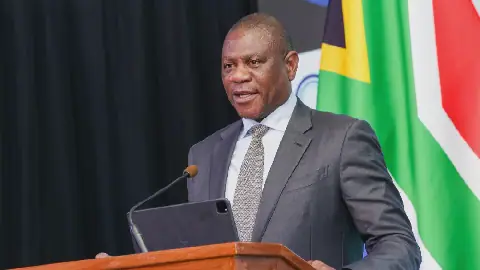
The Financial Action Task Force (GAFI) officially removed Côte d'Ivoire from its grey list on October 30, following a plenary meeting in Paris. This development is a significant step towards enhancing the country's financial credibility. The removal is a result of nearly two years of structural and institutional reforms aimed at strengthening the national system to combat money laundering and terrorist financing.
According to Vice-Premier Minister Téné Birahima Ouattara, the removal from the grey list is a testament to the country's political will and effective governance. He emphasized that the achievement demonstrates Côte d'Ivoire's capacity to address institutional and economic challenges through strong leadership and informed policy decisions. The Vice-Premier Minister expressed confidence that this development will boost investor trust in the country.
The process of removing Côte d'Ivoire from the grey list involved intense efforts by the Ivoirian authorities to enhance governance and security within the national financial system. Over the past 24 months, the authorities have implemented various initiatives to address concerns raised by the GAFI. These efforts included strengthening international cooperation in investigations and prosecutions related to money laundering and terrorist financing.
When Côte d'Ivoire was initially placed on the grey list, the GAFI identified 14 areas for improvement. By 2023, the country had implemented 68 out of 82 recommended measures. The remaining measures required full implementation and demonstration of their effectiveness. A team of 35 independent experts from various countries evaluated Côte d'Ivoire's progress in September 2026, verifying the steps taken to address GAFI's concerns.
Key advancements include enhanced cooperation in investigations and prosecutions, improved risk-based supervision of financial institutions and enterprises, and stricter enforcement of sanctions for regulatory breaches. The authorities have also intensified investigations, improved financial intelligence gathering, and facilitated access to information among relevant authorities. These reforms aim to enhance risk identification, produce high-quality financial intelligence, and accelerate investigations.
The Vice-Premier Minister highlighted the effectiveness of Côte d'Ivoire's institutional framework, which he believes can serve as a model for other countries. He attributed the success to strong political will and close monitoring of the process at the presidential level. The removal from the grey list not only signifies a diplomatic or financial victory but also serves as a strategic asset for national stability and economic security.
The removal from the grey list confirms that Côte d'Ivoire has a more robust financial system to address risks, particularly those related to terrorist financing. The country now has enhanced capabilities for anticipation, reactivity in investigations, and international cooperation in financial intelligence. This development is expected to reinforce investor confidence and strengthen partnerships with international financial institutions, including the IMF and the World Bank.
Key points
- Côte d'Ivoire's removal from the GAFI grey list demonstrates the country's commitment to strengthening its financial credibility and combating money laundering and terrorist financing.
- The achievement is attributed to strong leadership, effective governance, and significant reforms implemented over the past two years.
- The removal is expected to boost investor confidence and enhance partnerships with international financial institutions.