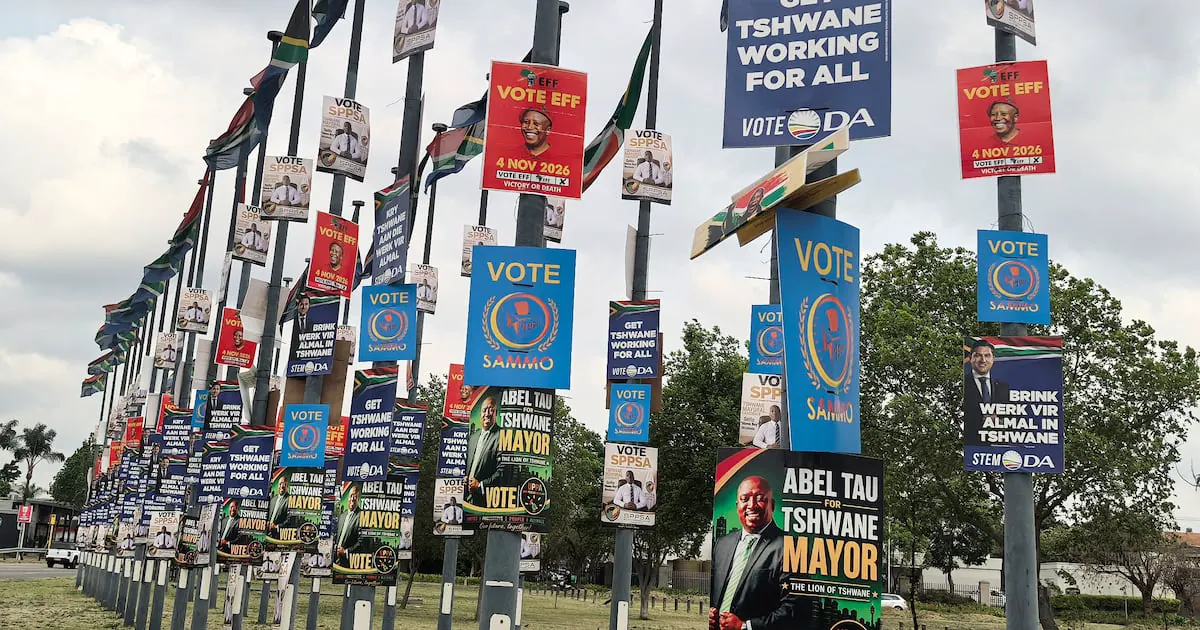
An analysis of 435 ward by-elections held in South Africa between February 2022 and June 2026 has revealed a significant shift in the electoral landscape. The data shows that 120, or 27.6%, of the by-elections resulted in a change in the party that held the ward after the 2021 elections. This represents an increase in electoral volatility over the period, with the proportion of by-elections resulting in a change of hands rising from about 23% in 2022 and 2023 to 27.5% in 2024 and 29.6% in 2025.
The ANC, which won 256 of the wards that subsequently went to by-elections in 2021, has suffered the largest number of ward-level losses. Of the 120 wards that changed hands, 68 had been won by the ANC in 2021. The IFP took 21 of those wards, followed by the DA with 12, the PA 11, the EFF 10, and the MK Party eight. The IFP's gains have been concentrated almost entirely in KwaZulu-Natal, where it won 21 wards previously held by the ANC.
The IFP has emerged as a significant beneficiary of ward-level changes, winning 28 by-elections that resulted in a change of party, all of them in KwaZulu-Natal. The party's gains included wards in municipalities such as Newcastle, Mthonjaneni, Umzumbe, Mtubatuba, Umhlabuyalingana, and Nongoma. The PA has also gained significantly, winning 23 of the 120 wards that changed hands, with 11 of those wards coming from the ANC and 11 from the DA.
The DA has remained comparatively stable in the wards covered by the dataset, losing 20 wards but gaining 19 that had previously been held by other parties. The DA's losses included 11 wards to the PA, six to the ANC, and one to an independent candidate, among others. Its gains were mainly from the ANC, which accounted for 12 of the 19 wards it won.
The data also shows the emergence of MK as a factor in ward-level elections after the 2021 local government poll. The party did not contest the 2021 elections but has subsequently won nine wards included in the by-election dataset. Eight of those wards were previously held by the ANC, and one by the DA. Seven of its nine gains were in KwaZulu-Natal.
The geographic distribution of the changes varies significantly between provinces. KwaZulu-Natal recorded 99 by-elections, of which 43 resulted in a change of party, giving it a turnover rate of 43.4%. The Western Cape recorded 62 by-elections, with 30 changes, or 48.4%. The Northern Cape had the highest proportion of contests resulting in a change of hands, at 56.5%, though this was based on only 23 by-elections.
Turnout has consistently been lower in by-elections than in the 2021 local government elections, with an average turnout of 42.2% across the 435 by-elections, compared with 48.1% in the same wards during the 2021 election. The by-election data points to a more fragmented and competitive ward-level electoral landscape since the 2021 elections, with the ANC remaining the party most frequently involved in changes of ward control.
Key points
- The ANC has suffered the largest number of ward-level losses since the 2021 local government elections.
- The IFP and PA have emerged as significant beneficiaries of ward-level changes.
- The by-election data points to a more fragmented and competitive ward-level electoral landscape since the 2021 elections.