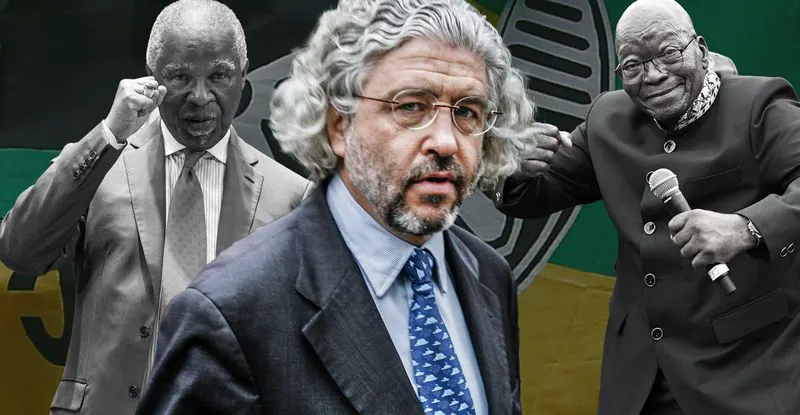
Between 1998 and 2004, Jürgen Kögl hosted secret meetings at his Johannesburg home between former apartheid-era generals and the new ANC government to discuss post-Truth and Reconciliation Commission (TRC) prosecutions. The talks involved powerful generals, including former president FW de Klerk, and top echelons of ANC leadership. Kögl's role as a facilitator has been revealed through his testimony to the Khampepe Commission of Inquiry into delayed TRC prosecutions.
Kögl, who was identified as the source of several payments to Jacob Zuma totalling around R1-million, described his actions as merely providing support to politicians. He claimed there was "nothing sinister" about these relationships, stating that he aimed to help them negotiate or govern the country. The ANC government had reached out to the generals to persuade them to disclose information on "third-force" operations in KwaZulu-Natal and arms caches that could be used in future political violence.
The generals had sought a "blanket amnesty" based on an admission of crimes committed, without needing to make full disclosure. This was in response to the TRC not granting amnesty to 37 ANC leaders. Kögl's home was raided by the Scorpions in August 2006, along with Zuma's house. As a political fixer, Kögl counted many South African politicians as close friends, including providing Thabo Mbeki with a flat in Hillbrow when he returned from exile.
Kögl founded a consulting firm with South African sociologist and politician Dr Frederik van Zyl Slabbert and labour affairs lawyer Charles Nupen after Namibian independence in 1989. The firm provided strategic and political analysis to companies operating in southern Africa. Kögl testified that he "neither authored, generated, nor assumed ownership of the content arising from the stakeholders' deliberations" and had "no knowledge of any efforts or attempts made to halt or interfere with the investigation or prosecution of TRC cases."
The meetings at Kögl's home aimed to reach an agreement on a legislative solution to avoid prosecutions after the TRC process. Attendees included General Constand Viljoen, General Jannie Geldenhuys, and General Magnus Malan, as well as ANC leaders Zuma, Mathews Phosa, and Cabinet ministers. Legal advisers presented proposed indemnity mechanisms to those present. The commission noted that former police commissioner Johan van der Merwe said FW de Klerk played a central role in the talks, often consulting with Mbeki.
Zuma had approached Constand Viljoen to discuss questions of criminal accountability, who then referred Zuma to General Geldenhuys and the Contact Bureau. These talks aimed to find a new indemnity mechanism or "backdoor amnesty." In 2019, investigative journalist Michael Schmidt interviewed Major General Dirk Marais, who said the generals sought a "quid pro quo" - they did not want to be charged, and nor did they want the ANC leaders to be charged.
The secret meetings and proposed amnesty mechanisms have raised questions about accountability for human rights abuses committed during apartheid. The Khampepe Commission's findings have shed light on the complexities of the post-TRC process and the efforts of various stakeholders to shape the outcome. Kögl's testimony has provided valuable insights into the inner workings of these secret talks and the roles played by key individuals.
Key points
- Jürgen Kögl facilitated secret talks between former apartheid-era generals and the ANC government.
- The talks aimed to find a legislative solution to avoid prosecutions after the TRC process.
- The proposed amnesty mechanisms have raised questions about accountability for human rights abuses committed during apartheid.