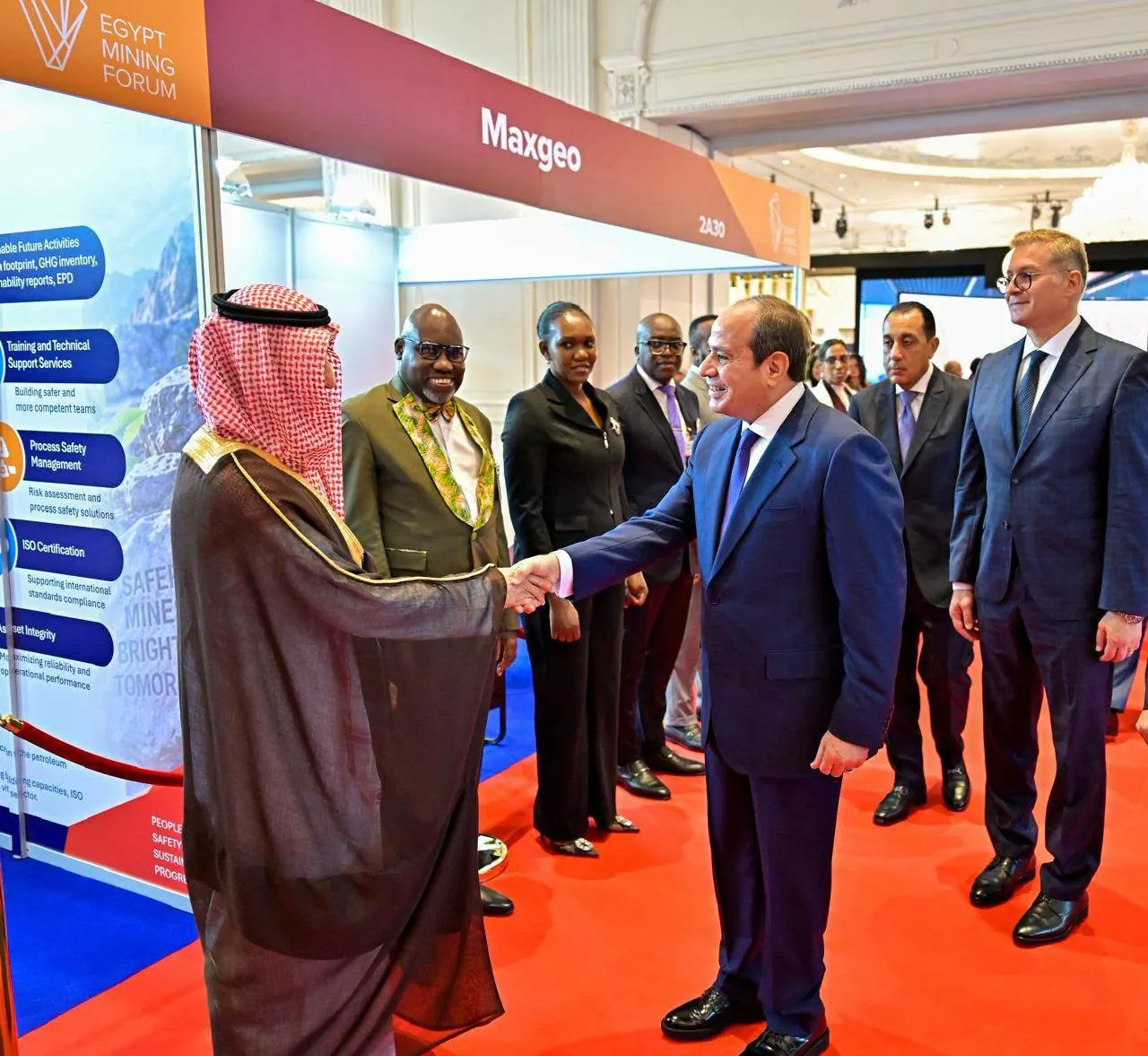
Egypt's Minister of Petroleum and Mineral Resources, Karim Badawi, announced that the country is targeting a 6% contribution to GDP from the mining sector. This goal is part of the government's efforts to attract more investment, expand exploration and production, and increase the local value added of mineral resources. The announcement was made during the fifth edition of the Egypt Mining Forum, held in the New Capital. The forum brings together local and international mining investors, ministers, and government officials from several mining countries.
The Egyptian government has launched an open-block mining tender system, which has received a positive response from investors. Since its launch on June 10, 2026, 119 companies have submitted applications, including 14 foreign companies from Australia, the UK, Canada, Saudi Arabia, Türkiye, South Africa, India, and China. These companies submitted 403 offers covering 118 blocks out of 335 blocks offered under the system. The areas extend across nearly 45,000 square kilometers and include promising deposits of gold, phosphate, talc, kaolin, and other minerals.
The new mining tender system provides greater flexibility and faster allocation of mining areas in line with international practices. This reflects the government's move towards a more open investment model that is more responsive to market requirements. The initial investor response is seen as an important step towards expanding exploration and developing mineral resources within the Arabian-Nubian Shield. The Sukari gold mine is cited as an example of Egypt's mining potential, having produced 6.8 million ounces of gold since production began in June 2009.
Egypt's mining potential is supported by its diverse geological resources across large areas of the Eastern Desert and South Sinai. The country's location within the Arabian-Nubian Shield offers opportunities for exploration for gold, copper, base metals, nickel, cobalt, rare earth elements, and other minerals. The availability of energy, an expanding road and port network, and Egypt's strategic location connecting three continents and overlooking the Mediterranean and Red seas also support the development of an integrated mining industry.
The Egyptian government is preparing a new model agreement for gold exploitation designed to provide greater clarity and flexibility and improve the competitiveness of the country's mining investment framework. The ministry has sought direct feedback from investors in major mining markets, including Australia and Canada, to identify challenges facing companies and examine international practices that could be applied in Egypt. The ministry has also introduced amendments to the executive regulations to increase flexibility in exploration activities and enhance investor incentives.
Egypt ranks third globally in phosphate rock reserves and seventh in phosphate production in 2025. The government is working to expand the industrial use of these resources, with eight new industrial projects being developed to maximize the value of phosphate resources. These projects include the first phase of the phosphoric acid complex in Abu Tartour, which will have a production capacity of 250,000 tonnes per year and investments of $650m. Production is scheduled to begin in 2028.
The objective of Egypt's mining sector development is not limited to increasing mineral production but also includes expanding value-added industries, creating jobs, increasing exports, and attracting investment based on technology, expertise, and knowledge. The government is seeking serious, long-term mining investment based on knowledge and technology transfer and greater local value creation, while continuing to address regulatory and operational challenges facing exploration and production.
Key points
- Egypt aims to increase the mining sector's contribution to GDP to 6%.
- 119 companies have submitted 403 offers for mining areas under the new open-block mining tender system.
- Egypt ranks third globally in phosphate rock reserves and seventh in phosphate production in 2025.