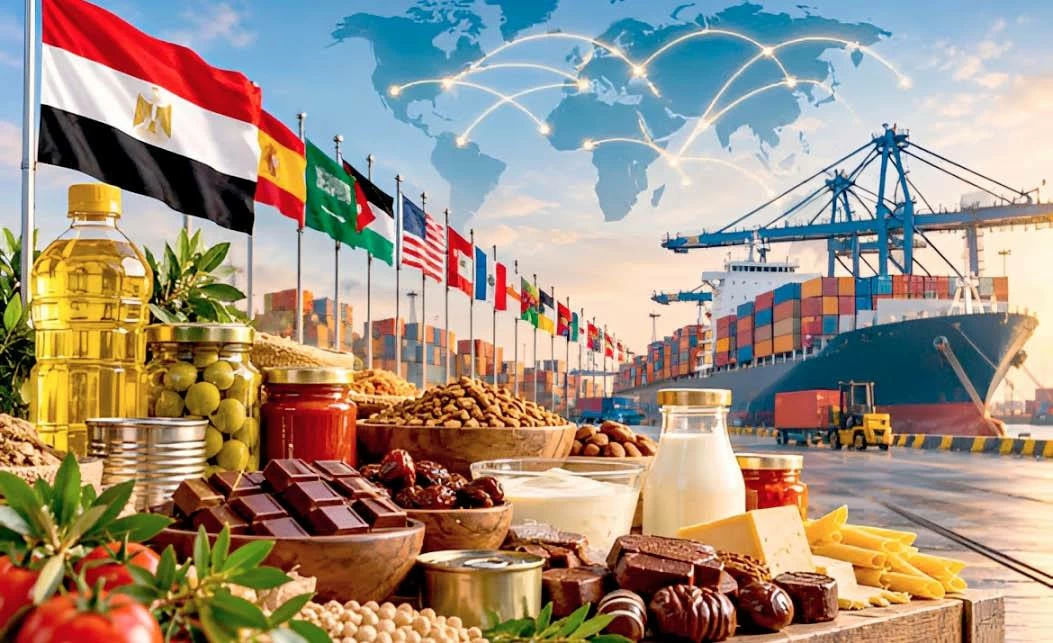
The Egyptian government's efforts to boost the food industry have yielded positive results, with the sector expected to play a crucial role in driving economic growth and job creation. According to a report by the Information and Decision Support Center, the food industry is a strategic sector that contributes significantly to the country's economy, with a large workforce and substantial exports. The industry comprises various sectors, including dairy products, sugar, frozen vegetables and fruits, and edible oils.
The report highlights the growth of the food industry, with the number of companies operating in the sector increasing from 1,127 in 2019 to 1,530 in 2024, a 35.8% rise. The capital invested in these companies has also increased, from 2.2 billion Egyptian pounds to 6.6 billion pounds during the same period. This growth is a testament to the government's efforts to attract investments and create a favorable business environment.
In terms of exports, the food industry has seen significant growth, with exports projected to reach $6.9 billion in 2025, up from $4.1 billion in 2021. This represents a 68.3% increase, making the food industry the third-largest contributor to Egypt's non-oil exports. The government's focus on developing the sector's infrastructure, including storage facilities and transportation networks, has helped to increase efficiency and competitiveness.
The government has also implemented various initiatives to support the food industry, including the development of smart agriculture and modern irrigation systems. Additionally, the government has launched programs to support small-scale farmers and improve the quality of agricultural products. These efforts aim to increase productivity, reduce waste, and promote sustainable agriculture practices.
The storage capacity for grains has also increased significantly, with 87 silos built, offering a storage capacity of 3.8 million tons, compared to 32 silos in 2014. This expansion is part of the national project for silos, which aims to improve the storage and handling of grains. The government has also updated milling facilities and developed a storage system that is linked to various transportation networks.
The government has also prioritized food safety, establishing the National Authority for Food Safety in 2017 to regulate and monitor the food industry. The authority is responsible for ensuring that food products meet international standards and for protecting consumers from unsafe food. Furthermore, the government has implemented measures to promote sustainable practices, including the use of renewable energy and the reduction of waste.
The growth of Egypt's food industry is expected to continue, driven by government support and investments in infrastructure. The sector is expected to play a crucial role in driving economic growth, creating jobs, and increasing exports. With a focus on sustainability and food safety, the industry is well-positioned to meet the challenges of the future and capitalize on new opportunities.
Key points
- Egypt's food industry is projected to reach $6.9 billion in exports by 2025, a 68.3% increase from 2021.