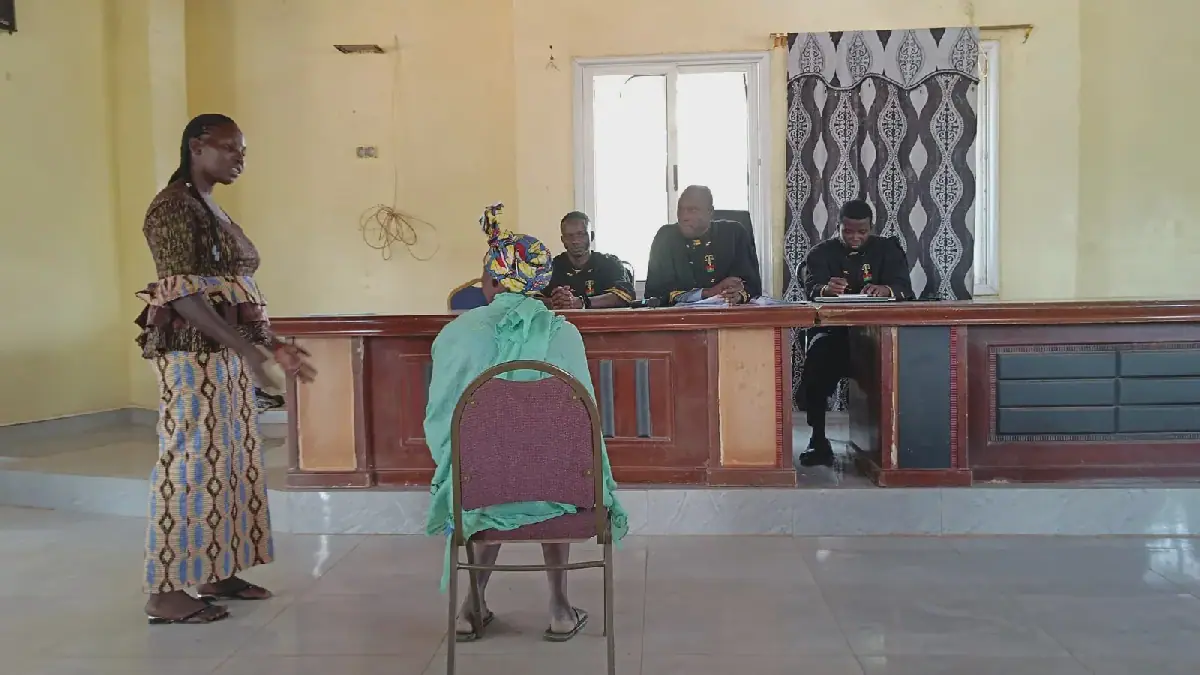
In a trial involving 39 people accused of female genital mutilation in Kaya, Burkina Faso, three women aged 65, 60, and 50 took the stand to recount their roles in aiding the practice. The women, who claim to have assisted the main accused, T.K., in maintaining girls during the mutilation procedures, received 200 FCFA from parents for their services. According to their testimonies, they were unaware that the practice was prohibited.
F.T., the 65-year-old woman, stated that her role was to hold the girls' feet during the procedure, adding that she sometimes received an additional 5,000 FCFA from T.K. She expressed remorse and promised not to repeat the act, seeking the court's leniency. The court inquired about her knowledge of the practice's prohibition, to which she replied that she was previously unaware but would not continue now that she knows.
T.S., a 60-year-old woman, claimed to have assisted T.K. for four years, also receiving 200 FCFA per girl. She explained that she participated in the practice due to financial difficulties and a lack of employment, stating that the money allowed her to take care of herself. When questioned about her motivations, T.S. mentioned that her actions were influenced by custom, but she struggled to justify the importance of the practice.
T.R., the 50-year-old woman, corroborated the testimonies of the other two women, stating that she also aided T.K. for four years, receiving 200 FCFA from parents and an additional 200 FCFA from T.K. The prosecution inquired about the origins of the practice and its justification, to which T.R. replied that it was a custom passed down through generations, but she could not explain its significance.
The trial, which began on October 27, 2026, at the Kaya High Court, aims to examine the roles of all 39 accused individuals in the female genital mutilation case. According to reports, the practice had been ongoing in Kaya for five years before the police intervened on September 22, 2026, leading to the arrest of T.K., her aides, and other individuals involved.
The court proceedings, organized in collaboration with ENABEL, are taking place over three days at the Boussouma town hall. The trial seeks to bring to justice those responsible for the mutilation of around thirty girls. As the trial continues, the court will investigate the extent of each accused person's involvement and determine their culpability in the practice.
Key points from the trial include the accused women's admission of their roles in aiding the female genital mutilation practice, their claims of being motivated by financial gain and custom, and their assertions that they were unaware of the practice's prohibition.
Key points
- The accused women received 200 FCFA from parents for their services.
- The practice of female genital mutilation had been ongoing in Kaya for five years before the police intervened.
- The trial aims to bring to justice those responsible for the mutilation of around thirty girls.