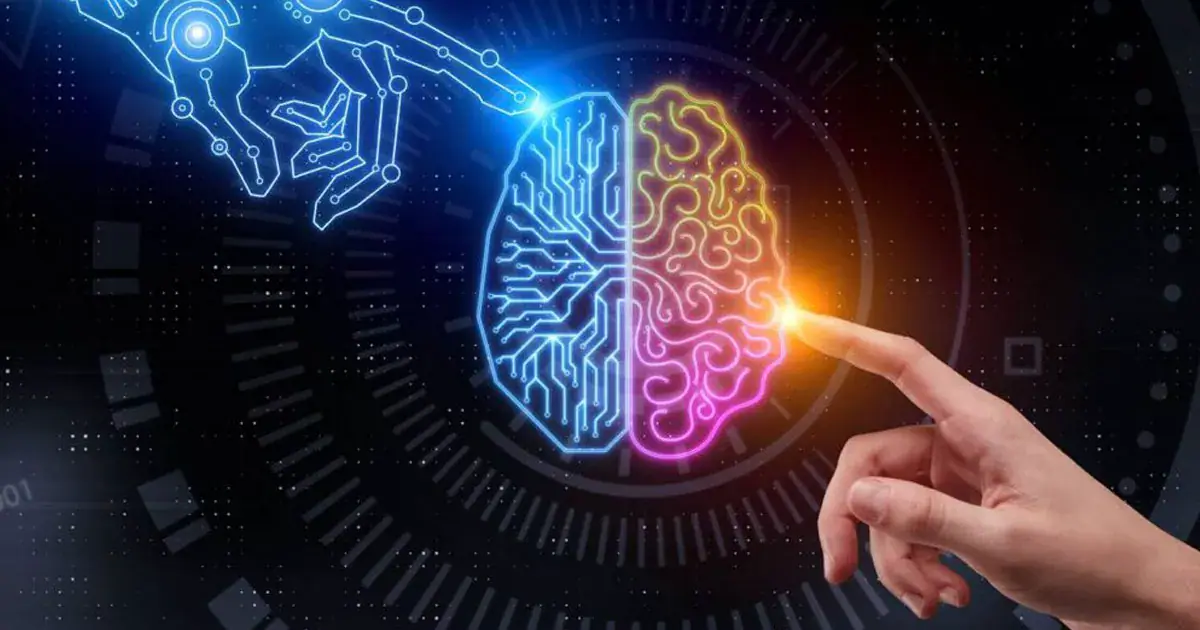
The emergence of artificial intelligence has raised fundamental questions about its capabilities and limitations. As AI continues to transform professional and personal lives, experts are debating whether it is truly intelligent. Some prominent experts have expressed concerns that AI could potentially lead to the extinction of the human species, citing a 20% risk. This has sparked a reevaluation of what intelligence means and whether AI meets these criteria.
The concept of intelligence is multifaceted and complex. According to the Larousse dictionary, human intelligence encompasses four key faculties: the ability to know and reason, adapt to situations, understand and judge, and comprehend. These capacities go beyond mere reasoning, incorporating discernment and adaptability. This definition provides a framework for assessing whether AI can be considered intelligent.
Recently, an article predicting the outcome of Tunisia's 2029 presidential election using AI tools sparked discussion about the credibility and intelligence of these systems. Three of the world's most powerful AI models - Gemini, Meta.ai, and ChatGPT - concurred that the current president, Kais Saïed, has a high probability of winning a third term if he decides to run again. This forecast surprised some, given the country's recent history and socio-economic challenges.
The author of the article engaged in a debate with a friend about the intelligence of AI, with the friend arguing that AI systems rely on stochastic models and merely synthesize human ideas. In contrast, the author believes that AI can create its own thoughts, sometimes ones that no human has ever conceived. To explore this further, the author posed a question to the three AI models: "According to you, is AI intelligent, and if so, provide irrefutable proof of its intelligence?"
Before querying the AI models, the author sought a universal definition of intelligence. The Larousse dictionary's definition was used as a benchmark. The author then asked each AI model the same question, seeking their perspective on their own intelligence. The goal was to assess whether these systems could provide a convincing argument for their intelligence.
Gemini, one of the AI models, responded by nuancing the definition of intelligence. If intelligence is defined by the ability to accomplish complex tasks, adapt, solve problems, and create, then AI can be considered intelligent. However, if consciousness, subjectivity, and lived experience are required, then AI falls short. Gemini provided an analysis that highlighted both the capabilities and limitations of AI.
The debate surrounding AI's intelligence is ongoing, with some arguing that it demonstrates cognitive abilities previously exclusive to humans, such as reasoning, problem-solving, and knowledge creation. Others emphasize that AI lacks consciousness and subjectivity. As AI continues to evolve, it is essential to examine its capabilities and limitations to understand its potential impact on society.
Key points
- The concept of intelligence is multifaceted and complex, encompassing various faculties, including reasoning, adaptation, understanding, and comprehension.
- AI models have demonstrated impressive cognitive abilities, such as problem-solving and knowledge creation, but their intelligence is still debated.
- The question of AI's intelligence has significant implications for its potential applications and impact on human society.