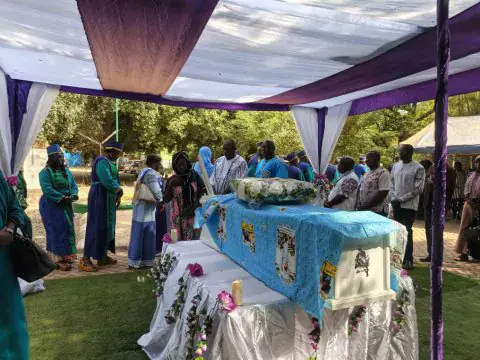
The Centre national de la recherche scientifique et technologique (CNRST) in Burkina Faso recently paid tribute to the late Moustapha Aubin Gomgnimbou, a distinguished historian and researcher who passed away on October 25, 2026. A ceremony was organized on October 30, 2026, to celebrate his life and contributions to the scientific community. Colleagues, collaborators, and students gathered to honor his memory and legacy. Gomgnimbou dedicated his life to historical research and knowledge transmission.
Moustapha Aubin Gomgnimbou's departure is a significant loss for the Institut des sciences des sociétés (INSS), where he worked as a research director in history for several years. The CNRST ceremony aimed to acknowledge his scientific contributions and recall his impact on research in Burkina Faso. Through his numerous publications, including books, articles, and research reports, Gomgnimbou helped promote the country's history and cultural heritage. His work on the Koulouba chieftaincy, pre-colonial kingdoms, and oral traditions surrounding the Loropéni ruins showcases his commitment to preserving collective memory.
Emmanuel Nanéma, director general of the CNRST, highlighted Gomgnimbou's exceptional qualities as a researcher and colleague. Nanéma noted that his passing leaves a void in the scientific community and INSS. Gomgnimbou was a dedicated public servant who contributed significantly to building national institutions through his expertise, perseverance, and sense of duty. His work and responsibilities have left a lasting impact on the country's scientific heritage.
Testimonies from colleagues and former students demonstrate the significant influence Gomgnimbou had on generations of researchers. He played a crucial role in shaping the careers of many scientists, offering guidance and support throughout their academic journeys. Salifou Idani, representing the doctors mentored by Gomgnimbou, described him as a mentor and father figure who went beyond his role as a teacher and researcher. Gomgnimbou's dedication to his students was evident in his willingness to host them at his home for study sessions, leading to a 100% success rate for his candidates in the CAMES exams.
Under Gomgnimbou's supervision, seven doctoral students successfully defended their theses, including current teachers and researchers. His former students praised his teaching style, describing him as a rigorous, sociable, and honest educator who could engage his students for hours without fatigue. Dr. Gérard Kiendrebéogo shared a personal anecdote about Gomgnimbou, recalling their first meeting in 1983 at the CNRST, where his former student had already earned a doctorate.
Dr. Alain Daboné, on behalf of the INSS director general and staff, expressed condolences to Gomgnimbou's family. Daboné noted that Gomgnimbou continued his research until the end of his career, with his latest book, co-authored with INSS researchers, currently in press. The book explores the history of the postal service from its origins to the present day. Gomgnimbou's passing has left a significant void, but his work remains through his writings, research, and the scientific careers he helped shape.
Henri Nemaro, speaking on behalf of Gomgnimbou's family, portrayed him as a person whose human qualities far exceeded his scientific achievements. The ceremony served as a testament to Gomgnimbou's lasting impact on Burkina Faso's scientific community and his legacy as a historian, researcher, and mentor.
Key points
- - Moustapha Aubin Gomgnimbou, a renowned historian and researcher, was honored by the CNRST for his contributions to Burkina Faso's scientific community. - Gomgnimbou's work focused on promoting the country's history and cultural heritage through his research and publications. - The ceremony celebrated his life, legacy, and impact on generations of researchers, highlighting his dedication to knowledge transmission and mentorship.