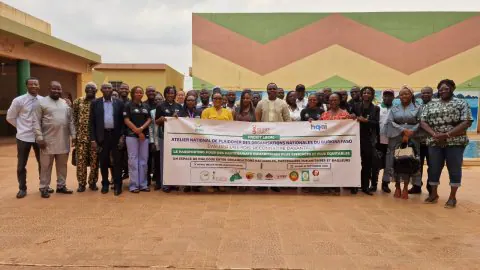
The Secrétariat permanent des ONG (SPONG) held a meeting in Ouagadougou on September 22, 2026, to discuss the recognition of local NGOs' capacities. The meeting brought together national organizations engaged in humanitarian response, donors, and technical partners. The goal is to promote the "passporting" mechanism, which aims to facilitate access to funding and partnerships for certified local NGOs. This mechanism is part of the LOCAL project, which seeks to support local organizations in their humanitarian response efforts.
According to Abdoulaye Ouédraogo, president of SPONG's board of directors, the certification of local NGOs is crucial in demonstrating their capacities and expertise. The certification process, conducted under the LOCAL project, allowed ten national organizations to strengthen their capacities and undergo CHS audits. Four of these organizations, APIL, CREDO, Tin Tua, and IPBF, obtained CHS certification. Ouédraogo emphasized that this certification is a proof of their capacities and expertise, enabling them to contribute to development actions and community changes.
The recognition of this certification is now the next step. Moumouni Ouédraogo, country director of DRC Burkina Faso, highlighted that the certification process has provided tangible proof of the quality of the organizations involved. He stressed that the next step is to advocate for the recognition of this certification at the decision-making level, facilitating access to funding for certified local partners. The LOCAL project aims to support local organizations in their humanitarian response efforts, and the recognition of their certification is essential in this process.
Micheline Kaboré, executive director of the Initiative Pananetugri pour le bien-être de la femme (IPBF), one of the certified organizations, sees the certification as a major step. She emphasized that it gives her organization credibility and attests to its capacity to intervene in humanitarian response and conduct activities correctly. Kaboré also highlighted the importance of "passporting" for national organizations, particularly those led by women, as it provides a guarantee of quality and a means to approach donors and authorities.
The SPONG is not considering certification as an endpoint, but rather as a starting point. The organization is calling on non-certified NGOs to strengthen their capacities and conform to required norms. Abdoulaye Ouédraogo emphasized that the goal is to work towards a second phase that will support more organizations in their certification process. The recognition of local NGOs' capacities is essential in facilitating their access to funding and partnerships.
The atelier aimed to transition from certification to effective recognition. The SPONG hopes that the efforts made by national organizations will not only result in certifications but also facilitate concrete access to funding and partnerships. The issue of "passporting" will remain at the heart of discussions between national NGOs, public authorities, donors, and technical and financial partners.
The LOCAL project has made significant progress in supporting local organizations. The certification process has demonstrated the capacities and expertise of local NGOs, and the recognition of this certification is now crucial. The SPONG and its partners will continue to advocate for the recognition of local NGOs' capacities, enabling them to play a more significant role in humanitarian response efforts.
Key points
- Local NGOs in Burkina Faso are seeking recognition of their capacities after obtaining certification through the LOCAL project.
- The certification process has demonstrated the capacities and expertise of local NGOs, enabling them to contribute to development actions and community changes.
- The recognition of local NGOs' capacities is essential in facilitating their access to funding and partnerships.