In a recent open letter to President Captain Ibrahim Traoré, Appolin Aimé Ngankam Penté, an educator and author, outlined eight proposals to accelerate Burkina Faso's economic transformation. Four years after his initial contribution, Penté emphasizes the need for greater sovereignty through national production, local processing of raw materials, agricultural modernization, education reform, and stronger integration within the Alliance of Sahel States (AES). His goal is to make Burkina Faso an economic, agricultural, and industrial powerhouse that creates sustainable wealth for its population.
Penté's proposals come as Burkina Faso has made significant changes in recent years, including reorienting partnerships, affirming sovereignty, and refounding its development model. The creation of the Sahel States Confederation in July 2024, alongside Mali and Niger, offers new perspectives for the country's future. While progress has been made, including growth in agricultural production and infrastructure development, challenges persist, such as security, employment, purchasing power, industrialization, and access to social services.
The expert's first proposal focuses on the reconquest of the territory, not just militarily but also economically and socially. He suggests that each stabilized territory should have an integrated program for reconstruction, including infrastructure rehabilitation, agricultural revival, market creation, and support for young entrepreneurs. This approach aims to restore public services, economic activities, and the dignity of populations who have been displaced.
Penté also advocates for consolidating Burkina Faso's military and diplomatic sovereignty. He recommends evaluating partnerships based on the country's interests, diversifying cooperation, and strengthening domestic defense capabilities. Additionally, he proposes enhancing national research and production capacities for strategic equipment, allowing the country to conceive, produce, maintain, and master its own equipment.
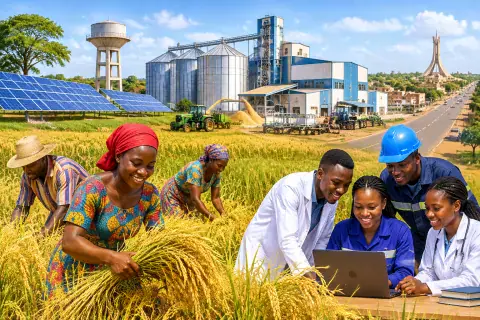
Another key proposal involves modernizing agriculture to ensure food sovereignty and increase production. Penté suggests investing in irrigation, mechanization, and agricultural research to improve yields and farmers' incomes. He also recommends promoting local processing of agricultural products to create jobs and add value to the country's production.
Education reform is another crucial aspect of Penté's strategy. He argues that the current education system needs to be overhauled to provide relevant training that meets the needs of the labor market. This includes vocational training, technical education, and promoting entrepreneurship among young people. By doing so, Burkina Faso can equip its youth with the skills needed to drive economic growth and innovation.
Finally, Penté emphasizes the importance of strengthening regional integration within the AES and promoting economic cooperation among member states. He believes that by working together, the Sahel countries can create a larger market, share knowledge, and coordinate policies to achieve sustainable development. This approach can help Burkina Faso and its neighbors overcome common challenges and unlock their economic potential.
Key points
- The expert proposes creating integrated programs for the reconstruction of stabilized territories, including infrastructure rehabilitation and support for young entrepreneurs.
- Penté advocates for consolidating Burkina Faso's military and diplomatic sovereignty by evaluating partnerships based on the country's interests and strengthening domestic defense capabilities.
- The proposals aim to make Burkina Faso an economic, agricultural, and industrial powerhouse that creates sustainable wealth for its population.