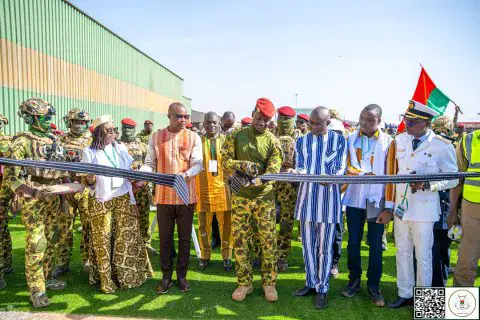
The Perkoa mine, located in the Nando region of Burkina Faso, has officially resumed operations after a four-year interruption. The mine was closed in April 2022 due to an underground flood that resulted in the loss of eight lives. The relaunch of the mine was presided over by President Ibrahim Traoré, who emphasized the importance of the mine in the country's efforts to regain control of its natural resources. The mine is now managed by SOPAMIB, a state-owned company created in 2024 to manage and valorize the country's mining heritage.
The relaunch of the Perkoa mine is a significant step in Burkina Faso's efforts to strengthen its national mining industry. According to Dr. Lamissa Barro, Director-General of SOPAMIB, the company's mission is to manage and valorize the country's mining heritage through its six subsidiaries and participations in various mining companies. The Perkoa mine is one of the key projects in this effort, with an estimated 3 million tons of resources and a average grade of 10.8% zinc. The mine is expected to produce 576,000 tons of polymetallic concentrate over its initial four-year lifespan.
The rehabilitation of the mine was a major technical challenge, with extensive work required to restore the site and prevent future floods. SOPAMIB invested in various corrective measures, including the widening and clearing of the rainwater drainage canal, the reconstruction of civil engineering structures, and the installation of 90 kW pumps. A water level monitoring system and video surveillance system were also put in place. The project required an investment of 37 billion FCFA, with the Burkinabè state contributing 20 billion FCFA through the Diaspora Bond.
The Perkoa mine is expected to generate significant economic benefits for Burkina Faso, including approximately 400 direct jobs and 850 indirect jobs. The mine is also expected to generate 84.8 billion FCFA in tax and parafiscal revenues over its initial four-year lifespan. President Traoré emphasized that the relaunch of the mine is a demonstration of Burkina Faso's mining sovereignty, with the mine now fully owned by the state. He also highlighted the importance of diversifying mining production beyond gold to build a more resilient economy.
The SOPAMIB has announced plans to launch a zinc refinery in 2027, which will aim to reduce the export of concentrate and develop a national metallurgical industry. The refinery will be extensible to other non-ferrous metals. This move is part of a broader effort to transform the country's mining sector and increase the value added to its natural resources. The Burkinabè government has emphasized the importance of taking control of the country's natural resources and benefiting from their exploitation.
The relaunch of the Perkoa mine is part of a broader effort by Burkina Faso to regain control of its economic and mining sovereignty. According to Minister of Energy, Mines, and Careers Yacouba Zabré Gouba, the mine's relaunch is a demonstration of the country's choice to take greater control of its natural resources and their valorization. The minister emphasized the importance of diversifying mining production to build a more resilient economy.
The Perkoa mine's relaunch is a significant milestone in Burkina Faso's efforts to develop its mining sector and increase its economic benefits. With its 3 million tons of resources and expected production of 576,000 tons of polymetallic concentrate, the mine is expected to play a key role in the country's economic development. The project's success will depend on the effective management of the mine by SOPAMIB and the implementation of measures to prevent future floods and environmental damage.
Key points
- The Perkoa mine has been relaunched after a four-year interruption, with an expected production of 576,000 tons of polymetallic concentrate over its initial four-year lifespan.
- The mine's relaunch is a demonstration of Burkina Faso's mining sovereignty, with the mine now fully owned by the state.
- The project is expected to generate significant economic benefits, including approximately 400 direct jobs and 850 indirect jobs, and 84.8 billion FCFA in tax and parafiscal revenues.