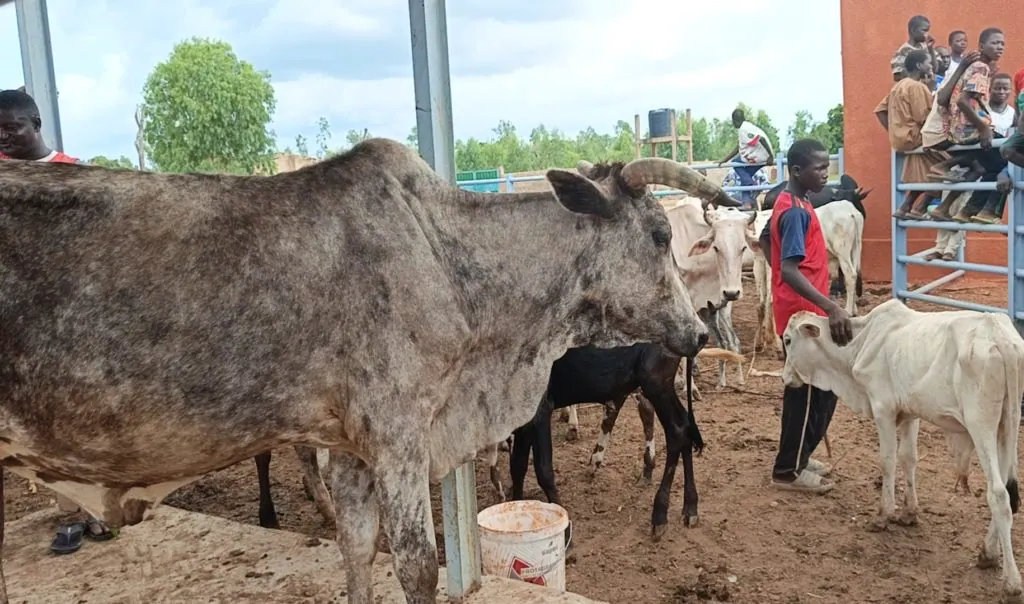
The government of Burkina Faso has initiated a significant animal health campaign, aiming to improve the health and productivity of the country's livestock. The campaign, launched on September 19, 2026, in Kombissiri, involves vaccination, artificial insemination, and digital identification of animals. Ministers Ismaël Sombié and Dr. Amadou Dicko led the launch event, emphasizing the importance of this initiative for the country's agricultural sector.
The campaign targets over 18 million poultry, 5 million cattle, and 5 million small ruminants for vaccination. Additionally, 100,000 cattle and 15,000 pigs will undergo artificial insemination to enhance breeding and productivity. This effort aims to reduce the prevalence of animal diseases and increase the overall health of the livestock population. By doing so, the government hopes to improve food security and the livelihoods of farmers and herders.
To combat livestock theft, the government will implement a digital identification system. An electronic device will be implanted in the stomach of each animal, allowing for easy identification and access to information about the animal's owner. This system is expected to significantly reduce livestock theft and facilitate the recovery of stolen animals. The digital identification process will initially cover 300,000 cattle.
According to Dr. Amadou Dicko, the vaccination campaigns, which have been ongoing for three years, cover multiple animal diseases. The government has been providing subsidies for vaccinations, with rates ranging from 80% to 100% in some cases. The minister highlighted that these efforts have been strengthened since 2023, with a focus on providing affordable and accessible veterinary services to farmers and herders.
The government plans to establish a vaccine production unit in Burkina Faso to enhance the availability of animal vaccines. Additionally, the Central Veterinary Medicines Purchasing Center (CAMVET) has been established to provide subsidized veterinary medicines to farmers. These initiatives aim to improve animal health and reduce the reliance on imported vaccines and medicines.
The artificial insemination campaign is a key component of the government's strategy to improve livestock productivity. By inseminating over 100,000 cattle and 15,000 pigs, the government aims to enhance breeding and increase the overall productivity of the livestock population. This effort is expected to have a positive impact on the livelihoods of farmers and herders, as well as the country's food security.
The total budget for the animal health campaign is over 2 billion FCFA. The government has emphasized its commitment to improving animal health and productivity, and this campaign is a significant step towards achieving these goals. The initiative is expected to have a lasting impact on the country's agricultural sector and the livelihoods of its citizens.
Key points
- The campaign targets over 18 million poultry, 5 million cattle, and 5 million small ruminants for vaccination.
- The government will implement a digital identification system to combat livestock theft.
- The total budget for the animal health campaign is over 2 billion FCFA.