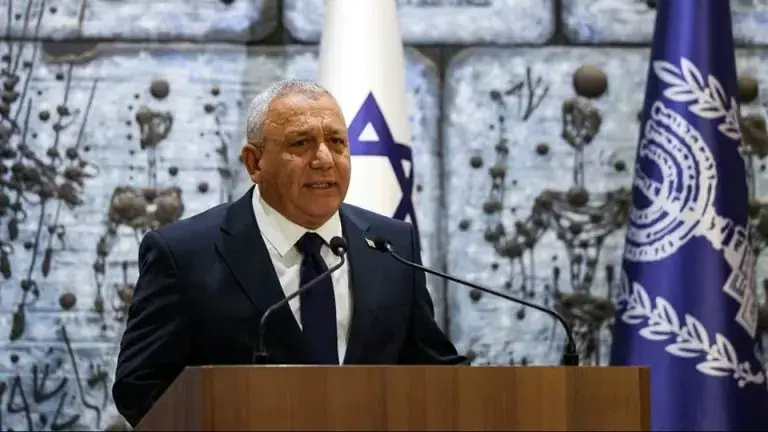
Israeli President Isaac Herzog officially tasked Gadi Eisenkot, leader of the main opposition bloc, with forming the next government on November 8, 2026. This move comes after recent legislative elections that did not yield a parliamentary majority. Eisenkot, a former Israeli army chief of staff, has 28 days to gather a majority of at least 61 out of 120 Knesset members and form a government.
During the mandate ceremony at the presidential residence in Jerusalem, Herzog urged Eisenkot to form a stable government that serves all citizens, regardless of their electoral choices. Eisenkot, 66, has been in politics for four years after a long military career. He aims to establish a "national emergency government" and has left the door open for a potential coalition with the Likud party of outgoing Prime Minister Benjamin Netanyahu and the Religious Zionist Party of Bezalel Smotrich.
Eisenkot's path to forming a coalition appears challenging due to a deeply divided political landscape. His camp excluded working with Arab parties during the election campaign, limiting possibilities for gathering a parliamentary majority. Despite this, Eisenkot remains determined to form a government, stating that Israel is going through one of its most critical periods, requiring a united political front to address the country's challenges.
President Herzog emphasized the need for the future government to advance diplomatic processes in the region after the war and implement US President Donald Trump's 20-point plan for the Gaza Strip. This development may signal the end of Netanyahu's nearly two-decade-long rule as Prime Minister. However, Netanyahu could still re-enter negotiations if Eisenkot fails to form a coalition.
Gadi Eisenkot's appointment as the candidate to form a government marks a significant shift in Israeli politics. His experience as a military leader and his relatively recent entry into politics make him a unique figure for this role. The success of his efforts will depend on his ability to navigate the complex Israeli political landscape and secure the necessary support from various parties.
The formation of a new government in Israel is crucial for addressing the country's current challenges, both domestically and internationally. The government's priorities will likely include economic issues, security concerns, and diplomatic efforts in the region. Eisenkot's ability to form a stable and effective government will be closely watched by both Israeli citizens and the international community.
As Eisenkot begins his 28-day mandate, he faces significant challenges in uniting a divided parliament and forming a functional government. His success will depend on his negotiation skills and ability to find common ground among different political factions. The outcome of his efforts will have a lasting impact on Israel's political future and its relations with neighboring countries.
Key points
- Gadi Eisenkot has been tasked with forming a government after recent Israeli legislative elections failed to produce a parliamentary majority.
- Eisenkot has 28 days to gather a majority of at least 61 Knesset members and form a government.
- The formation of a new government is crucial for addressing Israel's current challenges, including economic issues, security concerns, and diplomatic efforts in the region.
Reporting sources
- Côte d’Ivoire-AIP/Inter/ En Israël, Gadi Eisenkot chargé de former un gouvernement après la défaite de Nétanyahou · Agence ivoirienne de presse