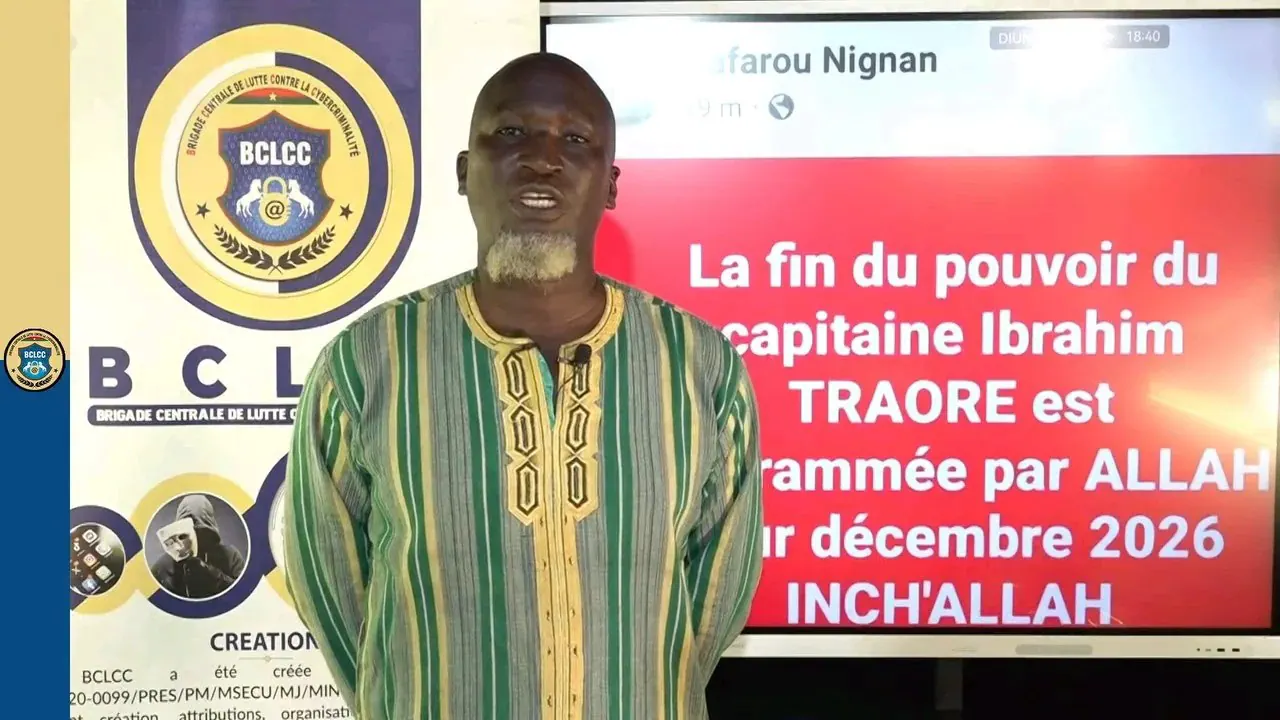
Gafarou Nignan, an engineer and demographer, has apologized for a Facebook post made in September 2024, which predicted the end of President Ibrahim Traoré's rule by December 2026. Nignan was summoned by the Burkinabé Central Brigade for Combating Cybercrime (BCLCC) after the post sparked concerns. In a video testimony released by the BCLCC, Nignan admitted to making the post and acknowledged that it was wrong to make such a statement about the head of state.
According to Nignan, the post was made "by mistake" and he had no intention of causing harm to President Traoré or undermining his authority. He expressed regret for any offense or frustration his post may have caused, particularly to those who respect and admire the president. Nignan emphasized that the head of state deserves respect from all citizens and that his post was a thoughtless mistake.
In his testimony, Nignan took responsibility for his actions and acknowledged that his post could be considered an attack on the state's security. He urged users of social media platforms to be cautious and mindful of the potential consequences of their posts. Nignan warned that making such statements can be considered a serious offense and can undermine the stability of the state.
The incident highlights the growing concern about the use of social media in Burkina Faso and the need for citizens to be responsible when sharing information online. The BCLCC has been actively working to combat cybercrime and ensure that individuals who use social media to spread false or malicious information are held accountable. Nignan's case serves as a reminder of the potential consequences of making reckless statements online.
President Ibrahim Traoré has been in office since 2022, and his administration has been working to address various security and economic challenges facing the country. Nignan's post sparked concerns about the potential for social media to be used to destabilize the government or undermine its authority. The incident has raised questions about the limits of free speech on social media and the need for responsible online behavior.
Gafarou Nignan's apology and admission of wrongdoing may help to mitigate any potential damage caused by his post. However, the incident serves as a reminder of the need for citizens to be vigilant and responsible when using social media. The Burkinabé government and the BCLCC have emphasized the importance of using social media responsibly and avoiding the spread of false or malicious information.
The case of Gafarou Nignan is a significant example of the efforts of the Burkinabé authorities to combat cybercrime and promote responsible online behavior. The incident highlights the need for citizens to respect the law and the authority of the head of state, even when using social media. By taking responsibility for his actions and apologizing, Nignan has demonstrated a commitment to making amends and promoting a culture of responsibility online.
Key points
- Gafarou Nignan apologized for a Facebook post predicting the end of President Ibrahim Traoré's rule, saying it was done by mistake.