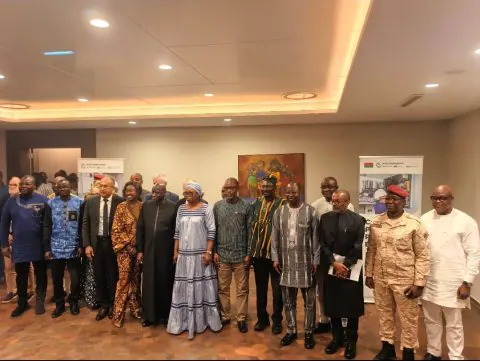
The Burkina Faso government and the World Bank have officially launched a new Country Partnership Framework (CPF) for 2026-2031. The framework is aligned with the country's national development plan, RELANCE, and focuses on key areas such as human capital, energy, agriculture, food security, and job creation for young people. The CPF was launched in a ceremony held in Ouagadougou on October 2, 2026, and was attended by several government officials, World Bank representatives, and other stakeholders.
The new framework aims to support the country's efforts in stabilization, resilience, and sustainable development. It is built around the country's priorities and needs, and is expected to evolve with the changing needs of the country. According to Fatoumata Bako Traoré, Minister Delegate for Budget, the CPF is not just an instrument for mobilizing resources, but a partnership based on dialogue, trust, and adaptation to national realities.
The CPF focuses on three main areas: improving human capital, increasing access to energy, and transforming the agricultural sector. The first area focuses on health and education, aiming to improve access to essential social services and their quality, while strengthening the human capacity needed for the country's development. The second area focuses on electricity, which is seen as essential for production, transformation of raw materials, and industrialization.
The third area focuses on agriculture, with the aim of improving productivity and strengthening food security. The goal is to make the agricultural sector a more significant contributor to economic transformation and food sovereignty. The CPF also aims to create more and better-quality jobs, particularly for young people.
The World Bank's Vice President for West and Central Africa, Ousmane Diagana, recalled that the new framework follows over 63 years of partnership with Burkina Faso. He highlighted several achievements during the previous period, including the reintegration of over 430,000 displaced students into the education system and the deployment of 77 advanced health posts in fragile areas.
According to Diagana, the World Bank's portfolio in Burkina Faso has grown from $2.7 billion in 2020 to nearly $4 billion in 2025, with 29 active projects. He also reported that the country's economic growth reached 5% in 2025, up from 4.8% in 2024.
The CPF is built around four complementary pillars, including improving human capital, increasing agricultural productivity, and improving access to energy. The framework is expected to support the country's development priorities and help achieve its goals in areas such as health, education, and economic growth.
Key points
- The new Country Partnership Framework focuses on human capital, energy, agriculture, and job creation.
- The framework aims to support Burkina Faso's efforts in stabilization, resilience, and sustainable development.
- The World Bank's portfolio in Burkina Faso has grown to nearly $4 billion in 2025.