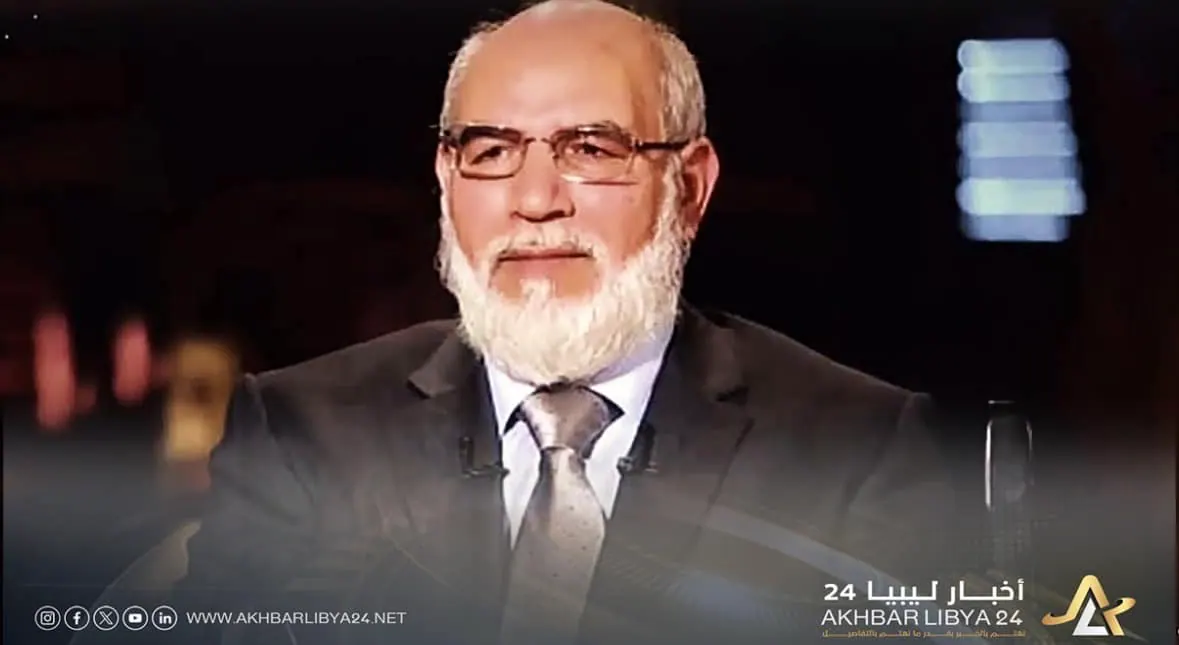
Libyan MP Dr. Mohamed Amer Al-Abani has emphasized the need for reforming the rules of the House of Representatives to change the country's political landscape. He argues that the current reality is heavily influenced by a logic of power, where might makes right, and that this approach undermines the rule of law and the role of institutions. Al-Abani believes that stability in Libya cannot be achieved solely through the existence of legal texts, but also requires respect for and adherence to these laws by all parties.
Al-Abani draws a distinction between a state governed by a constitution, where laws and institutions are the reference points for decision-making, and a state dominated by the logic of power, where personal interests and influence prevail. He notes that in Libya, the latter approach has led to a situation where the rule of law is often circumvented, and citizens are forced to rely on means other than the law to protect their rights. This, he argues, is a result of the weakness of state institutions and the dominance of powerful individuals and groups.
The MP uses the metaphor of a railway system to illustrate his vision for institutional reform. Just as changing a train is not enough to alter its course without also changing the tracks, so too is changing individuals or personnel not enough to reform the system without also changing the underlying rules and structures. Al-Abani emphasizes that reforming the internal system of the House of Representatives is a key priority, as it will allow for the development of a more effective and accountable legislative body.
Al-Abani's call for reform is echoed by the National Accord Bloc, which has prepared a proposal to amend the internal rules of the House of Representatives. The bloc believes that this reform is essential to improving the performance of the legislative body and ensuring that it is able to play its role in addressing the country's challenges. Al-Abani also notes that the current Speaker of the House of Representatives operates within the limits set by the internal rules and laws, and that any changes to these rules will be essential to enabling the Speaker to operate more effectively.
The Libyan MP also addresses the current status of the House of Representatives, which was elected in 2014 and remains, in his view, the sole legitimate legislative authority in the country. He notes that the House has continued to perform its duties, including engaging with political initiatives aimed at resolving the country's crisis, such as the electoral process and the unification of state institutions. Recently, the House of Representatives adopted the final agreement of the "4+4" mini-dialogue committee, which paves the way for the completion of the political process and the holding of national elections.
Al-Abani stresses that the House of Representatives will not be an obstacle to efforts to resolve the country's crisis and will be present at all key political events and deadlines. His emphasis on institutional reform and the strengthening of the rule of law reflects a broader debate in Libya about the relationship between the law and the balance of power, and the ability of institutions to translate constitutional and legal provisions into practical reality.
The debate over Libya's future continues, with various stakeholders seeking to address the country's complex political and institutional crisis. The international community, including the UN, has been working to support a peaceful resolution to the crisis, including through the establishment of a national electoral process and the unification of state institutions. Al-Abani's call for parliamentary reform is seen as an important contribution to this process, highlighting the need for a more effective and accountable legislative body.
Key points
- Dr. Mohamed Amer Al-Abani emphasizes the need for reforming the rules of the House of Representatives.
- The current reality in Libya is heavily influenced by a logic of power, undermining the rule of law and institutions.
- Al-Abani's call for reform reflects a broader debate in Libya about the relationship between the law and the balance of power.