The Ugandan parliament's Committee on Physical Infrastructure, led by Mwine Mpaka, has been holding hearings to investigate delays in the country's Digital Number Plate Project. The project, which aims to modernize Uganda's vehicle identification infrastructure, has faced criticism over price, production, and availability of digital number plates. However, the committee's focus has raised questions about whether they are investigating a simple number plate or a nationwide digital vehicle security infrastructure.
The Digital Number Plate Project is a complex system that combines secure vehicle identification, GPS tracking, communications technology, data processing, and integration with Police command centers. The system has shown promising results, with Police Director of ICT AIGP Felix Baryamwisaki reporting that 337 out of 375 stolen motor vehicles have been recovered, representing a 90 percent recovery rate. The committee has also verified the system's capabilities, testing it with their own vehicle registration numbers and confirming that cars and motorcycles can be tracked.
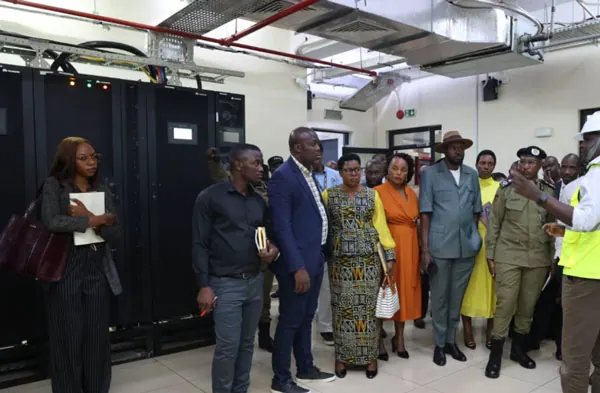
Despite the system's successes, there are still areas requiring improvement, including motorcycle recovery and Police response to system-generated alerts. However, these issues relate to how to improve a functioning system, rather than whether the technology works at all. The committee's visit to the Police Command Centre at Naguru demonstrated the system's capabilities, with MPs seeing firsthand how the wider system identifies and tracks vehicles and supports Police operations.
One risk emerging from the parliamentary debate is that the Digital Number Plate Project is being discussed as if the government had simply purchased more expensive pieces of metal. However, the plate is only the visible part of a much larger infrastructure combining secure vehicle identification, GPS tracking, communications technology, data processing, and integration with Police command centers. The question is therefore whether MPs are evaluating the price of a number plate or the cost and performance of the entire digital security infrastructure.
The project has faced shortages and delays, but the evidence suggests that corrective measures are working. The production backlog that dominated earlier criticism was reported cleared in August, and Ministry data showed average registration and fitment time at Kampala bonds falling from 19 days in December 2025 to two days by September 2026. The next target is 24-hour vehicle registration and number plate installation by the end of 2026.
The Digital Number Plate Project was conceived as more than a vehicle-registration exercise, with its purpose tied to national security and the modernization of Uganda's vehicle identification infrastructure. Parliamentary scrutiny is essential, but a complex digital security platform cannot be assessed only through the price of its most visible component. The debate should also examine whether the infrastructure works, how data is protected, and whether Uganda is developing the local expertise needed to operate such systems.
The evidence presented so far shows both sides, with documented vehicle recoveries, significantly shorter service times, and a digital security system that members of the Committee have now tested themselves. The Digital Number Plate Project should be judged as a complete technological system, with a focus on what works, what does not, what has improved, and what still needs to change. The danger is that a debate about the price of a number plate obscures the much bigger question before Parliament: the performance and future of a nationwide digital security infrastructure already deployed in Uganda.
Key points
- The Digital Number Plate Project is a complex system that combines secure vehicle identification, GPS tracking, and integration with Police command centers.
- The system has shown promising results, with a 90 percent recovery rate of stolen motor vehicles.
- Parliament's scrutiny should focus on the entire digital security infrastructure, rather than just the price of the number plate.