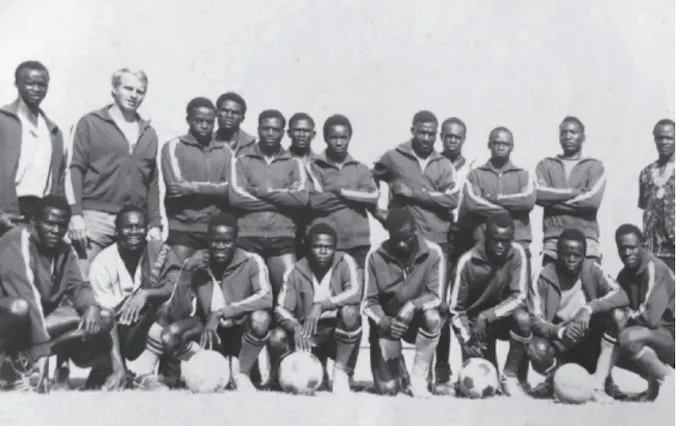
Managing a national team is a challenging task, especially for a foreign coach. Burkhard Pape, a German tactician, handled The Cranes in the late 1960s into the 1970s, leaving an indelible mark that transformed the team. Pape arrived in Uganda in 1968, replacing Robert Kiberu as national team coach. His approach was a departure from the traditional "kick and play" style, introducing a more attractive brand of football known as "kili-kili" football, characterized by short crisp passes.
Pape's impact was immediate, guiding Uganda to the 1968 East African Challenge Cup in Dar es Salaam. He organized coaching courses for coaches and games masters at Kyambogo, producing many quality coaches who traversed the country coaching football teams, higher institutions of learning, and schools. This resulted in many quality players being developed for The Cranes. Uganda won the Cecafa Senior Challenge Cup in 1968 and 1970, a testament to Pape's pragmatism and coaching acumen.
Pape's contributions to Ugandan football went beyond his tenure as national team coach. He took it upon himself to visit local teams in the top-flight league, sharing his coaching ideas with them. This helped improve the players' skills, as evident in Simba FC's success in reaching the Africa Club Championship finals in 1972. Pape sat on the Simba technical bench during the Caf fixtures, helping them impress with outstanding displays on the continent.
Pape is also credited with producing or helping improve top Ugandan coaches, including David Otti, Peter Okee, Robert Kiberu, Jimmy Bakyayita Semugabi, "Big" Ben Omoding, and Charles Omigi. His other great contribution was the formation of the Youth programme, which saw the first national youth team. A host of young players at the 1973 regional youth football tournament won by Uganda in Kenya graduated to become top football names.
The likes of Moses Nsereko, Timothy Ayiekho, George Mukasa, Stanley "Tank" Mubiru, Mike Kiganda, Ashe Mukasa, Abbey Nasur, and Billy Kizito were among the players who graduated from Pape's youth programme. They were part of The Cranes team that finished second at the 1978 Africa Cup of Nations in Ghana. Pape guided some of these players to the 1974 Africa Cup of Nations, showcasing his ability to develop and nurture young talent.
Pape's personality played a significant role in his success. He cooperated well with fellow coaches, administrators, and players alike, getting a lot of support that ensured his methods became a success. However, he had a profound weakness - he looked troubled when his team was under relentless attacks from opponents, often sweating profusely and being frantic like a caged leopard.
Pape led the Uganda Cranes on 70 occasions, winning 41 matches, drawing 16, and losing 13. In 1999, Pape returned to Uganda, wanting his old job back, but was appointed Technical Director instead. He cited high discipline among players and government's full support for the game as key factors in his success. Pape passed away in 2024, at 91, leaving behind a legacy that will forever be remembered in Ugandan football.
Key points
- Burkhard Pape introduced the "kili-kili" football style, characterized by short crisp passes, which became a hallmark of Ugandan football.
- Pape developed and nurtured young talent through his youth programme, producing top football names like Moses Nsereko and Stanley "Tank" Mubiru.
- Pape's tenure as national team coach saw Uganda win the Cecafa Senior Challenge Cup in 1968 and 1970.