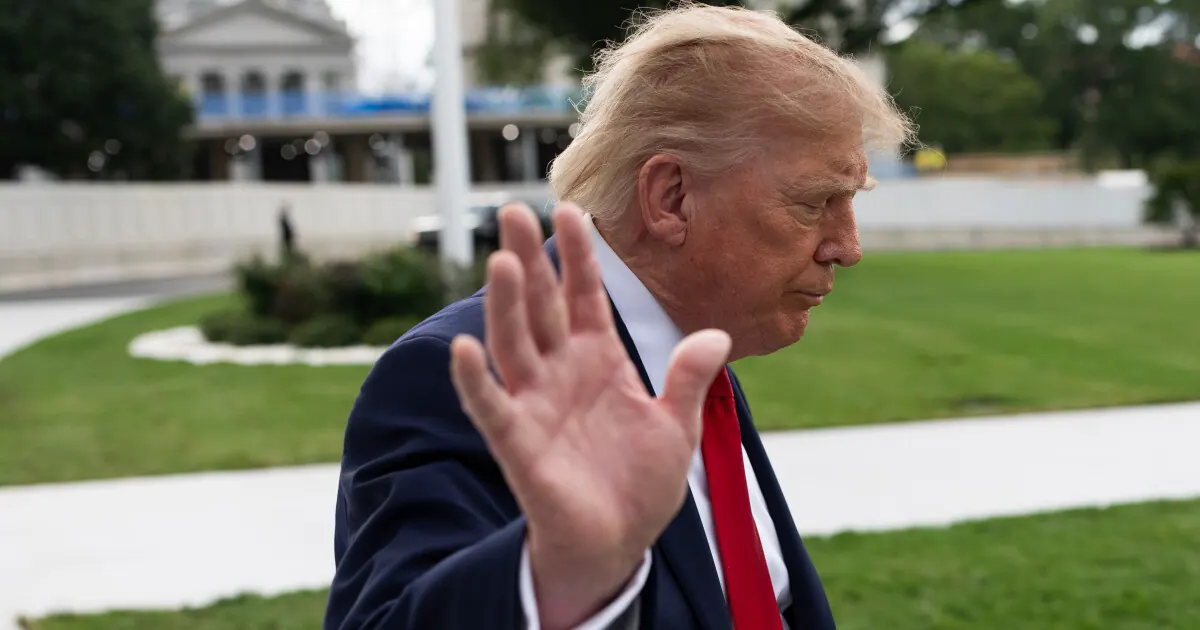
On September 26, 2026, US President Trump announced that he had rejected an Iranian plan to reopen the Strait of Hormuz, a vital waterway for global oil supplies. Speaking to reporters at the White House, Trump stated that the deal "would not be acceptable," without providing further explanation. The Iranian plan, proposed at the United Nations General Assembly meetings in New York, also called for resuming negotiations between the US and Iran.
Iranian Foreign Minister Abbas Araghchi revealed on Friday that Iran had conveyed a "concrete seven-day plan" to reopen the strait to the US through Qatar. The plan would involve the immediate reopening of the strait, which was closed by Iran after the US and Israel attacked Iran on February 28. The repeated closures have caused significant disruptions to the world's oil supply, with Iran citing the need for relief from a US naval blockade.
The Iranian proposal bears similarities to a "memorandum of understanding" agreed upon by the US and Iran in June, which aimed to temporarily end fighting and restart ceasefire talks. The MoU provided Iran with relief from the US naval blockade and eased sanctions, in exchange for Iran's promise not to seek a nuclear weapon and to reopen the Strait of Hormuz. However, the agreement collapsed due to disputes over vague wording, including language related to control of the strait.
Araghchi emphasized that the actions required of the US are not new, but rather already outlined in the MoU. He expressed optimism that implementation could be straightforward, stating that "the choice now rests with the United States." Iranian President Masoud Pezeshkian echoed this sentiment in a prerecorded interview with CBS, stating that Iran will abide by its commitments if the US shows a willingness to work with the Iranian government.
Pezeshkian's comments suggest that Iran is willing to cooperate with the US, provided that the US demonstrates a commitment to not overthrowing the Iranian government. He noted that if the US accepts the Iranian proposal, Iran would allow UN nuclear inspectors to enter the country. This development could potentially pave the way for renewed nuclear negotiations between the two nations.
The ongoing tensions between the US and Iran have had far-reaching consequences, including disruptions to global oil supplies and concerns over Iran's nuclear program. The rejection of the Iranian plan by Trump may exacerbate these tensions, although it remains unclear what specific concerns led to the rejection. The US and Iran have a complex and often contentious relationship, with disputes dating back several decades.
The situation remains fluid, with both sides seemingly open to negotiations, but wary of concessions. As the international community watches closely, the prospects for a renewed agreement between the US and Iran remain uncertain. Key players, including Qatar, continue to play a crucial role in facilitating communication between the two nations, in hopes of finding a peaceful resolution to the ongoing tensions.
Key points
- US President Trump rejects Iranian plan to reopen Strait of Hormuz, citing it as "not acceptable".
- Iranian plan involves reopening strait and resuming nuclear negotiations with the US.
- Ongoing tensions between US and Iran have significant implications for global oil supplies and regional stability.