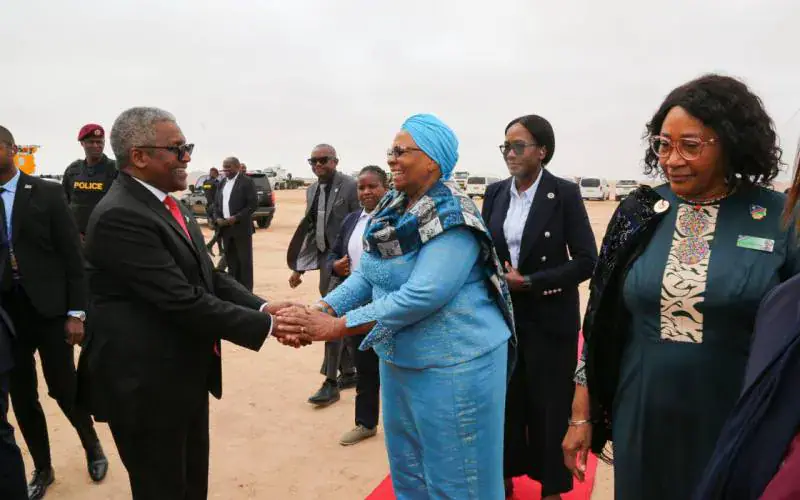
Namibian President Netumbo Nandi-Ndaitwah has revealed that her country came close to losing a multibillion-dollar investment from Nigerian industrialist Aliko Dangote due to bureaucratic delays. The project, valued at approximately N$41.1 billion, is a major energy infrastructure investment planned for Namibia. Nandi-Ndaitwah disclosed that she personally intervened to prevent Dangote from abandoning the investment after his team became frustrated with the pace of government processes.
The President's intervention was informed by previous experiences with investors while serving as minister of international relations and trade. She had witnessed how bureaucratic systems frustrated investors, leading to the loss of important projects, including a proposed shipyard in Namibia. The investors withdrew after four years, unable to proceed due to delays. Nandi-Ndaitwah's account illustrates the potential economic consequences of prolonged administrative processes.
This is not the first time a Namibian president has publicly challenged the civil service over bureaucratic inefficiencies and slow implementation. In June 2006, former President Hifikepunye Pohamba took senior government officials to task over bureaucratic delays affecting capital projects. Pohamba warned that funds allocated to development projects were going unused and being returned to the Treasury due to poor implementation.
Twelve years later, in February 2018, former President Hage Geingob raised similar concerns, linking bureaucratic bottlenecks to Namibia's investment climate and international competitiveness. Geingob directed then Prime Minister Saara Kuugongelwa-Amadhila to expedite reforms and conduct a bureaucratic bottleneck audit to decongest government systems and institutions.
The African Development Bank's Namibia Country Portfolio Performance Review 2025 identified procurement and implementation delays as challenges affecting development projects. The report found that the period between project approval and the first disbursement of funds had increased from 10.4 months to 13.6 months, mainly due to prolonged procurement processes and additional clearance requirements.
The Bank's report also recorded improvements in portfolio performance, with the proportion of red-flagged projects falling from 46% to 33% between the July 2024 performance review and the March 2025 review. However, significant implementation challenges remain. The findings provide a broader institutional perspective on the concerns raised by successive presidents.
For an economy seeking diversification, industrialisation, and employment creation, delays in investment implementation carry consequences beyond the immediate projects. When investors withdraw, the country loses potential capital, employment opportunities, and economic growth. The Dangote project's near-loss serves as a reminder of the need for Namibia to address bureaucratic inefficiencies and improve its investment environment.
Key points
- The Dangote project's value is approximately N$41.1 billion.
- Bureaucratic delays have affected successive administrations in Namibia, with concerns raised by presidents Hifikepunye Pohamba, Hage Geingob, and Netumbo Nandi-Ndaitwah.
- The African Development Bank's report identified procurement and implementation delays as challenges affecting development projects in Namibia.
Reporting sources
- How govt bureaucracy costs Namibia major investments · Windhoek Observer