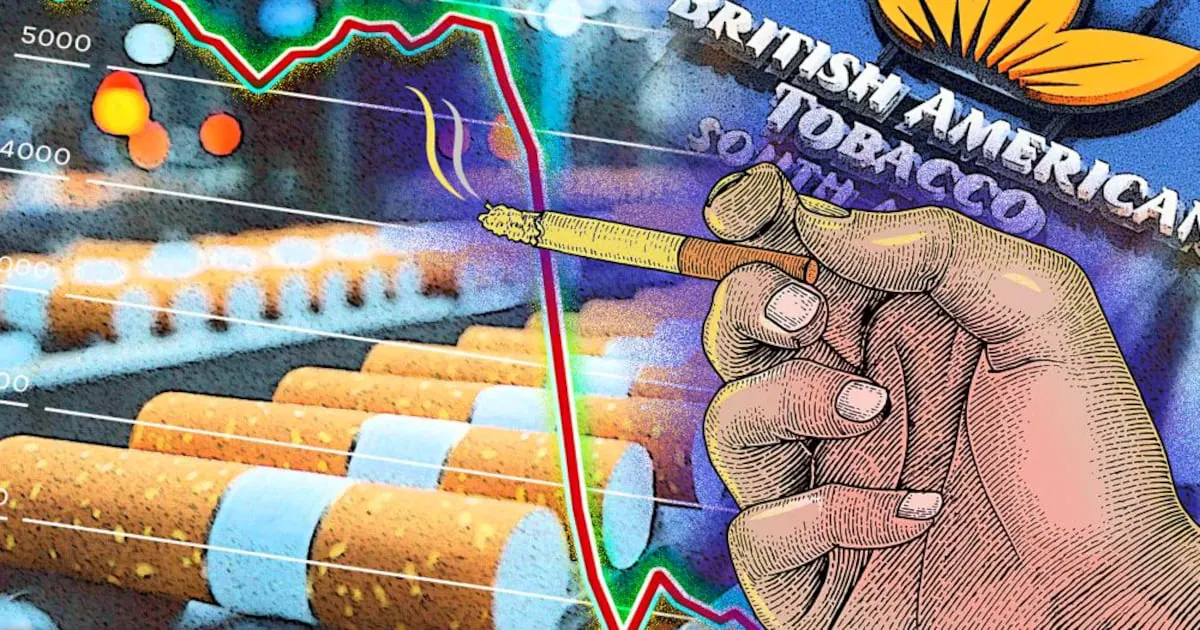
British American Tobacco (BAT) has reaffirmed its decision to close its Heidelberg factory in South Africa, a move that will mark the end of over five decades of cigarette manufacturing in the country. The factory, once the eighth largest globally for BAT, will shut down at the end of the year. According to Johnny Moloto, BAT's head of corporate and regulatory affairs for Sub-Saharan Africa, the company estimates that about three out of every four cigarettes sold in South Africa are illicit.
The closure of the Heidelberg factory is a result of the unsustainable operating conditions, with the plant currently running at just 35% of its total capacity. BAT had engaged with the government and law enforcement authorities over the years to address the growth of the illicit trade, but to no avail. Moloto stated that the company's decision to close the factory is a stark illustration of the impact of illicit trade on South Africa's formal economy.
The illicit cigarette trade is costing the South African fiscus billions of rand a year, with BAT estimating that it loses R28bn annually in lost revenue. The company had previously called for the introduction of a minimum retail price of R38 a pack of 20 cigarettes, which would provide law enforcement with a tool to identify non-compliant products and disrupt illicit trade. Moloto also suggested that a review of the current tobacco excise framework, including a reduction in tobacco excise, could help narrow the gap between legal and illicit products.
The consequences of illicit trade extend beyond lost tax revenues, with research conducted by Econometrix estimating that it displaces R193bn in formal production and 87,500 direct jobs across 12 sectors of the economy. Moloto emphasized that addressing the challenge of illicit trade requires an all-of-government and all-of-society approach. He noted that the only beneficiaries of illicit trade are criminal networks.
The impact of illicit trade is not limited to the tobacco sector, with the liquor industry also sounding the alarm about a surge in illicit booze. South African Breweries (SAB) has reported that illicit liquor now constitutes 20% of the market, with illegal products being 37% cheaper than legal alternatives. SAB has proposed a consumer price index-linked excise framework, which would align annual alcohol tax increases with inflation.
Other stakeholders have differing views on the proposed tax increase on standard beers. Heineken has come out against the tax proposal, while the DG Murray Trust (DGMT) has accused the brewers of overplaying the threat that the tax proposal will worsen the challenge of illicit liquor. DGMT supports the tax, citing research that shows alcohol abuse costs South Africa an estimated R800bn annually.
BAT may reconsider resuming local manufacturing if the government effectively clamps down on illicit products. The company's decision to switch to imports is part of a larger trend, with the liquor industry also considering a similar model. Moloto emphasized that sustainable economic growth requires a stable and predictable policy environment.
Key points
- BAT estimates that 75% of cigarettes sold in South Africa are illicit.
- The closure of the Heidelberg factory will result in lost jobs and economic activity.
- Illicit trade displaces R193bn in formal production and 87,500 direct jobs across 12 sectors of the economy.