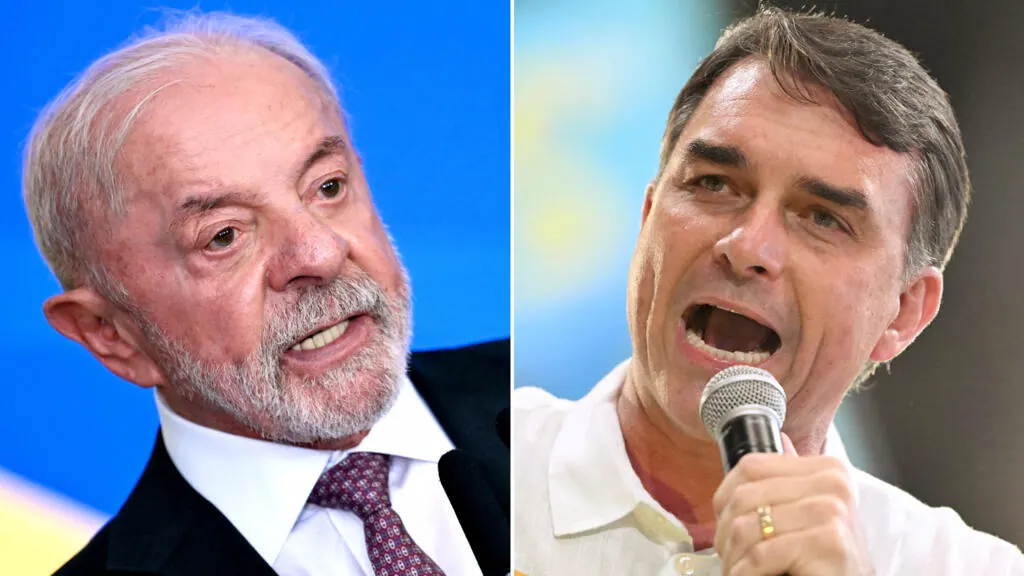
The Brazilian presidential election is heading to a runoff between Luiz Inácio Lula da Silva and Jair Bolsonaro, after neither candidate secured a majority in the first round. According to the Superior Electoral Court, Lula da Silva, the current president, garnered around 45% of the votes, while Bolsonaro, the Liberal Party candidate, secured approximately 47% of the votes. The first round took place on Sunday, and the results were announced on Monday.
The runoff election is scheduled for October 25, three weeks after the first round. Bolsonaro expressed his "great joy" at leading Lula da Silva in the first round and conveyed confidence in winning the runoff. Lula da Silva, on the other hand, described the first-round outcome as "unexpected" but asserted his confidence in "returning stronger and winning" the runoff.
The election results showed that Bolsonaro and Lula da Silva were the top two candidates, with the majority of votes counted. The Superior Electoral Court reported that over 99% of the votes had been tallied. Lula da Silva's Workers' Party and Bolsonaro's Liberal Party are expected to intensify their campaigns in the lead-up to the runoff.
The Brazilian presidential election is a significant event in the country's politics. The runoff will determine who will lead Brazil for the next four years. Lula da Silva and Bolsonaro have differing policy stances, and their campaigns have focused on issues such as economic growth, social welfare, and corruption.
Lula da Silva and Bolsonaro have a long history of rivalry in Brazilian politics. Lula da Silva previously served as president from 2003 to 2011, while Bolsonaro has been a vocal critic of his policies. The runoff election is expected to be closely contested, with both candidates vying for the support of undecided voters.
The international community is closely watching the Brazilian presidential election. Brazil is a significant player in global affairs, and the outcome of the election will have implications for the country's relationships with other nations. The runoff election will be an important test of the country's democratic institutions.
The runoff election between Lula da Silva and Bolsonaro will be a crucial moment in Brazilian politics. The outcome will determine the direction of the country for the next four years and will have significant implications for its citizens. Key issues such as economic growth, corruption, and social welfare will likely be at the forefront of the campaign.
Key points
- The Brazilian presidential election will proceed to a runoff between Luiz Inácio Lula da Silva and Jair Bolsonaro on October 25.
- Lula da Silva and Bolsonaro secured around 45% and 47% of the votes, respectively, in the first round.
- The runoff election will determine who will lead Brazil for the next four years.